Perspectives on Technology and Change

Practical writing on enterprise AI, execution, and commercial outcomes — from builders shipping with agents to career notes from the field.

AI & Building

Shipping with agents: memory systems, dev tooling, site builds, and quality gates.

Career

Roles, teams, and lessons from leading programs — including when agents are in the toolchain.

Commerce & Marketing

Ecommerce, CX, agencies, and growth systems — commercial outcomes in practice.

Composer 2.5 as My Only Coding Model: Cost, Predictability, and a Tighter Bootstrap
AI & Building

Composer 2.5 as My Only Coding Model: Cost, Predictability, and a Tighter Bootstrap

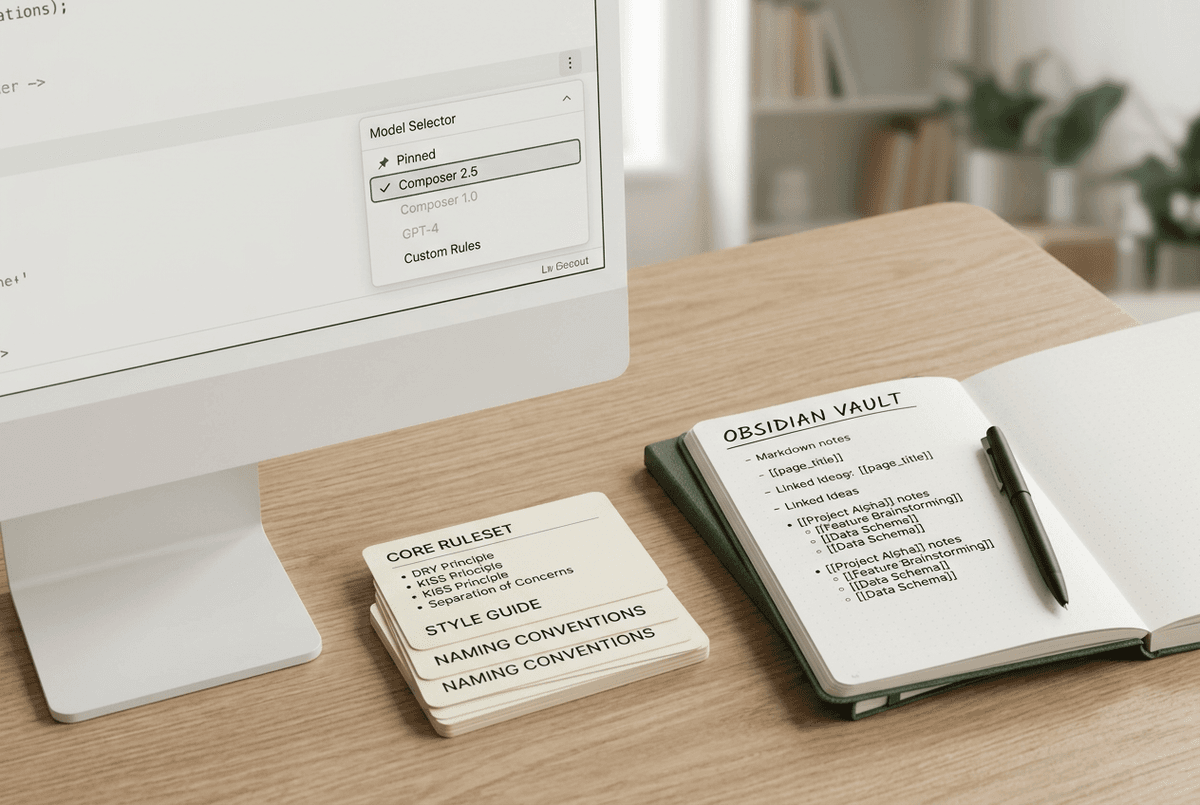
I run Cursor on Composer 2.5 only—not to save money alone, but to get predictable rule compliance. A tighter session bootstrap beat chasing frontier models for my workflow.

Continue reading →
External Memory Series: A Practical Guide to AI Session Continuity
AI & Building

External Memory Series: A Practical Guide to AI Session Continuity

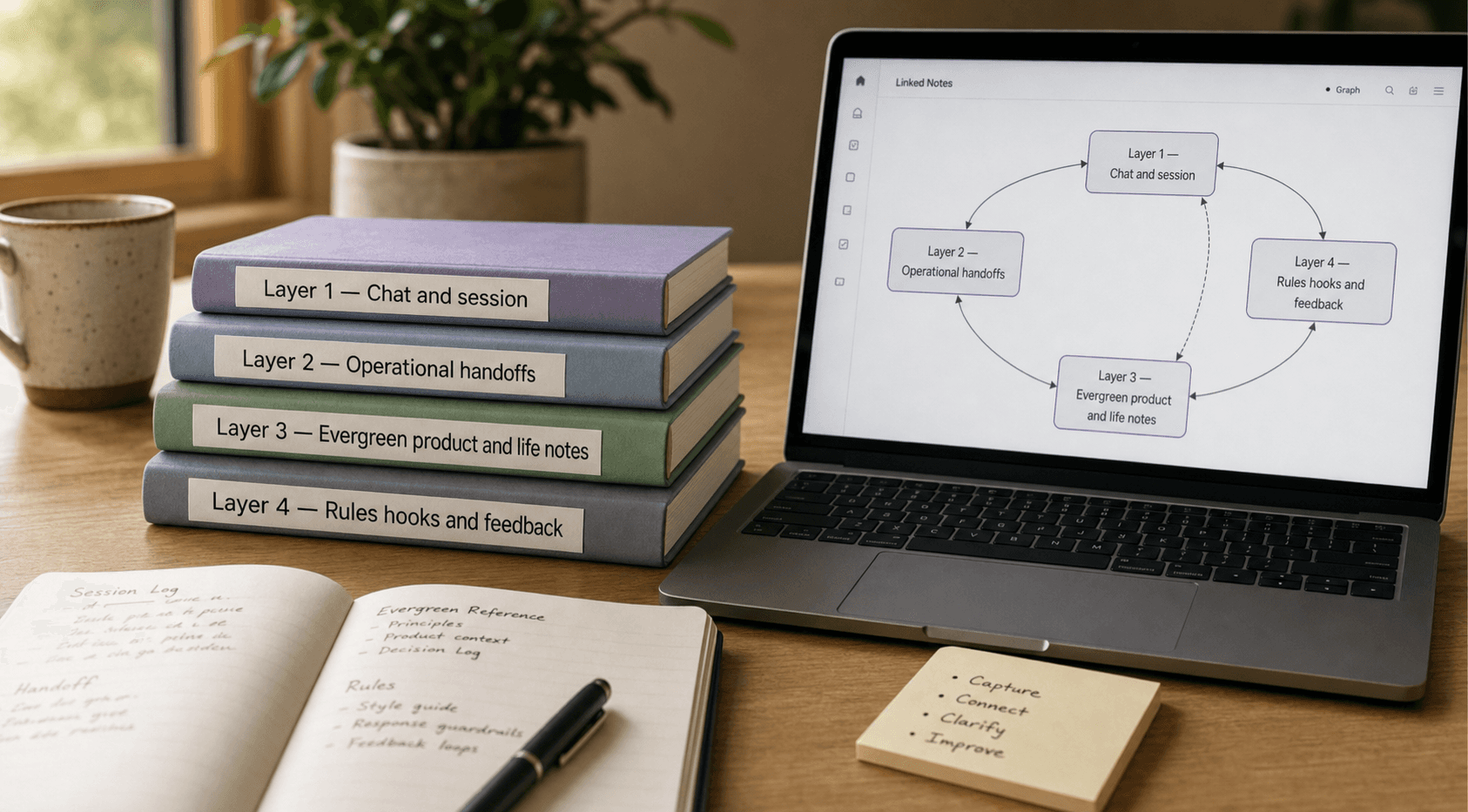
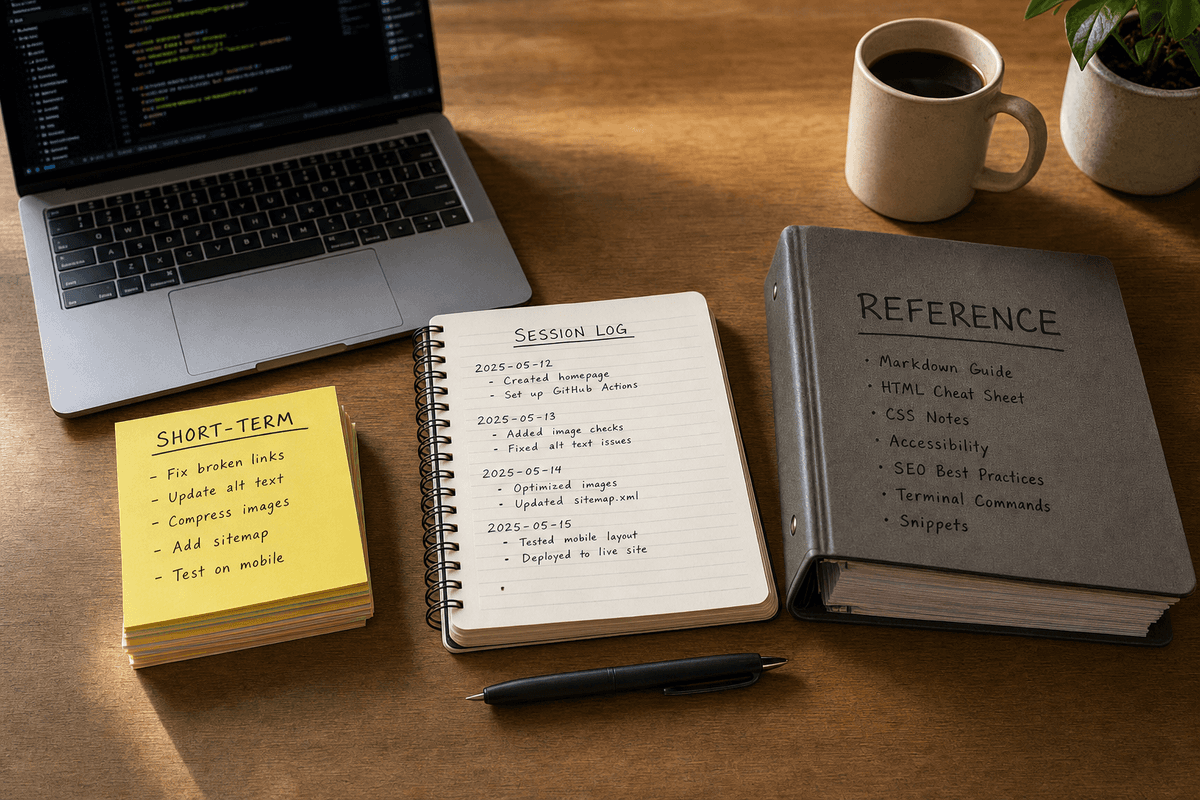
Chat is not memory. This series explains a file-based external brain for builders and leaders—four layers, hooks, and why it beats hoping the model remembers.

Continue reading →
Three Layers of External Memory for AI-First Development (What Actually Ships)
AI & Building

Three Layers of External Memory for AI-First Development (What Actually Ships)

Chat context is not memory. A three-layer file system—session, operational, evergreen—plus hooks and git automation is how I keep production codebases coherent across hundreds of agent sessions.

Continue reading →
Why Deliberate File Memory Beats Hoping Agents Remember
AI & Building

Why Deliberate File Memory Beats Hoping Agents Remember

Chat memory is opaque and ephemeral. Deliberate files give audit trails, solo-shipping continuity, team handoffs, and survival when models or tools change.

Continue reading →
Why File Memory Beats the Three-Layer AI Diagram (For Builders, Not Vendors)
AI & Building

Why File Memory Beats the Three-Layer AI Diagram (For Builders, Not Vendors)

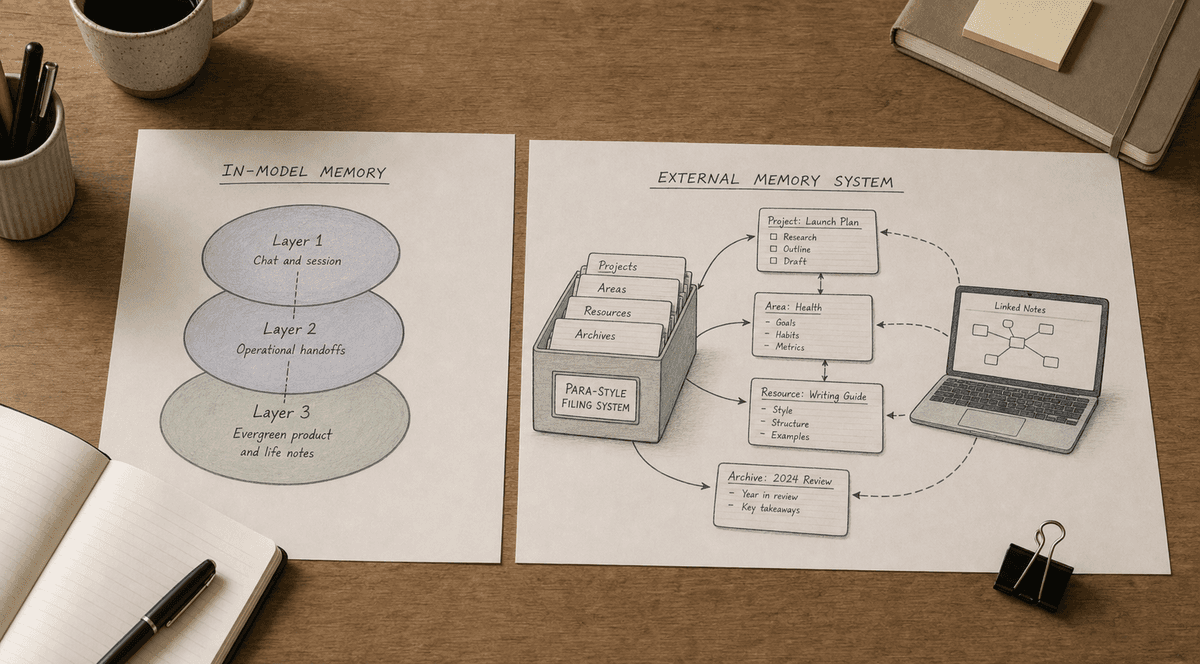
The popular STM / LTM / feedback diagram optimizes in-model memory. A file-based external brain optimizes audit, handoff, and tool churn. Here is when each design wins—and why I chose files.

Continue reading →
The AI Memory Problem: OpenClaw, Hermes, Karpathy, and the Approach That Actually Survives
AI & Building

The AI Memory Problem: OpenClaw, Hermes, Karpathy, and the Approach That Actually Survives

Every AI session starts from scratch. Four tools are racing to solve the AI memory problem - OpenClaw, Hermes, Karpathy's LLM wiki, and a plain Obsidian vault. Here's how they differ and which approach actually survives tool churn.

Continue reading →