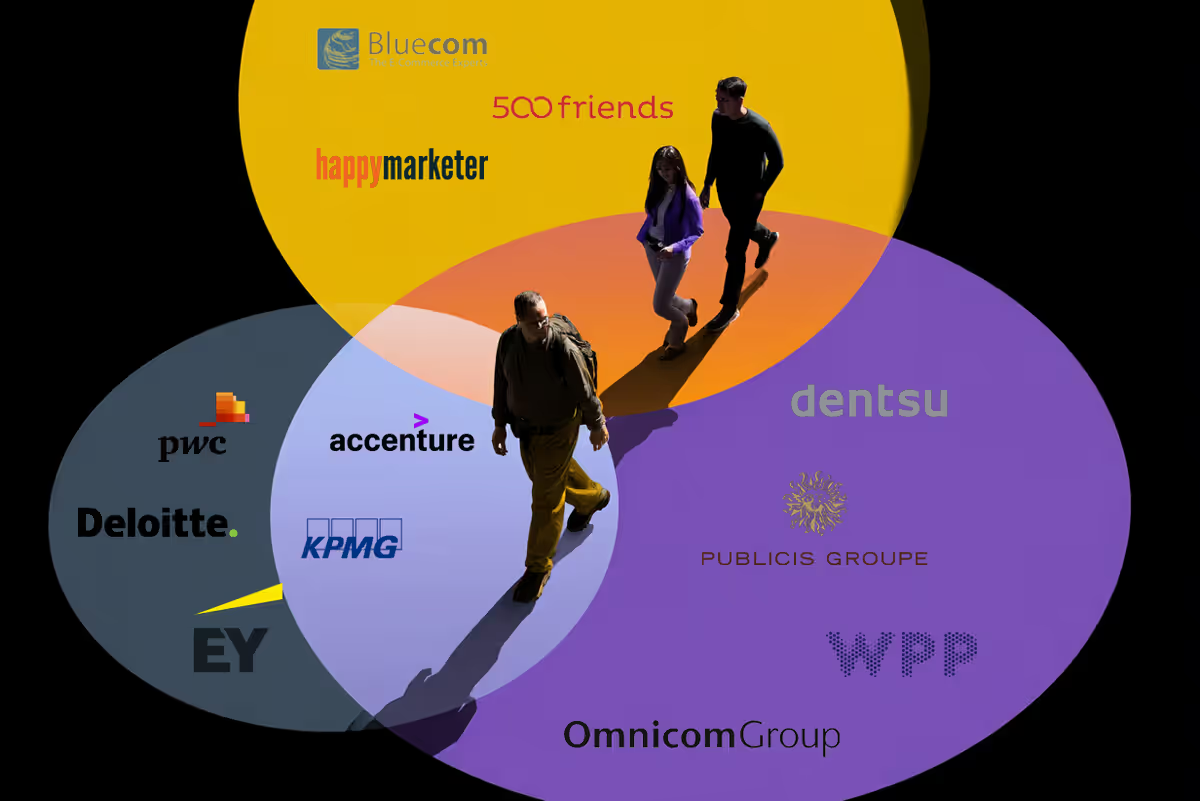
Having led digital transformation initiatives across Asia Pacific for global brands ranging from luxury retail to financial services, I've experienced the professional services landscape from multiple angles. I've started my own boutique, worked client-side dealing with agencies and consultancies, and served within agency networks. This diverse perspective has shown me that choosing between boutique firms, agencies, and consultancies isn't merely about company size-it's about understanding the unique value propositions, team dynamics, and return on investment each model offers.
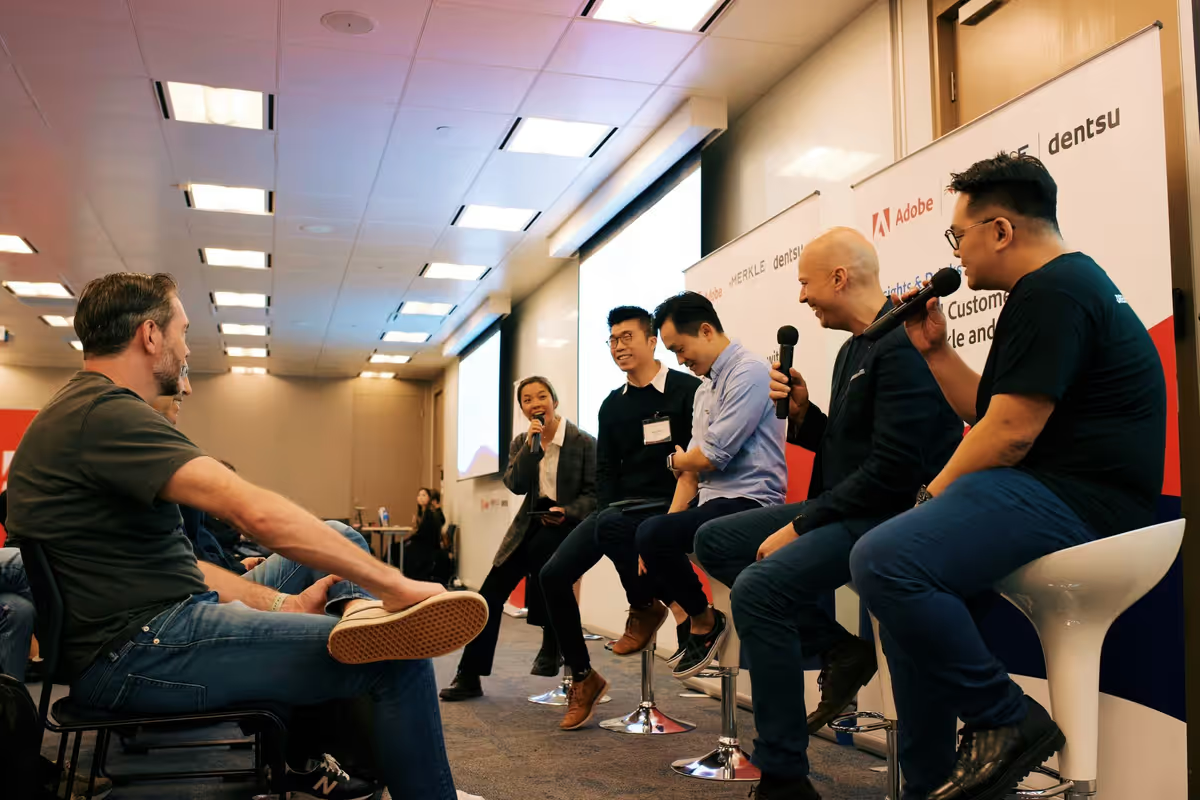 Photo: Pexels — stock
The Organizational Landscape: Understanding Your Options
Boutique Specialists
Boutique firms operate with focused expertise in specialized areas. During my time at Merkle, we implemented the Circle loyalty program for DFS globally. Our team largely comprised of boutique specialists from 500friends (a boutique loyalty agency we acquired), who provided specialized expertise in customer loyalty mechanics. When I was a project director at Isobar, I was effectively a part of Bluecom, an acquired boutique agency who's sole focus was providing ecommerce services.
Key Characteristics:
- Deep domain knowledge in specific disciplines
- Highly experienced senior practitioners who directly execute the work
- Flexible engagement models tailored to client needs
- Often founded by industry veterans with established methodologies
Full-Service Agencies
Working at Merkle and Isobar within the Dentsu network (77,000 employees strong), I led teams delivering omnichannel commerce solutions for amazing global brands like Shiseido and Microsoft. This experience gave me insight into how fully integrated agencies operate across multiple disciplines.
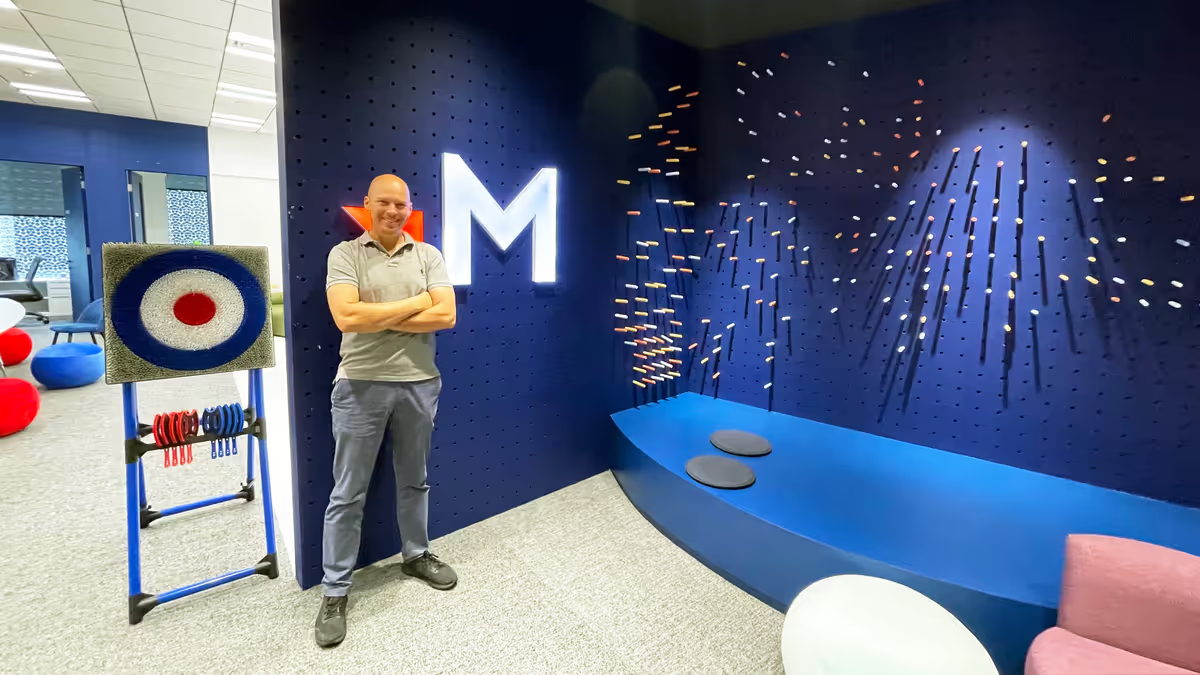 Photo: Pexels — stock
- Broad service offerings spanning creative, media, technology, and strategy
- Established methodologies and proprietary tools
- Scalable resources for execution
- Structured account management with multiple client touchpoints
Management Consultancies
My experience collaborating with consultancies like Accenture while implementing the Global Salesforce Commerce Cloud core for Shiseido APAC, and competing against Deloitte when positioning Merkle for campaign operations for Estée Lauder across 7 APAC markets, illustrated their distinctive approach.
Key Characteristics:
- Strategic business focus with C-suite relationships
- Robust methodologies based on extensive industry research
- Large, highly structured teams with clear hierarchies
- Comprehensive scope covering organizational change
The Emergence of Hybrid Models
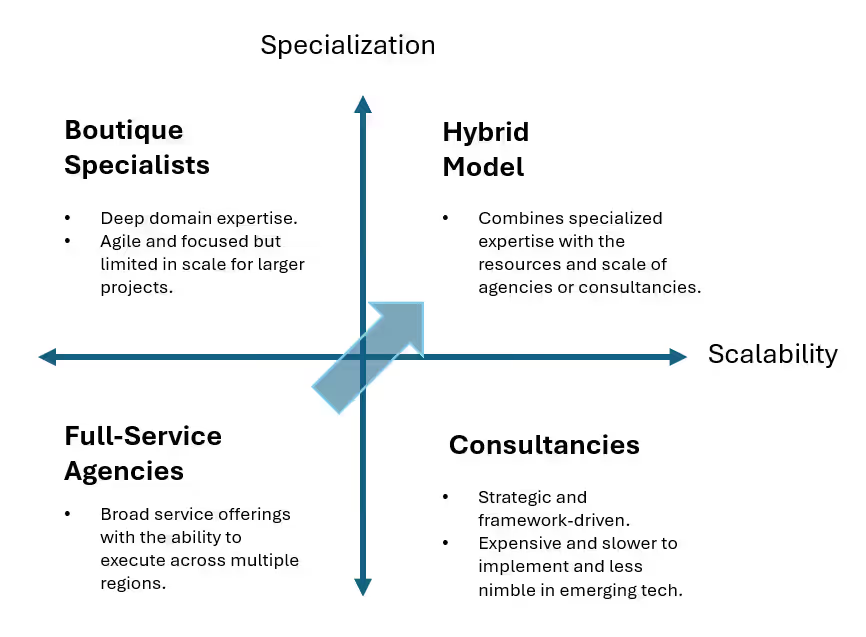
One of the most significant shifts I’ve observed in the industry is the blurring of traditional boundaries between business models. Agencies are increasingly absorbing boutique firms to create hybrid service offerings, while enterprise digital transformation leaders are prioritizing partners who bring specialized expertise within a broader service ecosystem.
This consolidation presents a unique opportunity for clients: by identifying these "boutiques within agencies," organizations can gain consultancy-level strategic thinking combined with boutique agility and agency-scale resources. For example, I leveraged highly certified Adobe specialists from Ugam (one of our acquired agencies)-who are so good at what they do, they are hired by Adobe itself to train their teams-to secure great work with Estée Lauder. When pitching media mix modeling for Estée Lauder, I partnered with boutique analytics and ML experts from Happy Marketer (one of our acquired agencies) to ensure we provided a masterful response.
Each collaboration delivered precise recommendations, building trust in our capabilities while achieving faster and more cost-effective solutions improvements than what’s typically offered by larger consultancies. The real strength of agencies lies in having the expertise of many boutiques readily accessible under a collaborative structure, and leveraging them correctly.
ROI Considerations: Where Value Truly Lies
Investment Structure and Expected Returns
Having managed budgets across multiple service models, I've observed distinctive patterns in how ROI manifests:
Boutiques:
- Higher daily rates for senior specialists
- Lower overhead costs
- Faster start-up and more immediate impact
- ROI tends to be highest for targeted challenges with clear outcomes
Agencies:
- Mid-range blended rates
- Standard engagement models with predictable costs
- Efficiency from integrated services and established processes
- ROI often strongest for customer facing omnichannel work and experience initiatives
Consultancies:
- Premium pricing models reflecting proprietary methods
- Significant investment in discovery and planning phases
- Emphasis on long-term strategic business impact
- ROI typically realized over longer timeframes but with broader organizational benefits
Human Factors: The People Behind the Services
Talent Profiles and Working Dynamics
In my experience working across different practices, I observed that the effectiveness of any engagement is heavily influenced by the individuals involved:
Boutique Professionals:
- Often industry veterans with deep expertise
- Direct access to senior talent throughout the engagement
- Entrepreneurial mindset with high personal stake in outcomes
- Less formal process, more relationship-based collaboration
Agency Teams:
- Specialized roles within integrated teams
- Mix of strategic and tactical expertise
- Career agency professionals with strong industry networks
- Process-driven with standardized deliverables
Consultancy Practitioners:
- Analytical problem-solvers with business acumen
- Framework-oriented approach to challenges
- Often from top-tier business schools with methodical training
- Structured interaction models with formal governance
While implementing the AI-driven social commerce platform for my current venture, buy.social, I we have a team comprising boutique specialists, agency veterans, and consultancy veterans. This blend wasn’t by chance-it was a strategic decision to harness the best thinking from each discipline. Boutique specialists bring deep, focused expertise and agility, agency veterans contribute creative problem-solving and executional precision, and consultancy veterans add strategic rigor and big-picture thinking. By combining these mindsets, we’ve created a team that can innovate at speed, execute at scale, and approach challenges with both creativity and strategic foresight-qualities that no single background could fully provide on its own. This hybrid approach ensures we’re not just building a platform but a solution that’s both visionary and grounded in practical impact.
Strategic Guidance: Making the Right Choice
Based on my experience implementing digital transformations for large companies, here's my practical guidance for selecting the right partner model:
When to Choose a Boutique Firm:
- You need specialized expertise in emerging technologies or methodologies
- Speed of implementation is critical
- Your team has strong project management capabilities
- You want direct access to senior practitioners
- Budget constraints require focused investment
When to Choose an Agency:
- Your needs span multiple marketing and technology disciplines
- You require consistent execution across regions
- You value established processes and account management
- Integration between services is important
- You need scalable implementation resources
When to Choose a Consultancy:
- Your initiative requires significant organizational change
- Senior leadership alignment is a critical success factor
- You need comprehensive industry benchmarking
- Risk management is a primary concern
- Long-term strategic impact outweighs immediate returns
Additional detail
Mitigating Risks Across Partner Models
Each model carries distinct risks that I've encountered during implementations:
Boutique Risks:
- Dependency on key individuals
- Limited scalability for expanding scope
- Potential knowledge transfer challenges
- Less comprehensive quality assurance processes
Agency Risks:
- Variability in talent quality across disciplines
- Complex approval processes slowing implementation
- Multiple stakeholders diluting accountability
- Potential for "B-team" staffing after initial sales process
Consultancy Risks:
- Higher costs frequently not matching delivered value
- Over-engineered solutions exceeding actual needs
- Implementation challenges when attempting to translate strategy to action
- Dependency on anyone but themselves for practical execution
When implementing omnichannel commerce solutions for Shiseido across multiple APAC brands and markets and working with Sapient, Accenture and Isobar UK on the same project, we mitigated risks by creating very clear accountability structures and ensuring knowledge transfer was built into the engagement model from day one.
What is boutique vs agency vs consultancy ROI?
Boutique, agency, and consultancy ROI differ by investment structure, speed, and return horizon. Boutiques deliver faster impact on targeted problems with senior practitioners direct on the work. Agencies blend mid-range rates with integrated omnichannel execution. Consultancies emphasize long-horizon strategic change at premium cost—with ROI often realized over years, not quarters.
TL;DR
- What Boutiques, Agencies, or Consultancies? Which one should you work with? covers.
- Who it is for and when to use it.
- Practical next steps after reading.
Reference
Quick reference: partner model comparison
| Model | Rate pattern | ROI horizon | Best fit |
|---|---|---|---|
| Boutique | Higher daily; lower overhead | Fast, targeted outcomes | Specialized expertise, speed |
| Agency | Mid-range blended | Omnichannel and experience initiatives | Multi-discipline, regional scale |
| Consultancy | Premium; heavy discovery | Long-term organizational change | C-suite alignment, transformation |
Additional detail
Common mistakes (choosing transformation partners)
| Mistake | Symptom | Fix |
|---|---|---|
| Choosing by size alone | Wrong team dynamics for problem | Match model to scope and internal capability |
| Ignoring hybrid "boutiques within agencies" | Miss specialized depth at scale | Identify acquired specialists in networks |
| Expecting consultancy speed | Slow discovery, delayed value | Use consultancies for strategy; boutiques for execution slices |
| Under-budgeting knowledge transfer | Dependency after engagement | Build transfer into day-one accountability |
| Single-model dependency | Key-person or B-team risk | Blend models strategically per workstream |
FAQ
When should I choose a boutique?
When you need deep specialized expertise, speed, direct senior access, and focused investment on a clear outcome—with strong internal project management.
When does an agency make sense?
When needs span multiple disciplines, require regional consistency, integrated services, and scalable execution resources.
When is a consultancy the right call?
When the initiative requires organizational change, C-suite alignment, industry benchmarking, and long-term strategic impact over immediate returns.
What is the hybrid model opportunity?
Agencies absorbing boutiques let clients combine consultancy-level strategy, boutique agility, and agency-scale resources—if you identify and leverage the right specialists.
How do I mitigate partner-model risks?
Clear accountability structures, knowledge transfer built into the engagement, and explicit staffing commitments after the sales process—for any model.
Conclusion: Finding Your Optimal Partner Mix
In my experience leading digital transformation initiatives across diverse sectors, the most successful organizations often leverage a strategic combination of these service models.
The right choice depends on your organization's specific needs, internal capabilities, and transformation objectives. Understanding the unique value propositions, talent profiles, and ROI expectations of each model allows you to make strategic investments that deliver meaningful business impact.
Whether you're considering a digital transformation partner or reassessing your current engagements, I'd be happy to share more specific insights based on your particular challenges and objectives.
Weekly email with new posts on enterprise AI and how teams ship it.
One email per week. Unsubscribe anytime.