Playbook

18 articles on Playbook — programs, tooling, and delivery on Petralian.

The Knowledge Work Agent Engine: A File-Based Stack for PM, Leadership, and Marketing (Not Just Code)
Hybrid

The Knowledge Work Agent Engine: A File-Based Stack for PM, Leadership, and Marketing (Not Just Code)

Best forLeaders and operators designing a knowledge-work engine around agents

The same session-continuity engine that ships software can run initiatives, decisions, and content. Maps memory, voice, and routing to Agile, Jira, Confluence, RACI, and RAG—with a replication kit an AI can execute.

Continue reading →
Leadership and Decisions With an AI Session Engine (Purpose, Dissent, and Audit Trails)
Strategic

Leadership and Decisions With an AI Session Engine (Purpose, Dissent, and Audit Trails)

Best forExecutives making the leadership calls that determine whether agent programs scale

Simon Sinek's Why-How-What, Drucker's decision discipline, and RACI meet applied AI. Leaders keep accountability; the file-based engine holds purpose, dissent, and decision records agents need at session start.

Continue reading →
Marketing and Voice at Scale With a File-Based Agent Engine (Systems, Not Style PDFs)
Hybrid

Marketing and Voice at Scale With a File-Based Agent Engine (Systems, Not Style PDFs)

Best forMarketing leaders keeping brand voice consistent when agents draft at scale

Brand voice fails when it lives in a PDF nobody opens. This playbook maps Sinek's Why-How-What, voice-as-system governance, and content-batch routing to produce consistent, high-volume marketing with minimum rework.

Continue reading →
Project Management With a File-Based Agent Engine (Not Another PM Tool)
Hybrid

Project Management With a File-Based Agent Engine (Not Another PM Tool)

Best forProgram and delivery leads running projects where agents are part of the team

Agile, Scrum, Jira, and Confluence already own execution and narrative. This playbook shows where a file-based agent engine fits—iron triangle tradeoffs, RAG, RACI, RAID, and applied AI without pretending chat is a program office.

Continue reading →
Measure Your Cursor Harness — CSV, CI, and OpenRouter Dollars
Hands-on

Measure Your Cursor Harness — CSV, CI, and OpenRouter Dollars

Best forBuilders measuring whether their Cursor harness actually improves output

Do not build Phase 2 orchestration until Phase 0 data says so. Layer 4 feedback — CSV, footer Agents line, eval gate — plus weekly OpenRouter checks beat benchmark leaderboard anxiety.

Continue reading →
Agent Harness Memory Loop — Four Tiers, Feedback Loop, and Load Gates
Hands-on

Agent Harness Memory Loop — Four Tiers, Feedback Loop, and Load Gates

Best forBuilders connecting file memory, Obsidian, and agent loops in daily work

External memory is four tiers in practice — short-term, operational, evergreen, and a feedback loop hardened into rules and footers. The harness gates when each tier loads so you keep control without token bloat.

Continue reading →
You Already Have an AI Harness in Cursor (Without LangChain)
Hands-on

You Already Have an AI Harness in Cursor (Without LangChain)

Best forSolo builders and small teams who want harness discipline without microservice overhead

Terminal-Bench harnesses look like separate products. On a production Shopify app I already had subagents, CI gates, and session rules. You keep model and mode control — the harness supports routing, tests, and memory gates, not autopilot.

Continue reading →
Beyond Headroom: What I Tried to Save Cursor Tokens, What Failed, and What I Use Now
Hands-on

Beyond Headroom: What I Tried to Save Cursor Tokens, What Failed, and What I Use Now

Best forPower users optimizing token spend and context windows in Cursor

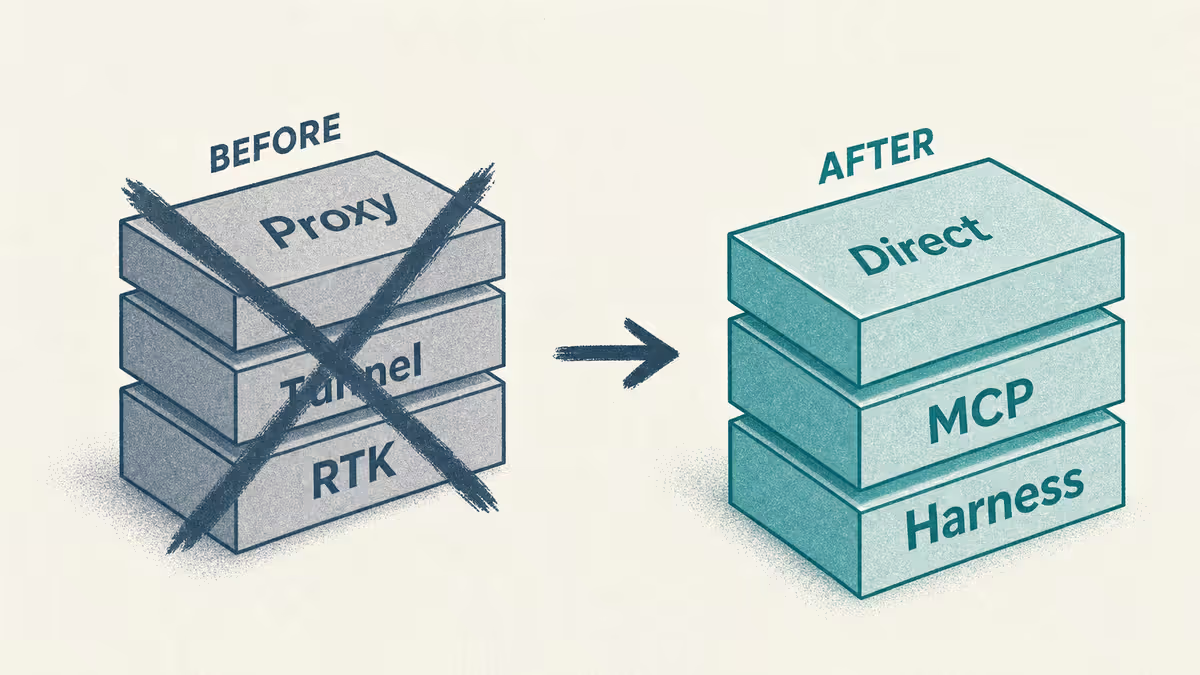
I ran Headroom, built a 300-line proxy, wired a Cloudflare tunnel, and added RTK. On my Cursor + OpenRouter workload the dollars did not move. Here is what is worth doing instead.

Continue reading →
From VS Code Copilot to Cursor: What Changed in My AI Workflow
Hands-on

From VS Code Copilot to Cursor: What Changed in My AI Workflow

Best forDevelopers comparing Copilot and Cursor in a real daily workflow

Copilot had the same footer spec but dropped it on long chats. Cursor keeps it with alwaysApply rules, optional hooks, and a v3.1 mode-based Response Footer Contract.

Continue reading →
Getting Enterprise AI Right: The Work That Comes Before Deployment
Strategic

Getting Enterprise AI Right: The Work That Comes Before Deployment

Best forLeaders and program owners steering enterprise AI before go-live pressure wins

Enterprise AI programs that last share one pattern: data readiness, named governance owners, and change runway are gates before go-live—not parallel work you finish after the demo.

Continue reading →
External Memory Series: A Practical Guide to AI Session Continuity
Hybrid

External Memory Series: A Practical Guide to AI Session Continuity

Best forAnyone adopting file-based memory for AI-assisted work — start here for the series map

Chat is not memory. This series explains a file-based external brain for builders and leaders—four layers, hooks, and why it beats hoping the model remembers.

Continue reading →
Beyond Chat History: Using Layered Obsidian Memory for Personal Productivity
Hybrid

Beyond Chat History: Using Layered Obsidian Memory for Personal Productivity

Best forKnowledge workers layering Obsidian memory beyond a single chat thread

The same three-layer memory stack used for shipping code works for strategic work, client engagements, and cross-tool AI—short chat, operational handoffs, evergreen notes, and explicit feedback.

Continue reading →
Three Layers of External Memory for AI-First Development (What Actually Ships)
Hands-on

Three Layers of External Memory for AI-First Development (What Actually Ships)

Best forBuilders implementing the three-layer external memory model for AI-first dev

Chat context is not memory. A three-layer file system—session, operational, evergreen—plus hooks and git automation is how I keep production codebases coherent across hundreds of agent sessions.

Continue reading →
Why Deliberate File Memory Beats Hoping Agents Remember
Hybrid

Why Deliberate File Memory Beats Hoping Agents Remember

Best forTeams adopting governance for file-based agent memory instead of hoping context sticks

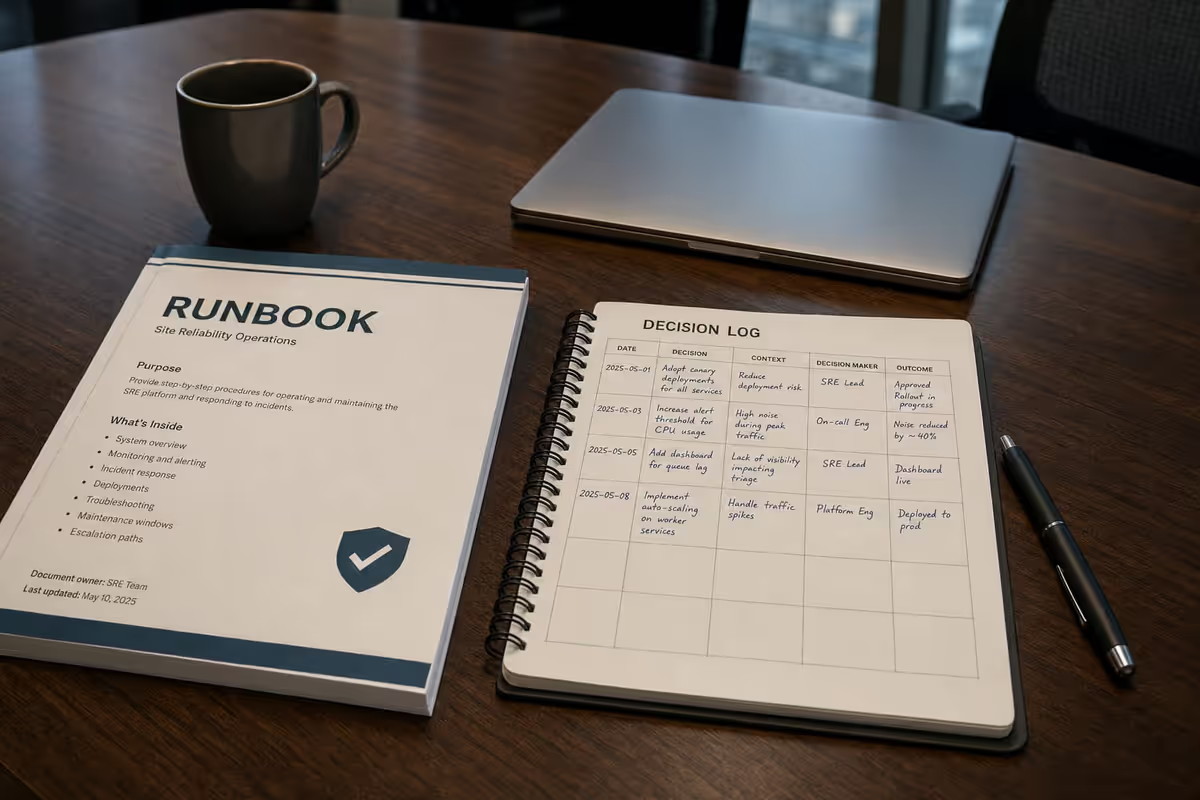
Chat memory is opaque and ephemeral. Deliberate files give audit trails, solo-shipping continuity, team handoffs, and survival when models or tools change.

Continue reading →
Why File Memory Beats the Three-Layer AI Diagram (For Builders, Not Vendors)
Hybrid

Why File Memory Beats the Three-Layer AI Diagram (For Builders, Not Vendors)

Best forBuilders choosing pragmatic file memory over diagram-perfect architecture

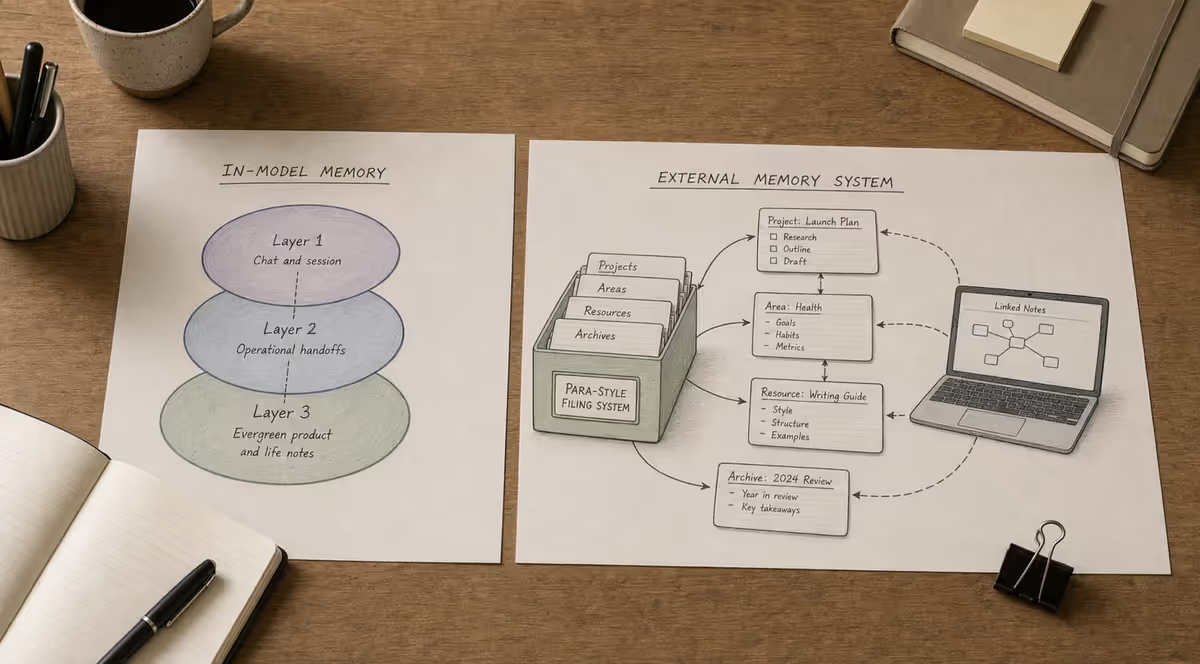
The popular STM / LTM / feedback diagram optimizes in-model memory. A file-based external brain optimizes audit, handoff, and tool churn. Here is when each design wins—and why I chose files.

Continue reading →
How We Built Gravio’s Scoring Engine: From Repo Signals to Release Gates
Hands-on

How We Built Gravio’s Scoring Engine: From Repo Signals to Release Gates

Best forBuilders who want the architecture behind an AI quality scoring engine

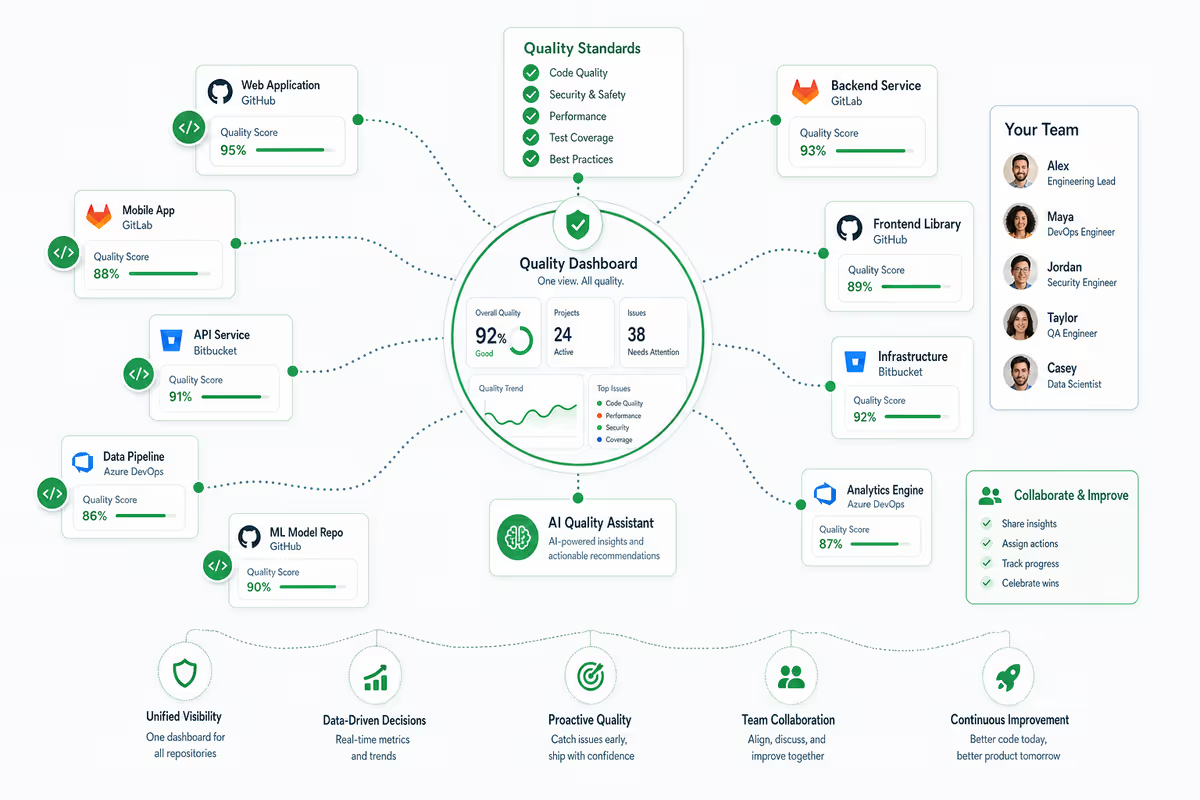
A practical breakdown of how Gravio turns repository signals into six-dimension scores, hard quality gates, and actionable remediation plans.

Continue reading →
Team Playbook: Rolling Out Gravio Across Multiple Repositories
Hybrid

Team Playbook: Rolling Out Gravio Across Multiple Repositories

Best forPlatform and engineering leads rolling AI quality scoring across multiple repos

A practical rollout framework for introducing Gravio across many repos without creating process fatigue, policy confusion, or noisy quality signals.

Continue reading →
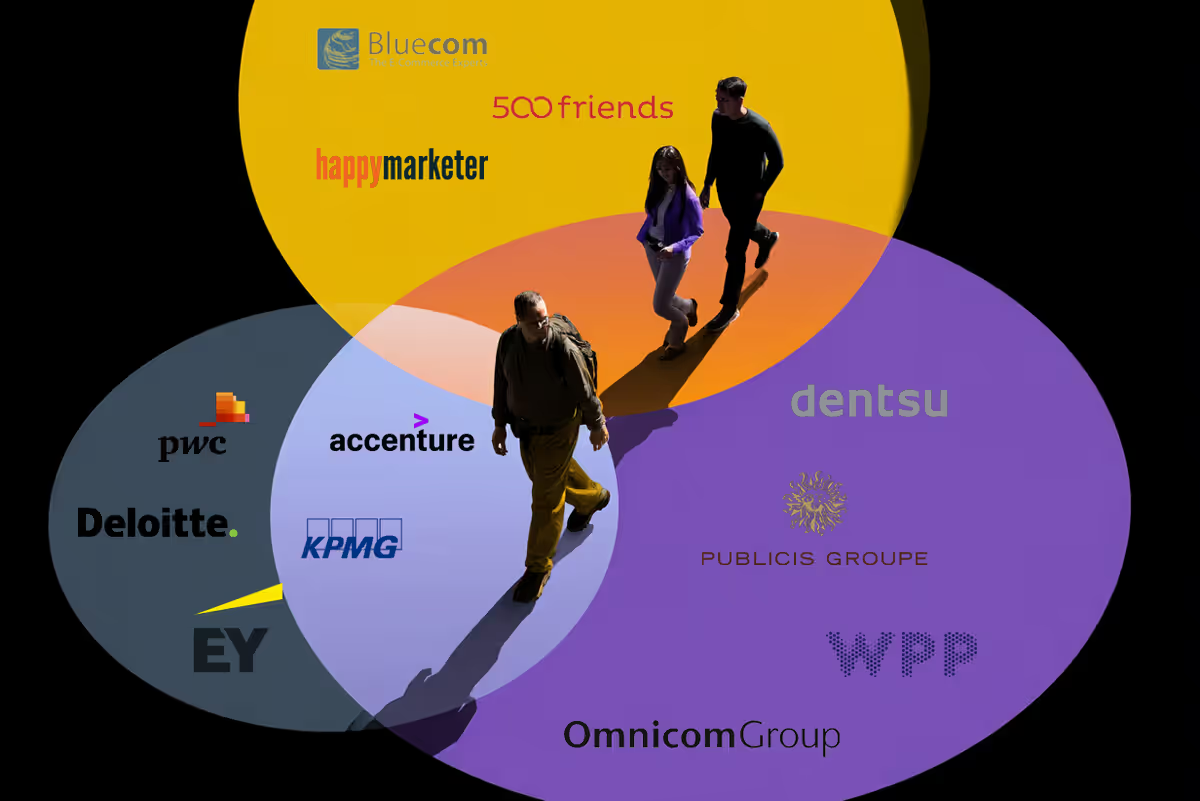
Boutiques, Agencies, or Consultancies? Which one should you work with?
Strategic

Boutiques, Agencies, or Consultancies? Which one should you work with?

Best forLeaders choosing between boutique partners, agencies, and consultancies for transformation work

Having led digital transformation initiatives across Asia Pacific for global brands ranging from luxury retail to financial services, I've experienced the…

Continue reading →