TL;DR
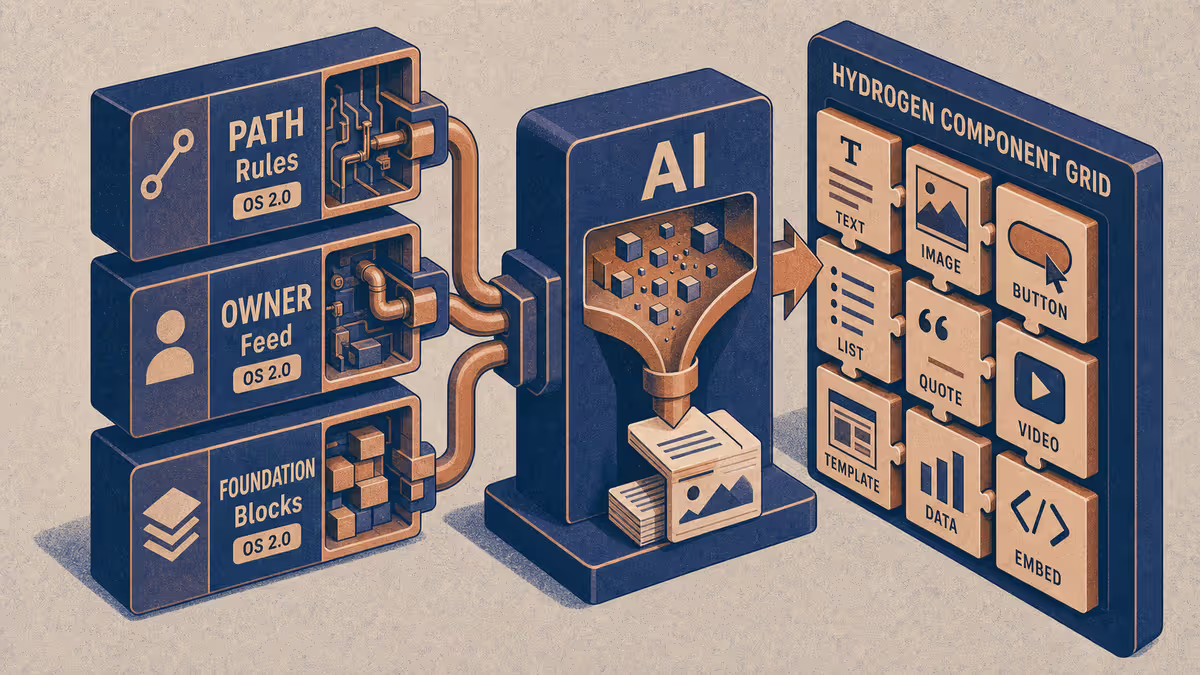
- When AI generates storefront UI and copy, you need a stack that separates merchant truth from generated presentation.
- Hydrogen trades speed for component control; Online Store 2.0 trades flexibility for launch velocity. Pick based on who owns change, not hype.
Hydrogen vs Online Store when AI writes the front end
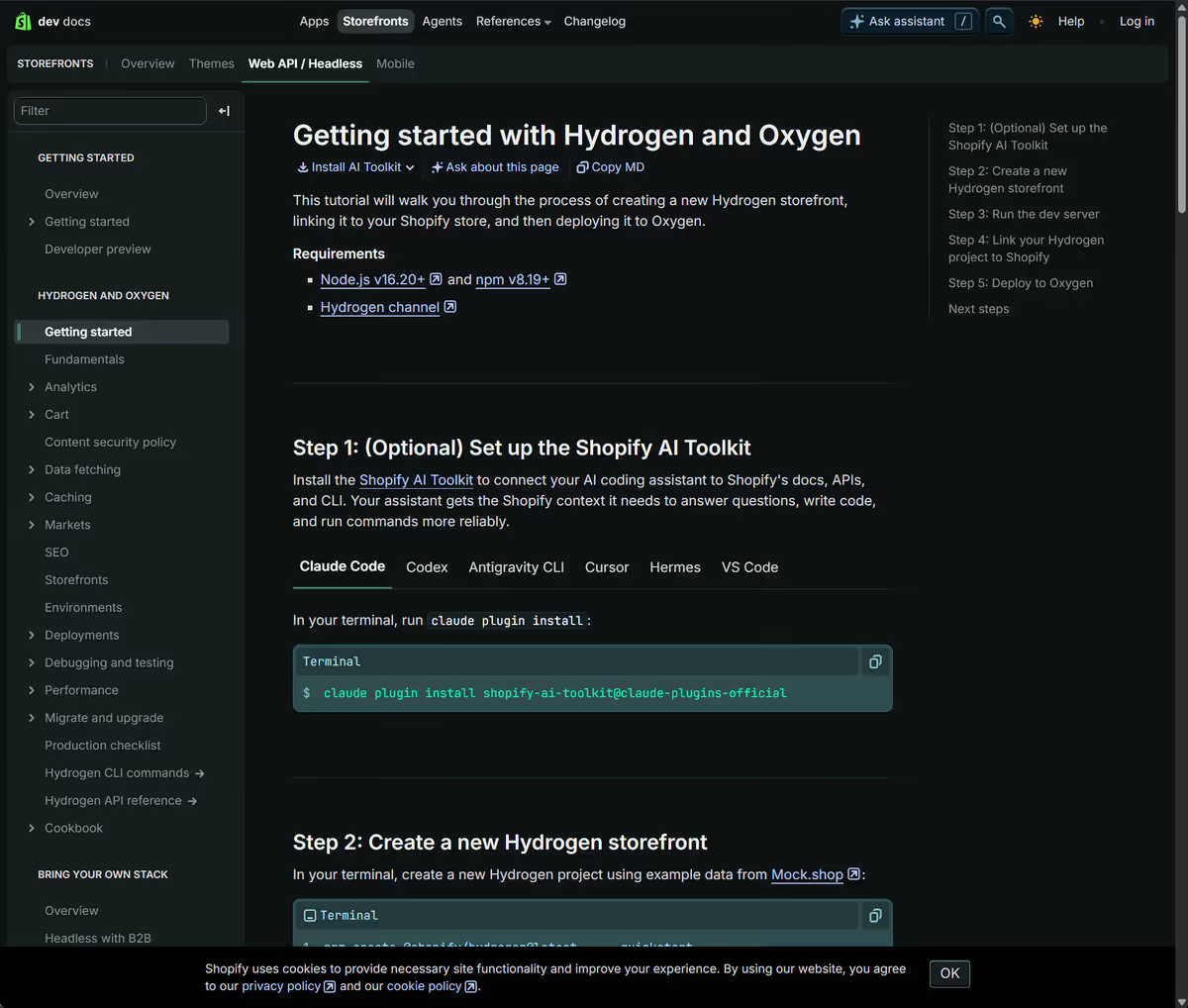 Screenshot: Shopify Hydrogen docs — Petralian (2026)
Shopify Hydrogen is Shopify's React-based headless storefront toolkit. Online Store 2.0 is the theme architecture inside Shopify Admin: sections, blocks, and the Liquid theme most merchants already run. When AI becomes the front-end author (layouts, product copy, campaign landers), decide on where generated UI may land and how fast you can reject a bad generation, not only whether the stack is headless.
Who it is for: Ecommerce operators, agency tech leads, and founders on Shopify who use AI for creative and front-end work. You may not employ a full storefront team. You still need a rule for what AI may change without breaking checkout.
What you will learn: how AI shifts the Hydrogen vs OS 2.0 tradeoff, a decision matrix, one commerce example from my Shopify app work, and Path A for merchants staying on themes.
What changes when AI generates the storefront
Classic headless debates focused on performance and omnichannel APIs. AI adds a new constraint: generation volume and rollback.
| Without AI front end | With AI front end |
|---|---|
| Fewer, human-reviewed theme edits | Many draft variants per week |
| Copy lives in theme or metafields | Copy may stream from agent sessions |
| Rollback = theme version history | Rollback = git + theme + prompt lineage |
Contextual AI in ecommerce already pushed commerce toward conversation layers. Generative UI pushes the same boundary: the storefront is output, not only a static design file.
Shopify's own docs describe Hydrogen as a path to custom storefronts on Storefront API. OS 2.0 remains the default for merchants who want Admin-native editing. Neither doc promises AI safety; that is your governance job.
Decision matrix
| Factor | Favor Online Store 2.0 | Favor Hydrogen |
|---|---|---|
| Team skills | Marketers edit sections | Dev or agent maintains React |
| AI output type | Copy, banners, section swaps | Custom components, novel layouts |
| Time to first sale | Days on a quality theme | Weeks with pipeline setup |
| Rollback | Theme duplicate in Admin | Git revert + deploy |
| App embed compatibility | Native theme app extensions | Verify Storefront API coverage |
| AI experiment rate | Low (few section publishes) | High (many component PRs) |
If AI only drafts copy inside existing sections, OS 2.0 usually wins. If AI drafts new component trees (bundles, configurators, AI-guided quizzes), Hydrogen or another headless layer deserves serious review.
 Screenshot: Shopify Admin theme editor — Petralian (2026)
Example: commerce app context
I work on Vouch, a Shopify embedded app for referral and social commerce. The merchant storefront stays on Online Store 2.0 themes; the app UI lives in Shopify's embedded admin surface. That split matters for AI governance: agents may propose referral copy and diagnostic text inside the app boundary, while storefront theme files stay merchant-owned unless explicitly in scope.
The three-gates pattern for zero referrals is a reminder that commerce bugs often trace to surface mismatch (theme vs app embed vs checkout), not bad AI prose. Stack choice should make those surfaces explicit before you automate front-end generation.
Hydrogen when AI is high-volume
Choose Hydrogen (or headless generally) when:
- You already run CI/CD for the storefront and agents open pull requests.
- You need component isolation so a bad generation cannot break global Liquid.
- You sell through multiple heads (web, app, partner) from one commerce API.
- You measure customer data ownership as a strategic asset, not only a theme concern.
Costs: hosting, build pipeline, and human review of agent diffs. AI does not remove that review; it increases diff count.
Online Store 2.0 when speed and merchant control win
 Screenshot: Petralian / Shopify Admin theme editor (2026)
Stay on OS 2.0 when:
- Merchants edit without GitHub access.
- Campaigns are mostly section toggles and metafield-driven content.
- Your agency already ships fast on Dawn-derived themes.
- AI assists copy drafts that humans paste into Admin.
Use theme duplicates before AI-assisted publishes. Treat AI output like a contractor deliverable: preview link, checklist, publish.
Path A: theme-native AI without Hydrogen
- List every storefront element AI may touch (hero, collection description, FAQ). Everything else is out of scope.
- Create a
STORE-FRONT-RULES.mdin your shared drive: tone, banned claims, return policy wording that must not change. - In ChatGPT or Claude, paste rules + product facts only. Generate copy for one section.
- Paste into a duplicated theme section. Preview. Publish only after human read.
No Hydrogen required. You tested whether AI output is the bottleneck, or whether governance is.
Limitations
This post does not benchmark Hydrogen performance vs every OS 2.0 theme. Shopify's product surface changes; verify Hydrogen and Online Store 2.0 docs before committing budget. AI-generated UI can violate accessibility, regional pricing rules, or brand legal lines regardless of stack.
FAQ
When should I choose Hydrogen over Online Store 2.0?
When you need headless control of front-end data fetching, custom agent-driven UX, or multi-surface commerce—not for every merchant.
How does AI change the Hydrogen versus OS decision?
Agents compose UI faster on file-based Hydrogen repos; OS themes trade flexibility for speed when AI is not customizing the storefront.
Can I use agents on a standard Shopify theme?
Yes, but guardrails differ—theme limits and Liquid context bound what agents can safely change.
What to do next
Write one sentence: "Our AI may change ___ on the storefront." If the blank is "sections merchants already edit," start with OS 2.0 governance. If the blank is "component architecture we ship weekly," pilot Hydrogen with a single collection experience and measure rollback time, not demo wow.
Weekly email with new posts on enterprise AI and how teams ship it.
One email per week. Unsubscribe anytime.