Developer Tools

20 articles on Developer Tools — programs, tooling, and delivery on Petralian.

Measure Your Cursor Harness — CSV, CI, and OpenRouter Dollars
Hands-on

Measure Your Cursor Harness — CSV, CI, and OpenRouter Dollars

Best forBuilders measuring whether their Cursor harness actually improves output

Do not build Phase 2 orchestration until Phase 0 data says so. Layer 4 feedback — CSV, footer Agents line, eval gate — plus weekly OpenRouter checks beat benchmark leaderboard anxiety.

Continue reading →
You Already Have an AI Harness in Cursor (Without LangChain)
Hands-on

You Already Have an AI Harness in Cursor (Without LangChain)

Best forSolo builders and small teams who want harness discipline without microservice overhead

Terminal-Bench harnesses look like separate products. On a production Shopify app I already had subagents, CI gates, and session rules. You keep model and mode control — the harness supports routing, tests, and memory gates, not autopilot.

Continue reading →
CursorBench 3.1: Fable 5 Tops the Chart, but Composer 2.5 Wins the Budget
Hands-on

CursorBench 3.1: Fable 5 Tops the Chart, but Composer 2.5 Wins the Budget

Best forBuilders comparing model cost versus quality with reproducible benchmarks

Anthropic's Fable 5 leads CursorBench 3.1 at 72.9%, but at $18 per task and 76 steps. I read the table for score per dollar, tokens, and steps, and where open models land.

Continue reading →

Beyond Headroom: What I Tried to Save Cursor Tokens, What Failed, and What I Use Now
Hands-on

Beyond Headroom: What I Tried to Save Cursor Tokens, What Failed, and What I Use Now

Best forPower users optimizing token spend and context windows in Cursor

I ran Headroom, built a 300-line proxy, wired a Cloudflare tunnel, and added RTK. On my Cursor + OpenRouter workload the dollars did not move. Here is what is worth doing instead.

Continue reading →
From VS Code Copilot to Cursor: What Changed in My AI Workflow
Hands-on

From VS Code Copilot to Cursor: What Changed in My AI Workflow

Best forDevelopers comparing Copilot and Cursor in a real daily workflow

Copilot had the same footer spec but dropped it on long chats. Cursor keeps it with alwaysApply rules, optional hooks, and a v3.1 mode-based Response Footer Contract.

Continue reading →

The Customer Account Monolith Is an Anti-Pattern for Shopify Extensions
Hybrid

The Customer Account Monolith Is an Anti-Pattern for Shopify Extensions

Best forShopify merchants and developers splitting customer account extensions by real jobs

A thousand-line profile block in one extension fights merchant menu IA. Split full-page extensions by job and align with how customers navigate account tasks.

Continue reading →

Capturing UI Designs for AI Agents Creates a Prompt Injection Surface
Hands-on

Capturing UI Designs for AI Agents Creates a Prompt Injection Surface

Best forBuilders feeding UI context to agents who want to understand prompt-injection risk

Design capture CLIs that dump outerHTML into SKILL.md files can smuggle instructions. Sanitize at the trust boundary before agents read the DOM.

Continue reading →
Composer 2.5 as My Only Coding Model: Cost, Predictability, and a Tighter Bootstrap
Hands-on

Composer 2.5 as My Only Coding Model: Cost, Predictability, and a Tighter Bootstrap

Best forDevelopers standardizing on a single coding model and tighter agent bootstrap

I run Cursor on Composer 2.5 only—not to save money alone, but to get predictable rule compliance. A tighter session bootstrap beat chasing frontier models for my workflow.

Continue reading →
Three Layers of External Memory for AI-First Development (What Actually Ships)
Hands-on

Three Layers of External Memory for AI-First Development (What Actually Ships)

Best forBuilders implementing the three-layer external memory model for AI-first dev

Chat context is not memory. A three-layer file system—session, operational, evergreen—plus hooks and git automation is how I keep production codebases coherent across hundreds of agent sessions.

Continue reading →
Getting to Lighthouse 100 on Next.js 16: Every Fix That Actually Mattered
Hands-on

Getting to Lighthouse 100 on Next.js 16: Every Fix That Actually Mattered

Best forDevelopers chasing Core Web Vitals and Lighthouse scores on a Next.js site

A complete walkthrough of every Lighthouse bottleneck on a Next.js 16 Vercel site — TBT from 3,020ms to 20ms, LCP from 3.0s to 1.7s — including the config options that don't exist in Next.js 16 and will silently break your build.

Continue reading →
GitHub Copilot vs OpenRouter: The Real Cost of AI Coding in 2026
Hands-on

GitHub Copilot vs OpenRouter: The Real Cost of AI Coding in 2026

Best forDevelopers comparing real monthly cost across Copilot, OpenRouter, and similar stacks

GitHub Copilot's new token-based pricing changes everything. Here's what it actually costs compared to OpenRouter and third-party relays when you code extensively.

Continue reading →
How I Built the Petralian Weekly Digest on Brevo Free
Hands-on

How I Built the Petralian Weekly Digest on Brevo Free

Best forSolo publishers automating a weekly digest without paid RSS tooling

I wanted a clean weekly digest for petralian.com without paying for RSS automations. This is the exact architecture we implemented, the issues we hit, and the code patterns that made it reliable.

Continue reading →
Publishing Obsidian Drafts Through GitHub Actions
Hands-on

Publishing Obsidian Drafts Through GitHub Actions

Best forBuilders publishing from Obsidian with GitHub Actions and minimal friction

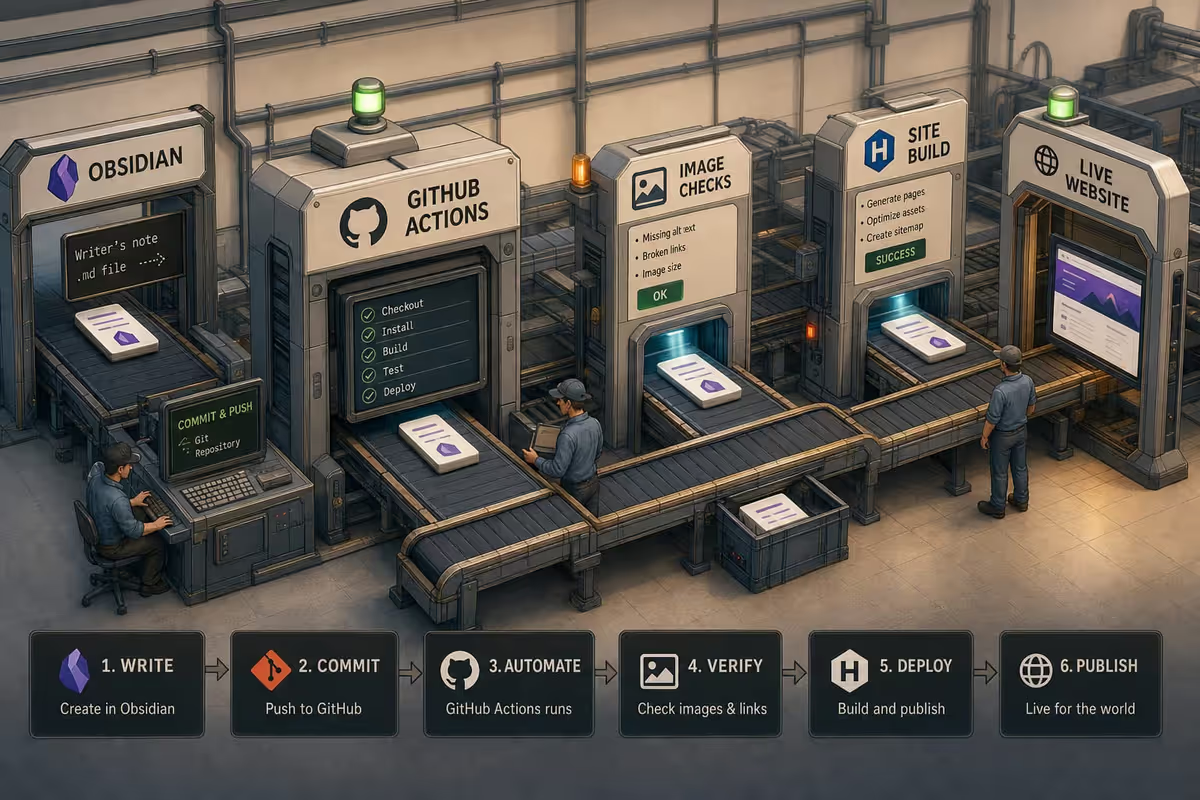
A practical way to move from writing in Obsidian to publishing on a live site without copy-paste, manual uploads, or brittle one-off scripts.

Continue reading →
Building petralian.com: The Technical Reality
Hands-on

Building petralian.com: The Technical Reality

Best forBuilders curious how this site is wired — Obsidian, sync, and Next.js in practice

The why was clean. The how had corners. A ground-level account of building petralian.com — the masonry layout that fought back, a 404 page with a working Asteroids game, the TinaCMS newline problem nobody warns you about, and how AI wrote most of it.

Continue reading →
CSS Masonry Grids and Reading Order: What column-count Gets Wrong, and How to Fix It
Hands-on

CSS Masonry Grids and Reading Order: What column-count Gets Wrong, and How to Fix It

Best forFront-end developers fixing masonry layout and screen-reader reading order

CSS column-count creates a masonry layout in one line. It also silently breaks left-to-right reading order. Here is what is actually happening in the DOM, and a reliable fix that holds up under variable card heights.

Continue reading →
Why I Rebuilt Petralian on Next.js (And Open Sourced It)
Hands-on

Why I Rebuilt Petralian on Next.js (And Open Sourced It)

Best forDevelopers weighing a Next.js rebuild for content, SEO, and shipping speed

WordPress was slowing down the actual writing. Here's why I rebuilt petralian.com on Next.js, how Obsidian now sits at the center of my publishing workflow, and why I decided to open source the whole thing.

Continue reading →
How We Built Gravio’s Scoring Engine: From Repo Signals to Release Gates
Hands-on

How We Built Gravio’s Scoring Engine: From Repo Signals to Release Gates

Best forBuilders who want the architecture behind an AI quality scoring engine

A practical breakdown of how Gravio turns repository signals into six-dimension scores, hard quality gates, and actionable remediation plans.

Continue reading →
The New CI Gate: Failing Builds on Agent Quality, Not Just Unit Tests
Hands-on

The New CI Gate: Failing Builds on Agent Quality, Not Just Unit Tests

Best forBuilders wiring AI quality checks into CI and release pipelines

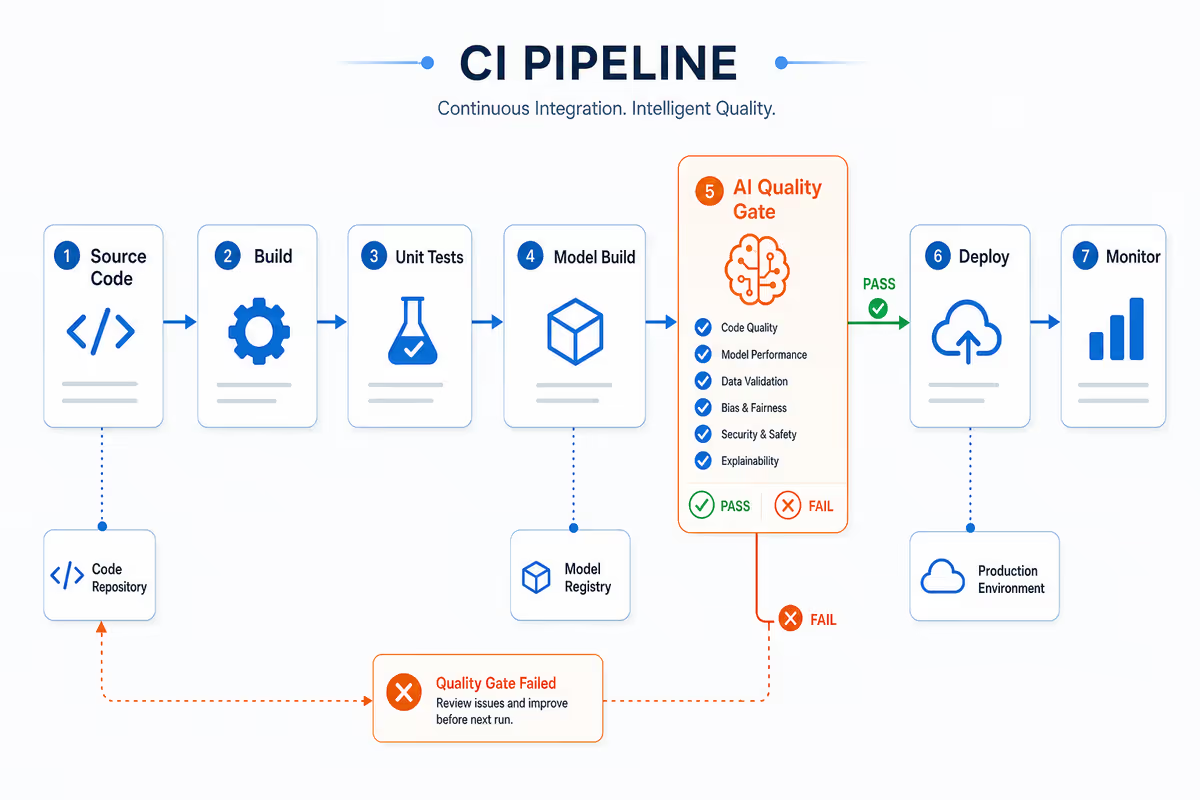
Unit tests catch code failures. They do not always catch AI quality regressions. Here is how to add quality thresholds as a first-class release gate.

Continue reading →
From Empty Folder to First Quality Score in 10 Minutes
Hands-on

From Empty Folder to First Quality Score in 10 Minutes

Best forBuilders trying Gravio scoring on a real repo in one sitting

A practical, no-fluff walkthrough for getting Gravio running from a clean folder to your first quality score, including the exact command flow and common mistakes.

Continue reading →
Zero-Knowledge AI Quality: How Gravio Scores Agents Without Seeing Your Code
Hands-on

Zero-Knowledge AI Quality: How Gravio Scores Agents Without Seeing Your Code

Best forBuilders exploring privacy-preserving AI quality scoring with Gravio

Most AI quality platforms ask you to trust them with your source code. Gravio takes a different path: encrypted scoring designed to keep plaintext out of the server path.

Continue reading →