
TL;DR
- Mini Programs embed commerce inside a messaging super-app with wallet and CRM adjacency; Instagram Shop optimizes discovery inside Meta's graph with thinner first-party export.
- Neither surface replaces a program owner who owns calendar, consent, attribution disputes, and the bridge to owned channels.
Where social commerce still needs a human program owner
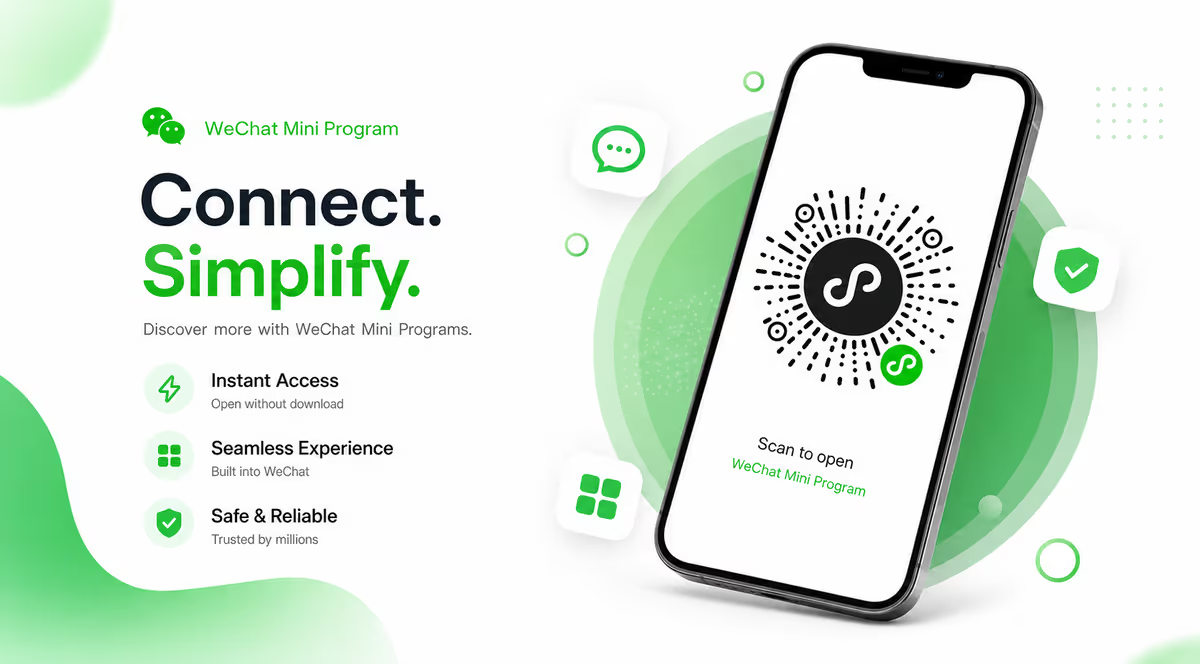 Photo: iMin Technology on Pexels — Petralian (2026)
WeChat Mini Programs and Instagram Shop both sell inside the feed, but they govern customer data, campaign pace, and cross-channel accountability differently. Platforms automate storefront mechanics. A human program owner still owns your launch calendar, consent language, and the handoff when a shopper becomes a CRM record.
Who it is for: DTC leaders, regional ecommerce heads, and agency program leads running social commerce in APAC and Western markets at the same time. You need a comparison that ends in ownership, not feature checklists.
What you will learn: how Mini Programs and Instagram Shop differ on data and operations, why APAC super-app habits change the program rhythm, and what a human program owner must hold that no mini app or shop tab automates.
Two shortcuts, two governance models
Social commerce collapsed the path from inspiration to purchase. That is real. The mistake is treating the path as fully outsourced once the storefront is live.
| Dimension | WeChat Mini Programs (APAC super-app pattern) | Instagram Shop (Western social pattern) |
|---|---|---|
| Primary habit | Messaging, payments, and mini apps in one session | Discovery and inspiration in feed and stories |
| Checkout depth | Native wallet and program APIs inside WeChat | In-app checkout with platform payment rails |
| First-party data | Stronger when you architect CRM and membership bridges | Often fragmented; platform holds much of the graph |
| Campaign pace | Live commerce, KOL drops, festival calendars | Seasonal drops, creator partnerships, paid boost cycles |
| Ops load | Mini program updates, Tencent policy shifts, local agency partners | Catalog sync, Meta commerce policies, creative fatigue |
Both can produce revenue. Both leak accountability when nobody owns the program layer above the storefront.
Why Mini Programs feel "complete" and still orphan data
In many APAC markets, WeChat is not a marketing channel. It is the default operating layer for communication, payment, and lightweight apps. Mini Programs sit inside that layer, which is why Western feature matrices undercount their weight.
A luxury beauty APAC program can run member exclusives, store appointment booking, and campaign landing in one Mini Program without sending users to a mobile web tab that feels foreign. Wallet integration reduces friction. That is genuine product strength.
The governance gap appears after the purchase:
- Membership identity may live in the mini app while CRM teams work in a separate CDP.
- Consent strings for SMS, email, and loyalty may not match what the platform captured at checkout.
- Regional festivals compress build and test windows; engineering ships, but marketing owns the calendar clash.
- Agency handoffs between creative, CRM, and commerce ops break when each vendor owns only one tile in the mini app stack.
The future of social commerce argues the strategic fix is owned customer data. Mini Programs do not remove that argument. They change where you must architect export and consent.
Why Instagram Shop wins discovery and loses the program thread
 Photo: Mayara Caroline Mombelli on Pexels — Petralian (2026)
Instagram Shop excels where Western social habits already live: visual discovery, creator loops, and paid amplification. For brands that already invest in content studios, Shop reduces one hop to checkout.
Program risk shows up in different places:
- Attribution arguments between paid social, creators, and email revival campaigns.
- Catalog drift when SKU counts outpace creative refreshes.
- Policy shocks when commerce eligibility or ad rules change mid-quarter.
- Customer service tickets that start in DM and end in a helpdesk with no order context.
Shop automates the shelf. It does not automate stakeholder alignment when the shelf must match store inventory, influencer contracts, and loyalty tiers.
Shoppable media strategy in WARC-style omnichannel framing already noted Western platforms following APAC in-content checkout. The follow-on question in 2026 is who owns the program when the button is native everywhere.
APAC pace vs Western campaign rhythm
Retail innovation in APAC often moves faster because mobile payment and super-app habits normalized in-content buying earlier. Retail vs banking innovation patterns apply here too: retail rewards speed; regulated categories reward gates.
A human program owner translates pace into safe speed:
| Retail social commerce | Regulated or cross-border social commerce |
|---|---|
| Same-week mini app copy swaps | Legal review on claims and data export |
| Live commerce with hourly offers | Fixed promotion windows and audit logs |
| Creator commissions paid weekly | Contract tiers with clawback rules |
Without that translation layer, engineering becomes the accidental program owner. That is how platforms get blamed for governance failures that were always org design gaps.
What the human program owner actually owns
Think RACI at program level, not task level:
| Accountability | Program owner holds |
|---|---|
| Calendar | Launch dates, festival blackout, creator exclusivity windows |
| Consent and identity | What each surface may capture; how IDs merge in CRM |
| Attribution rules | Which source wins when Shop, Mini Program, and store POS disagree |
| Escalation | Platform policy changes, payment failures, VIP complaints |
| Agent and automation scope | What AI may change in catalog copy vs what needs human sign-off |
Agents can draft shop descriptions and sync SKUs. They should not silently change consent text or pricing rules without a named approver. That is the same advisory vs commit split I use in enterprise program file governance.
Limitations
This comparison is structural, not a feature scorecard for 2026 Q3 releases. WeChat and Meta ship commerce tools continuously. Verify current APIs and policies in official docs before you contract.
I also do not argue every brand needs both surfaces. Many APAC-first brands live entirely inside super-app ecosystems. Many Western brands win with Shop plus owned site. The program owner role persists in each case.
Path A: name the owner before you pick the platform
- List your next two social commerce launches and the business owner for each (not the agency lead).
- For each launch, write one sentence: what customer identity field must exist in CRM within 24 hours of purchase.
- Map which surface (Mini Program, Shop, owned site) captures that field today.
- If the answer is "unknown," your blocker is program design, not technology selection.
- Schedule a 30-minute RACI review with commerce, CRM, and legal before you approve build scope.
Repeat when you add creators or cross-border SKUs. Platforms change. Ownership gaps recur.
FAQ
What is the main WeChat Mini Program advantage for commerce?
In-app payments and social graph inside WeChat give APAC brands checkout depth that is hard to replicate outside the ecosystem. Wallet integration and member programs can live in one session without sending users to a mobile web tab that feels foreign.
How does Instagram Shop differ for brands?
Instagram Shop optimizes discovery-led social catalog and Meta checkout flows. It wins where Western habits already live in feed and Reels, but it often leaves first-party identity fragmented unless you architect CRM export deliberately.
Where should brands own customer data?
In a CDP or folder contract you control, not only inside platform silos. Mini Programs and Shop tabs automate the shelf; they do not replace consent bridges, attribution rules, or the program owner who merges IDs into CRM within 24 hours of purchase.
Who owns the program layer when both surfaces are live?
A human program owner holds calendar, consent language, attribution disputes, and escalation when platform policy shifts. Agents can draft catalog copy; they should not silently change consent text or pricing without a named approver.
Can I run both WeChat and Instagram without duplicating ops?
Yes, if you separate surface mechanics (what each platform automates) from program mechanics (identity, calendar, RACI). Use generic CRM field maps and one SteerCo pack instead of two unrelated playbooks.
What to do next
WeChat Mini Programs and Instagram Shop are different social contracts with different data residues. Platforms will keep automating storefronts. Human program owners still own the calendar, the consent bridge, and the argument about who the customer is after the like becomes a purchase.
Pick the surface that matches your market habit. Then hire the program discipline in your org chart, not only in your tech stack.
Weekly email with new posts on enterprise AI and how teams ship it.
One email per week. Unsubscribe anytime.