As a digital transformation strategist who has worked with global brands across multiple sectors, I've consistently observed that strong marketing fundamentals serve as the backbone of successful business growth. Whether working with luxury brands like Estée Lauder and Lanvin or financial institutions like Standard Chartered and Livi Bank, I've seen firsthand how these principles transcend industries and market conditions.
What is sustainable marketing growth?
Sustainable marketing growth builds repeatable demand through customer understanding, consistent positioning, measurable channels, and retention—not one-off campaigns or vanity metrics.
Who it is for: founders, small-business marketers, and teams resetting fundamentals before scaling spend.
What you will learn: core principles that outlast tactics; how to align product, audience, and channel; and metrics that signal real growth.
The Power of Core Marketing Principles
The foundation of effective marketing rests on several interconnected concepts. Branding isn't just about logos and colors-it's about creating a consistent identity that resonates with your audience. At its core, positioning is about crafting a unique space in your customers' minds where your business stands apart from competitors.
During my work with Estée Lauder across several brands in several APAC markets, I witnessed how proper market segmentation allowed them to target specific customer groups with tailored messaging. This approach resulted in significantly higher engagement rates compared to broad-spectrum marketing campaigns.
According to a McKinsey study, companies that integrate creativity, analytics, and purpose in their marketing strategies grow their revenue at twice the rate of their peers.
Storytelling: The Heart of Customer Connection
In today's digital landscape, attention is the scarcest resource. When implementing the Circle loyalty program for DFS globally, we discovered that transaction-focused messaging had limited impact compared to story-driven communications.
Effective storytelling transforms features into benefits and benefits into emotional connections. For British American Tobacco's campaign management across four brands and markets, we found that narrative-driven content generated 37% higher engagement than product-focused content.
Harvard Business Review research shows that stories are 22 times more memorable than facts alone, making storytelling an essential tool for marketers looking to create lasting brand impressions.
Building Customer-Centric Marketing Strategies
My experiences reinforced that customer-centricity isn't just a buzzword-it's a business imperative. Here are actionable approaches I've found effective:
- Develop Detailed Customer Personas: Go beyond demographics to understand motivations, pain points, and aspirations.
- Map Comprehensive Customer Journeys: Identify all touchpoints and emotions throughout the customer experience.
- Implement Closed-Loop Feedback Systems: Regularly collect, analyze, and act on customer feedback.
- Align Metrics with Customer Success: Track indicators that reflect real customer value, not just marketing activities.
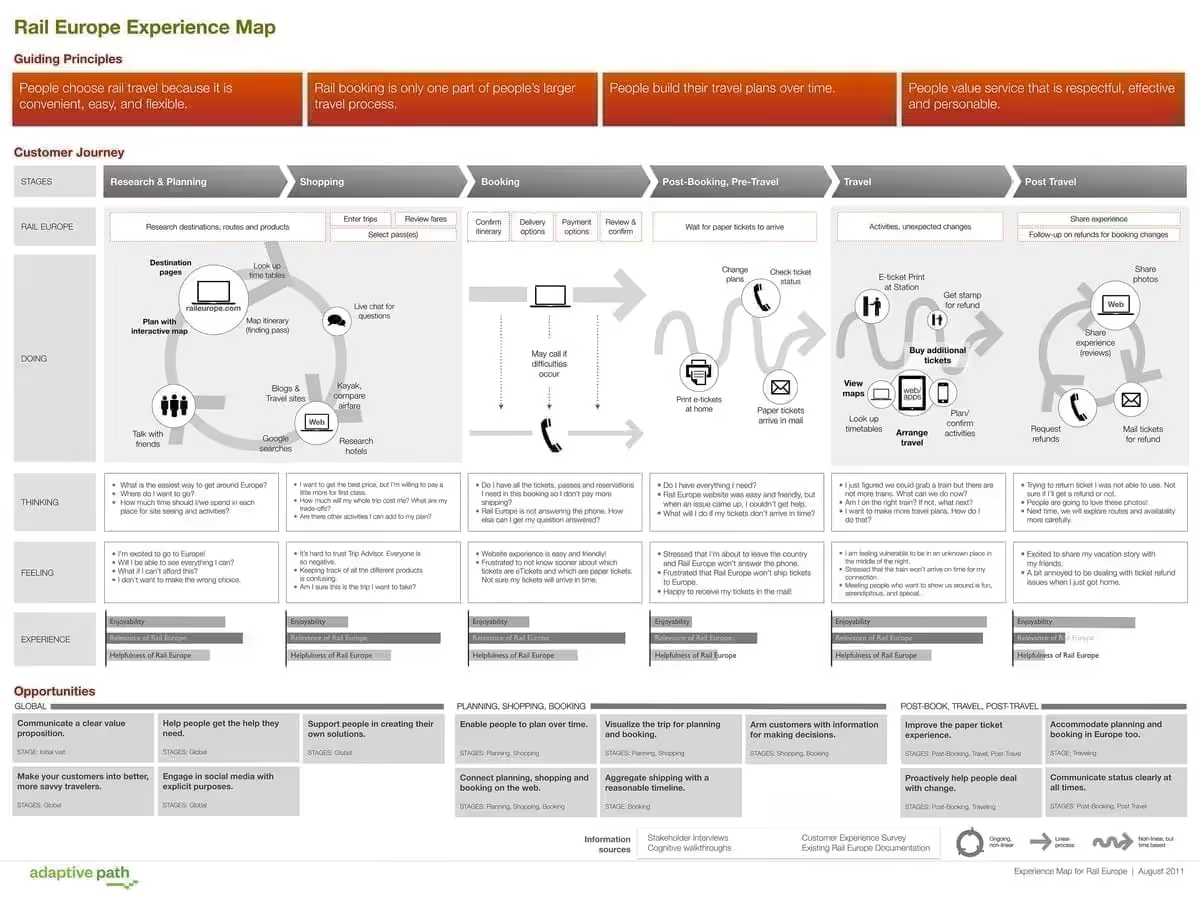 Rosenfeld Media from Brooklyn, USA, CC BY 2.0 https://creativecommons.org/licenses/by/2.0, via Wikimedia Commons
The Future of Marketing Fundamentals
The tools of marketing continually evolve, but the importance of these fundamentals remains constant. As I've seen when developing AI-driven solutions for my recent venture into social commerce, even cutting-edge technologies must serve these core principles to create real business value.
Marketing fundamentals aren't just academic concepts-they're practical tools that drive business results. I've seen this reality play out across diverse industries and markets throughout my career.
If you're looking to strengthen your marketing foundation or discuss how these principles might apply to your specific business challenges, I'd be delighted to connect and share more insights from my experience.
Common mistakes (marketing fundamentals)
| Mistake | Symptom | Fix |
|---|---|---|
| Scaling spend before message-market fit | High CAC, churn, brand confusion | Validate positioning with small tests first |
| Chasing every channel | Thin presence everywhere | Master one channel, then expand |
| Vanity metrics over revenue | Impressions without pipeline | Tie campaigns to cohort LTV and payback |
| Inconsistent brand story | Audience distrust | Document positioning and voice once |
| Ignoring retention | Leaky bucket growth | Invest in post-purchase and loyalty loops |
FAQ
What is the first marketing principle every founder should nail?
Clear who you serve and what outcome you deliver—before tactics.
How much should a startup spend on marketing?
Enough to learn, not enough to scale unproven messaging—often 5–15% of revenue early, context-dependent.
When is it time to hire vs outsource?
Hire when strategy is stable and execution volume is predictable; outsource for specialized bursts.
What metrics matter at the foundation stage?
Conversion rate, CAC payback, repeat rate, and qualitative customer feedback.
How does Marketing 101 differ from growth hacking?
Fundamentals prioritize durability and trust; hacks optimize short-term spikes without a base.
Weekly email with new posts on enterprise AI and how teams ship it.
One email per week. Unsubscribe anytime.