TL;DR
- Unlock the potential of AI and SEO integration to elevate your digital campaigns.
- Discover how combining these innovative strategies can enhance search engine rankings, personalize content, and automate tasks, driving substantial growth for your business.
Best Practices for Founders: Integrating Artificial Intelligence and SEO for Effective Digital Campaign Management As a founder and digital innovator, I’ve seen how artificial intelligence (AI) and SEO strategies are transforming digital campaign management. From enhancing search engine rankings to tailoring content strategies for a specific target audience, this combination has proven to be a game-changer. During my work with global brands like Shiseido and Estée Lauder, I’ve utilized AI to analyze user intent, automate repetitive tasks, and optimize campaigns for maximum ROI. In this post, I’ll dive into actionable insights and best practices for integrating AI and SEO to elevate your digital marketing strategies.
What is AI-assisted SEO for founders?
AI-assisted SEO for founders combines search fundamentals with generative tools for research, drafting, and optimization—without sacrificing accuracy, originality, or long-term authority.
Who it is for: founder-publishers, lean marketing teams, and startups building organic channels early.
What you will learn: practical AI+SEO workflows; quality gates that protect rankings; and how to scale content without spam signals.
Understanding the Role of Artificial Intelligence in SEO
Artificial intelligence is reshaping how we approach SEO by decoding user intent and improving search engine rankings. AI-powered tools like Google’s RankBrain and SEMrush utilize machine learning to provide deeper insights into search intent, helping content marketers craft strategies that resonate with their target audience.
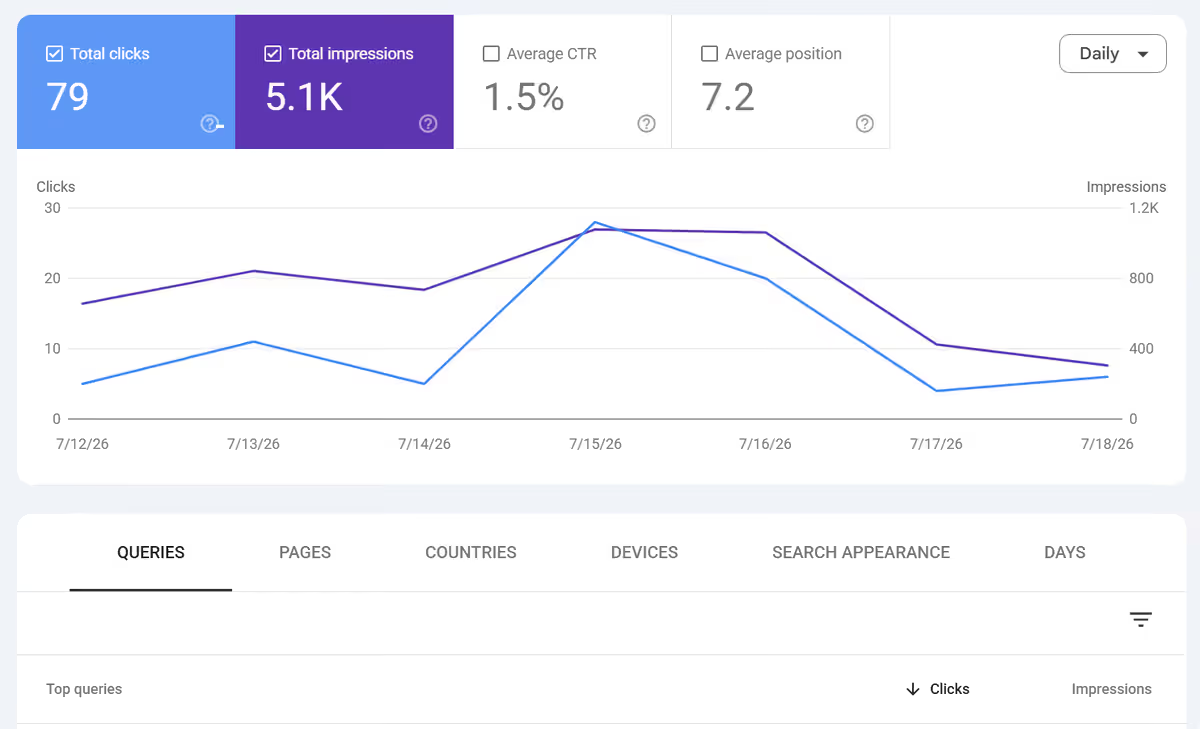 Screenshot: Google Search Central — Petralian (2026)
How AI Can Optimize SEO:
- Keyword Optimization: AI identifies relevant keywords with precision, allowing content marketers to target the right audience effectively.
- Search Intent Analysis: By understanding user intent, AI ensures your content aligns with the needs of your audience.
- Improved Rankings: Predictive analytics give insight into what drives search engine rankings, enabling smarter optimization strategies.
For example, while leading Shiseido’s SEO optimization, I used AI-driven keyword analysis to refine our approach. This led to significant improvements in organic traffic and ecommerce sales.
Leveraging Data Analytics for Campaign Insights
AI doesn’t just enhance SEO-it also empowers founders with actionable data analytics to make informed decisions. Predictive analytics tools can forecast campaign success, helping you allocate resources more effectively.
Key Metrics AI Can Help Analyze:
- Conversion rates across multiple channels.
- Engagement metrics like click-through rates (CTR) and user behavior trends.
- Performance of target keywords over time.
When I managed digital campaigns for Estée Lauder, AI tools provided real-time insights that helped us identify high-performing strategies and adapt campaigns dynamically.
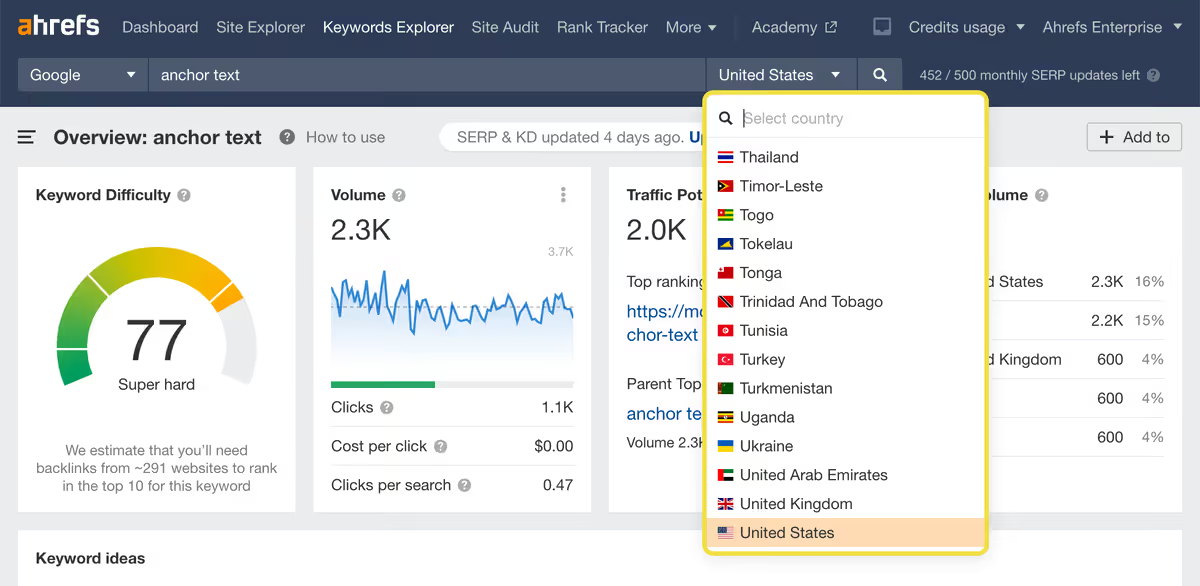 Screenshot: Ahrefs — Petralian (2026)
Personalizing User Experience with AI and SEO
AI-driven personalization is critical for building meaningful connections with your target audience. By analyzing user behavior, AI can help craft tailored content strategies that drive engagement and retention.
Best Practices for Personalization:
- Use AI to deliver dynamic, real-time content recommendations based on user intent.
- Tailor email campaigns and landing pages to align with audience preferences.
- Focus on creating SEO-friendly content enriched with target keywords for better visibility.
Dynamic content generation, powered by AI, not only boosts engagement but also increases customer loyalty.
Automating Routine Tasks with Artificial Intelligence
Automation is one of the most impactful benefits of integrating AI into digital campaign management. By handling repetitive tasks, AI allows you to focus on higher-level strategy and innovation.
Tasks AI Can Automate:
- Keyword research and meta-tag optimization.
- Performance tracking and reporting.
- Dynamic ad placements based on user behavior.
Tools like Ahrefs and Adobe Campaign automate these processes seamlessly, freeing up time for content marketers to focus on creative strategies.
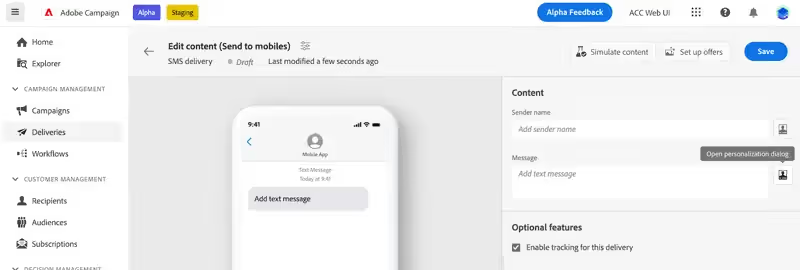 Screenshot: Adobe Campaign — Petralian (2026)
Enhancing Content Strategies with AI
Creating high-quality, SEO-friendly content is easier with the help of AI. Natural language processing (NLP) tools like Clearscope analyze search intent and provide real-time recommendations for content optimization.
Tips for Content Optimization:
- Use AI to analyze competitors’ strategies and refine your relevant keywords.
- Optimize content in real time to align with changing search trends.
- Incorporate target keywords naturally to boost search engine rankings.
AI not only enhances the quality of your content but also ensures it aligns with the needs and preferences of your target audience.
Ensuring Ethical Use of AI in Digital Marketing
While AI offers immense potential, ethical considerations must remain a priority. Transparency, accountability, and data privacy are critical for maintaining trust.
Guidelines for Ethical AI Usage:
- Ensure compliance with data protection regulations like GDPR.
- Maintain human oversight to ensure content aligns with brand values.
- Regularly audit AI tools to mitigate algorithmic biases.
Ethical AI usage builds credibility and ensures sustainable, long-term success for your brand.
Conclusion
The integration of artificial intelligence and SEO is revolutionizing digital campaign management. From understanding user intent to automating tasks and optimizing content strategies, AI empowers founders and content marketers to create campaigns that engage and convert. By adopting these best practices and focusing on ethical AI implementation, you can stay ahead of the curve and drive meaningful results.
If you’re ready to explore how AI and SEO can transform your campaigns, feel free to contact me-I’d love to collaborate and share more insights tailored to your business.
Relevant links:
Myth vs reality (AI marketing)
| Myth | Reality |
|---|---|
| "AI lets founders 10x SEO overnight" | Volume without expertise rarely sustains rankings |
| "Founders should ignore SEO for product-led growth" | Organic trust compounds—especially in crowded categories |
| "More pages always equals more traffic" | Quality clusters beat content farms |
| "AI research replaces customer interviews" | It accelerates synthesis; it does not replace voice-of-customer |
| "SEO and brand building conflict" | Search-visible expertise is brand building for founders |
Common mistakes (founders + AI + SEO)
| Mistake | Symptom | Fix |
|---|---|---|
| Publishing unedited AI drafts | Thin content penalties | Human edit for expertise and examples |
| No topical strategy | Random posts, no authority | Build clusters around core problems |
| Skipping technical basics | Crawl errors undermine content | Fix sitemap, speed, and mobile first |
| Keyword tools without customer language | Misaligned titles | Mine sales calls and support for phrases |
| Neglecting internal links | Orphan pages never rank | Link hubs to supporting articles |
FAQ
What is the minimum viable SEO stack for a founder?
Clear positioning, fast site, indexable structure, one topic cluster, and analytics on conversions—not just traffic.
Where should AI help first?
Research summaries, outline drafts, meta variants, and FAQ expansion—under human review.
How often should founders publish?
Consistency beats bursts; one strong piece monthly beats four thin weekly posts.
When to hire SEO help?
When technical debt, localization, or competitive clusters exceed founder bandwidth.
How do I avoid Google helpful-content issues?
Show first-hand experience, cite sources, and delete or merge weak pages.
Weekly email with new posts on enterprise AI and how teams ship it.
One email per week. Unsubscribe anytime.