Benchmark cluster: Open models on CursorBench 3.2 · Fable 5 vs Composer cost vs score · When to escalate to Fable 5
Grok 4.5 for Cursor knowledge work
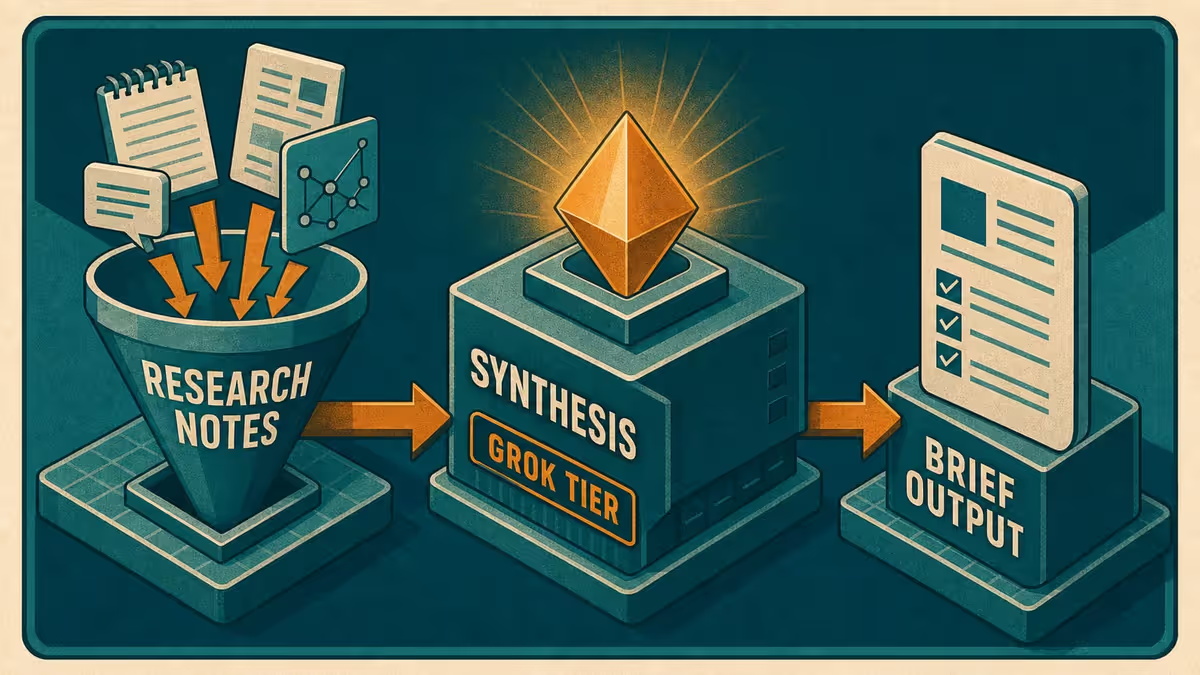
Grok 4.5 is xAI's model family available in Cursor with multiple reasoning tiers. On CursorBench 3.2 it posts strong agent scores at higher cost than Composer 2.5. For knowledge work — synthesis, briefs, research consolidation, stakeholder narrative — that profile can justify selective escalation.
This post is not another benchmark table. The numbers live in the cluster posts above.
Who it is for: Anyone choosing models for mixed weeks where files matter as much as code — writing, planning, research, and directed implementation in the same Cursor workspace.
What you will learn: which knowledge-work jobs benefit from Grok 4.5, which jobs should stay on Composer, how cost discipline applies outside coding, and a three-question escalation test before you switch defaults.
Why knowledge work is a different picker problem
Coding sessions punish wrong edits. Knowledge work punishes weak synthesis: vague recommendations, duplicated sections, confident summaries that do not match source files.
Composer 2.5 is my default for tight agent loops with files because cost and steps stay predictable (cost vs score hub). Grok 4.5 enters when the task is judgment across many inputs and the output must read like a decision memo, not a chat reply.
The CursorBench row matters as budget signal, not as bragging rights. Grok tiers run roughly 3x Composer cost per task in the 3.2 battery (see the open-models post for exact figures and the training-data disclaimer on Grok).
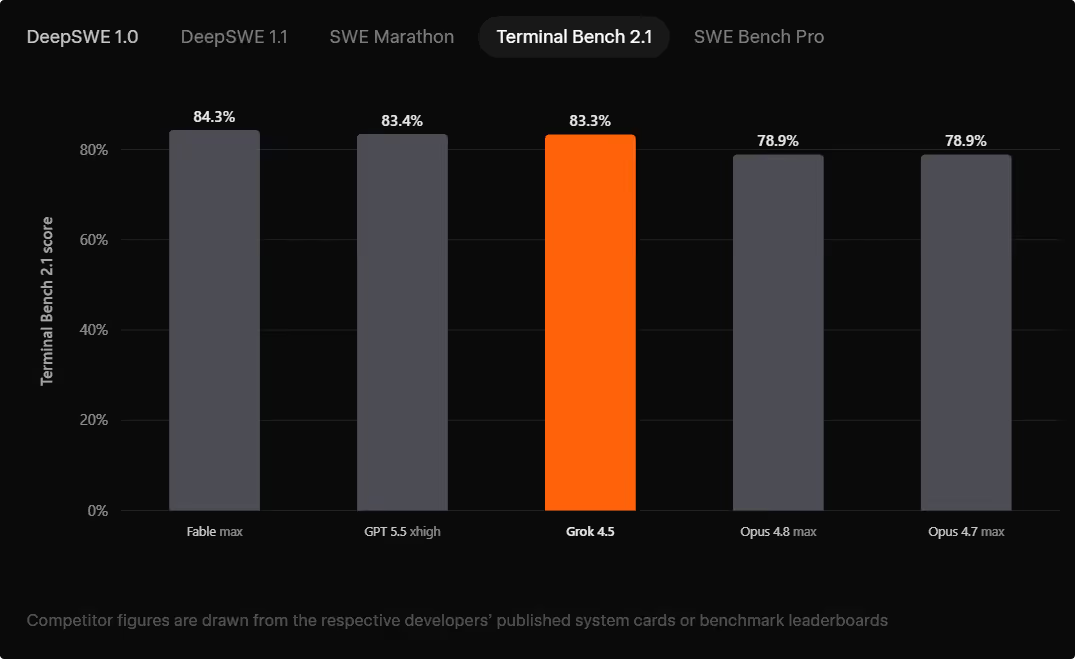 Screenshot: xAI Grok 4.5 — Petralian (2026); Grok is actually quite clever…
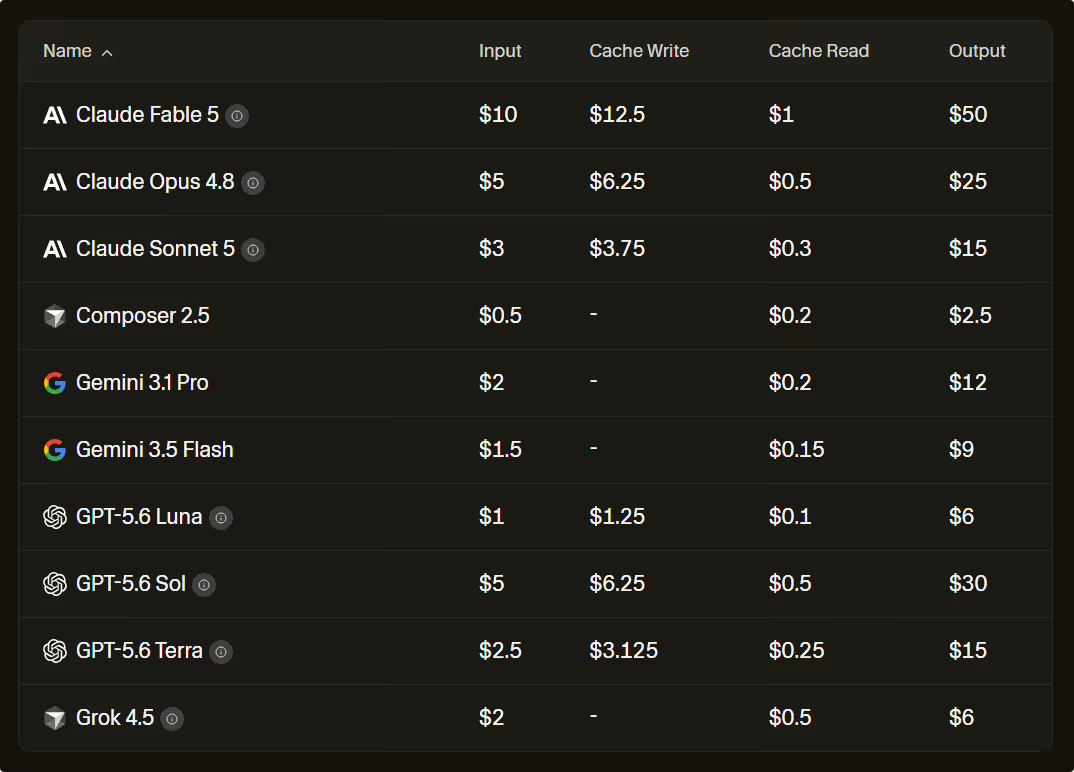 Screenshot: Cursor models and pricing — Petralian (2026); …and 5× cheaper as Fable 5
Jobs where I escalate to Grok 4.5
| Work type | Why escalation helps | Stay on Composer when |
|---|---|---|
| Multi-source synthesis | Holds thread across PDFs, notes, prior decisions | Single file edit with clear diff |
| Executive brief / board narrative | Tone and structure need one coherent arc | Bullet list for internal scratch |
| Research consolidation | Merges contradictions explicitly | Fetch one fact or definition |
| Strategy option memos | Compares tradeoffs with labeled uncertainty | Template fill with known fields |
| Long-form editorial pass | Catches drift against voice rules in big drafts | Paragraph-level tweak |
I direct the agent to read curated files first — same harness as Is Cursor only for developers?. Grok does not remove the need for Bridge and SSOT. It reduces weak merging when inputs are messy.
Jobs where Grok is the wrong default
| Work type | Better default | Reason |
|---|---|---|
| Repo edits and shipping | Composer 2.5 | Cost, steps, predictable tool loop |
| Harness wiring, hooks, configs | Composer or hands-on session | Frequent small turns |
| Escalation already on Fable 5 policy | Follow Fable escalation post | Premium tier for hardest coding |
| Exploratory brainstorm | Cheaper/fast tier | Outcome is options, not final prose |
Model policy is mode policy. My blogging mode and client brief mode can justify Grok. My shipping mode does not.
Example implementation — how I run it
I keep Composer as workspace default. I switch to Grok 4.5 for named modes: "consolidate these three research files into a two-page decision memo" or "editorial pass on this draft against the writing guide."
Before escalation I check:
- Inputs curated? If not, Grok will sound confident on garbage.
- Output type fixed? Memo, brief, table, outline — not "make it better."
- One-shot or iterative? One-shot synthesis fits Grok; twelve micro-edits fit Composer.
I review outputs like a program lead reviews a contractor deliverable: structure, citations to files, explicit unknowns. Vibe coding applies to prose too — I direct and accept; I do not claim I drafted every sentence by hand.
Cost discipline without spreadsheet obsession
You do not need a daily model spreadsheet. You need triggers:
- Escalate when synthesis quality blocked a decision last time.
- De-escalate when Grok produced pretty prose that ignored Bridge.
- Log one line in Bridge:
Model: Grok pass for memo v2so next session does not assume Composer voice.
For team governance, pair this with best model by task and your own spend caps. Benchmark posts supply numbers; your calendar supplies urgency.
Limitations
Grok's CursorBench advantage may include training-data overlap with Cursor codebases (see evals disclaimer). Treat coding scores as directional.
 Screenshot: Cursor evals — Petralian (2026)
Knowledge work quality still erodes without file discipline. No model fixes missing Bridge.
Regional availability and tier names change. Re-check Cursor's model picker quarterly.
Path A: escalation without Grok
In any chat tool:
- Paste only curated excerpts, not whole drives.
- Ask for output format first:
## Decision,## Options,## Recommendation,## Unknowns. - Run a second cheap pass: "List every claim not grounded in the pasted text."
You simulate synthesis discipline without premium spend.
What to try next
Pick one messy folder of notes. Run Composer consolidation. If the result blurs contradictions, rerun as a one-shot Grok pass with the same files and a fixed memo template. Compare decision usefulness, not eloquence.
For numbers, read open models on CursorBench 3.2. For coding escalation, read Fable vs Composer.
Related reading
Weekly email with new posts on enterprise AI and how teams ship it.
One email per week. Unsubscribe anytime.