Enterprise AI

28 articles on Enterprise AI — programs, tooling, and delivery on Petralian.

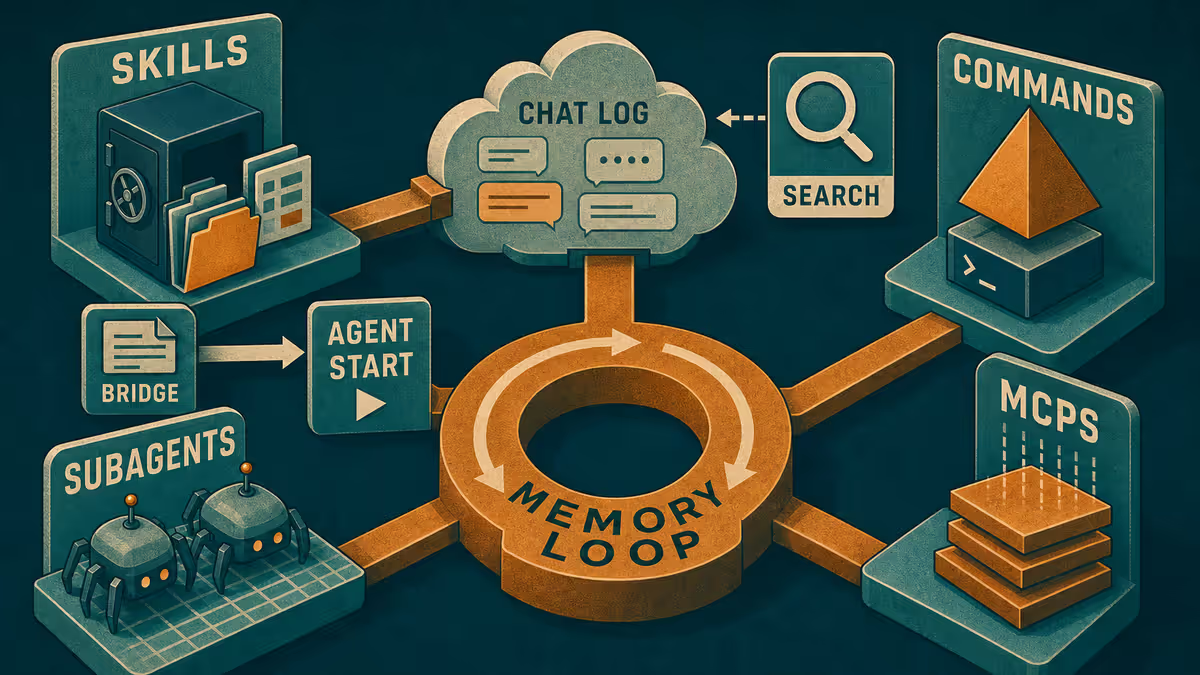
Steel filing vault with one drawer open showing glowing data cards instead of software logos.
Hybrid

The CDP Your Agents Need Is a Folder Contract

Best forMarketing and program leads running agent pilots who need governed customer context without buying another CDP seat

Composable martech plus a folder contract: governed customer-context paths for agents—when CDP, lake, or hybrid stacks fit, and best practice for commerce and marketing.

Continue reading →
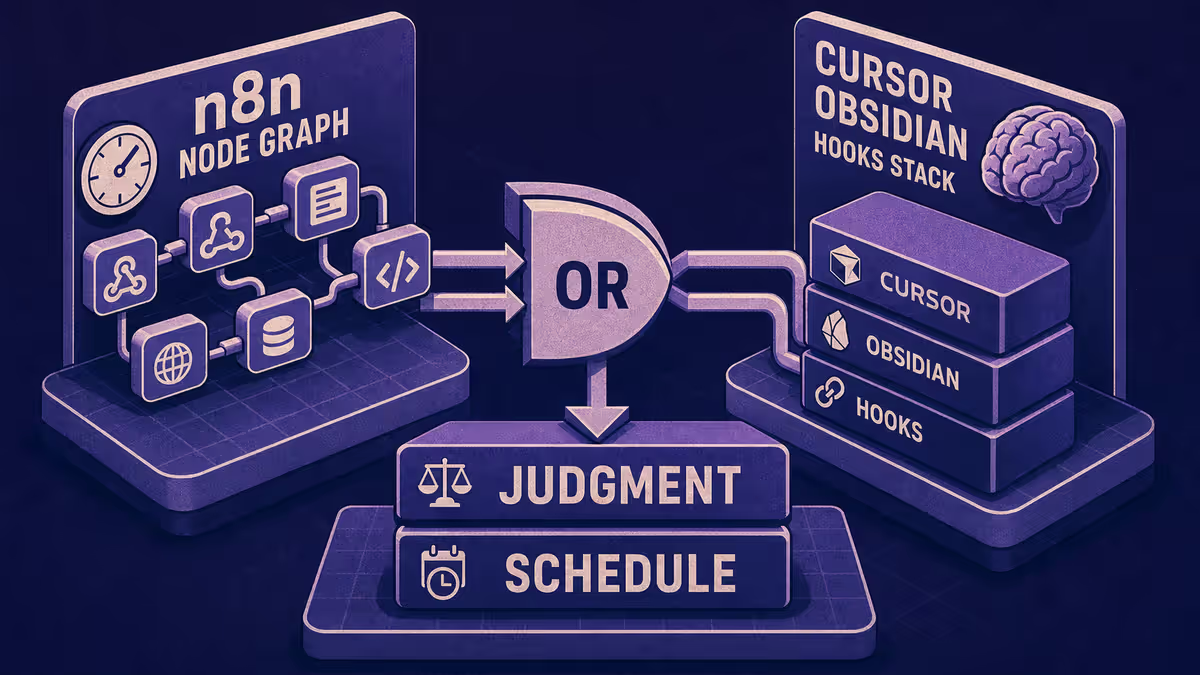
Industrial conveyor belts move scheduled packets while a lit desk handles one open folder for judgment work.
Hybrid

n8n vs My Cursor and Obsidian System: Scheduled Automation vs Judgment Work

Best forOperators comparing n8n to a Cursor plus Obsidian harness who need a clear line between scheduled integrations and file-grounded agent judgment

I retired n8n last year for AI-coded microservices on petralian.com. Cursor plus Obsidian still owns judgment work. Here is when each layer wins.

Continue reading →

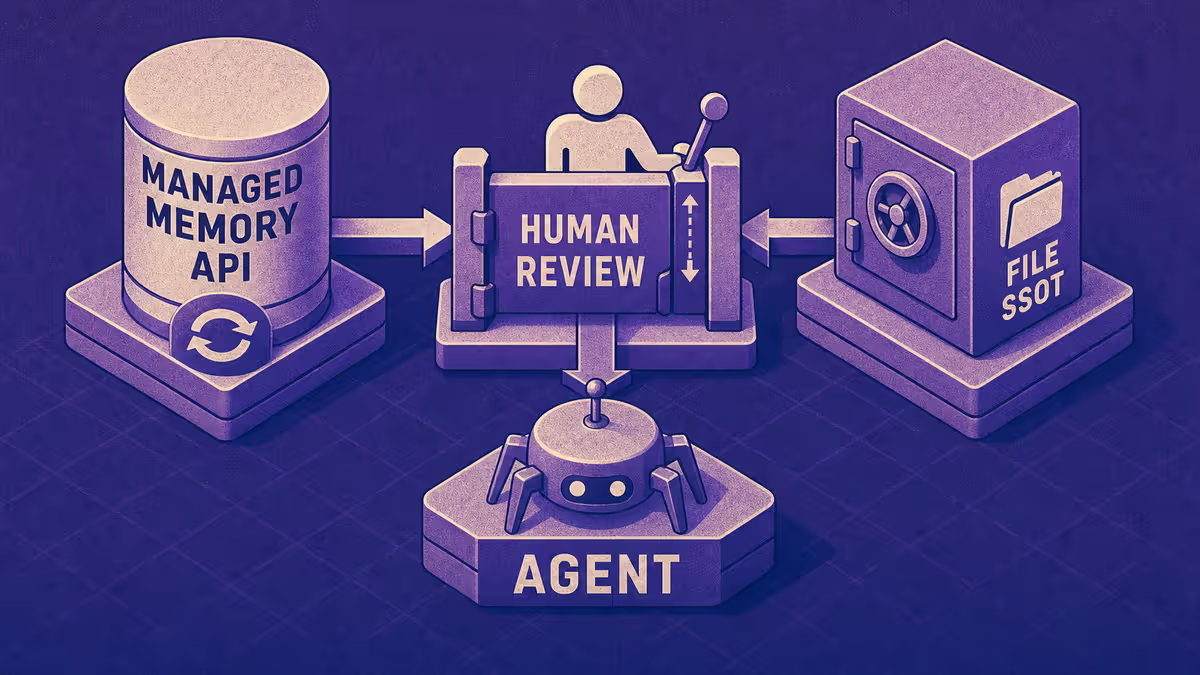
Automatic memory carousel beside open wooden drawers of markdown files connected by a beam of light.
Hybrid

Managed Agent Memory vs Files You Control: A Strategic Hybrid

Best forAnyone evaluating Mem0 or similar managed memory who also keeps Obsidian or git markdown and wants a clear hybrid rule instead of vendor lock-in

Mem0 and managed memory layers promise automatic recall. File harnesses promise portability. I use both lanes deliberately — not as a single winner.

Continue reading →

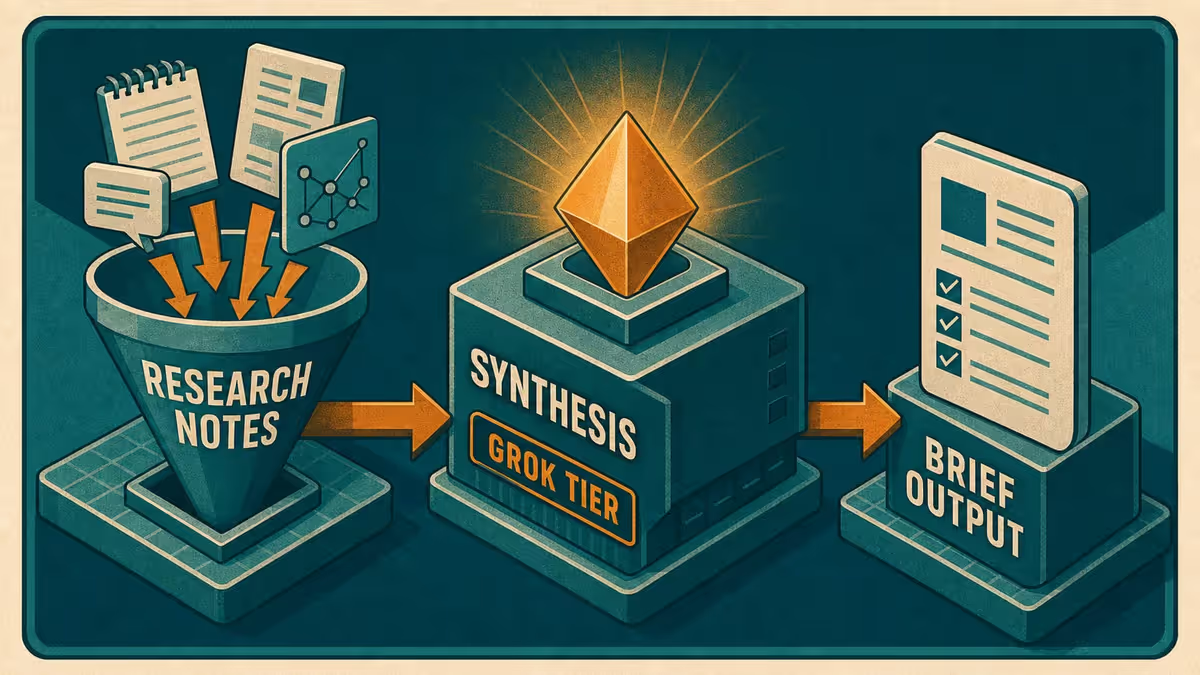
Research papers on a desk morphing into a single clean brief stack under a desk lamp.
Hybrid

Grok 4.5 in Cursor for Knowledge Work: Beyond the Benchmark Row

Best forAnyone who read Grok 4.5 CursorBench numbers and wants a practical rule for knowledge work, briefs, and synthesis without changing every default

Grok 4.5 scores high on CursorBench agent tasks. I use it for synthesis, briefs, and research passes — not as a default for every repo edit. Here is the decision frame.

Continue reading →
Cinematic 16:9: two translucent control panels floating over a laptop, upper panel cloud-lit cyan, lower panel warm copper desk reflection, cables meet at a ...
Hybrid

Cursor Cloud Agent Hooks vs Local Hooks: Two Layers of the Same Harness

Best forOperators wiring Cursor Customize who need a clear split between cloud-side agent hooks and local IDE hooks without turning the repo into a microservice

Cloud agent hooks (beforeSubmitPrompt, afterAgentThought, subagentStart) run on Cursor's side. Local hooks (sessionStart, afterAgentResponse) run on your machine. Here is how I use both.

Continue reading →

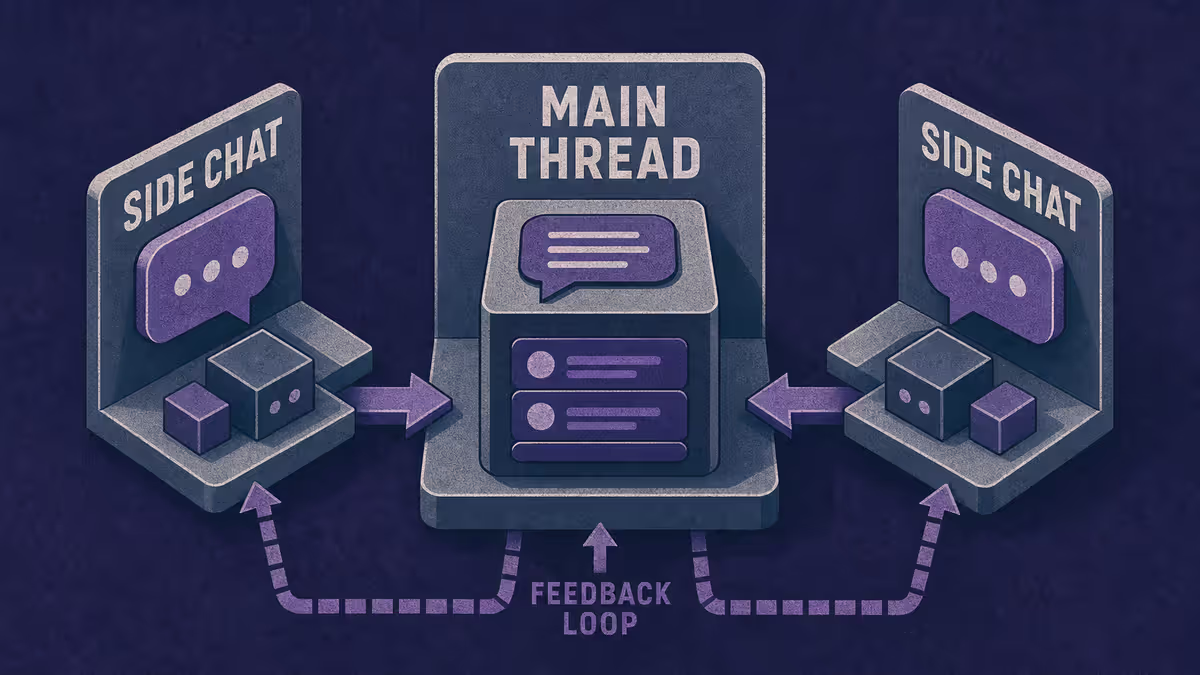
Main conversation path on a desk with two thinner side channels branching off like tributaries.
Hybrid

Cursor Side Chats and Parallel Threads: How I Split Work Without Losing the Main Line

Best forAnyone running long Cursor agent sessions who needs quick tangents without losing the main task or re-explaining context on mobile

Cursor 3.11 side chats (/side, /btw) let you branch questions without polluting the main thread. Here is how I pair them with parallel agents and mobile handoff.

Continue reading →

Cinematic 16:9: two chairs at a wooden table with a single shared binder open between them, soft afternoon window light, sense of alignment not sales theater...
Hybrid

Cursor Customize for Business Development: Questionnaire to Plan SSOT

Best forFounders, consultants, and operators who need AI-assisted proposals and plans that stay consistent across collaborators and drafts

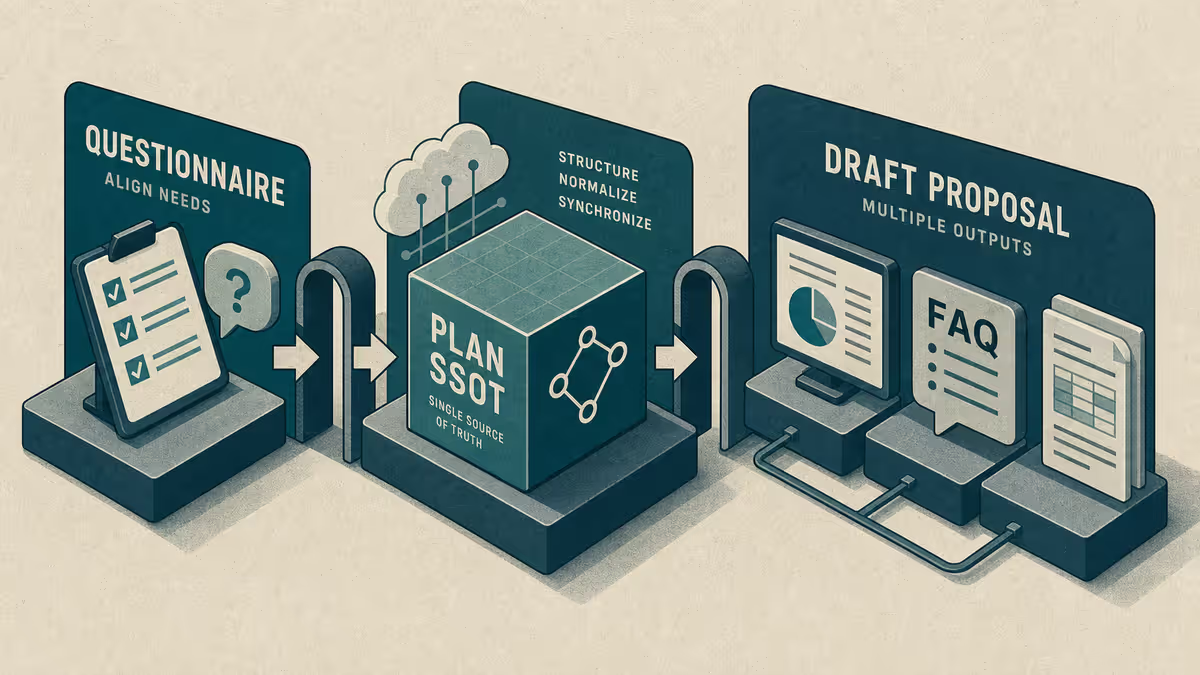
For consulting and BD work, a shared questionnaire becomes the single source of truth for the business plan - so Cursor drafts stay consistent instead of inventing a new strategy every chat.

Continue reading →

Four workshop trays on a concrete bench under colored gel lights, each suggesting a different work mode, editorial still life, no logos or readable text.
Hybrid

Best Cursor Model by Work Mode (2026): Analysis, Review, Execution, Greenfield

Best forAnyone choosing Cursor model defaults by work mode who wants cost-aware picks from public benchmarks

CursorBench 3.2 reports one score per model, but agent work varies by risk and scope. Here is a work-mode default map for anyone choosing Cursor models — with cost, tokens, and steps from the public table.

Continue reading →
Green pedestrian signal beside a taller red emergency beacon on a concrete wall at dusk, shallow depth of field, no logos or readable text.
Hybrid

When to Escalate from Composer 2.5 to Fable 5: A Decision Tree

Best forAnyone governing Cursor model spend who needs escalation triggers before premium tiers become default

Composer 2.5 is the CursorBench budget default. Fable 5 tiers buy peak score at higher cost. Use this decision tree to escalate only when failure cost justifies the line item — for solo work or team policy.

Continue reading →

Five nested brass rings on dark slate with coin stacks beside each ring, macro editorial still life, amber keylight, no logos or readable text.
Hybrid

Fable 5 Pricing on Cursor: Every Tier Explained (Max to Low)

Best forAnyone approving Cursor AI spend who needs Fable tier unit economics before picking a default

Fable 5 ships as five effort tiers on Cursor. CursorBench 3.2 shows how score, cost, tokens, and steps change from Max to Low — for anyone approving model spend, not pickers chasing rank.

Continue reading →
Three seedlings sprouting from cracked concrete under distinct colored light filters, morning mist, macro editorial, no logos or readable text.
Hybrid

Open Models on CursorBench 3.2: Grok 4.5, GLM 5.2, Kimi K2.7, and LongCat

Best forAnyone comparing open-model vendor claims to Cursor session economics before changing defaults

Open-model launch posts cite SWE-bench; CursorBench cites session cost. Here is how to read Grok, GLM, Kimi, and LongCat for buying decisions — not picker hype alone.

Continue reading →
Three measuring instruments on a steel table in cool side light, suggesting different benchmark types, shallow depth of field, no logos or readable scales.
Strategic

CursorBench vs SWE-bench vs HumanEval: What Each Benchmark Actually Tests

Best forAnyone reading vendor AI benchmarks who needs to know what each score actually measures

Vendor AI scorecards mix incompatible benchmarks. Here is what CursorBench, SWE-bench, and HumanEval each measure — and how to read tables without picking the wrong default for your work.

Continue reading →

Desk with one labeled Obsidian notebook feeding multiple project folders on a laptop screen, warm editorial lighting, no logos or readable text.
Hybrid

How I Run Cursor With One Obsidian Brain Across Many Projects

Best forAnyone running Cursor across multiple contexts who wants one external memory system without rebuilding rules per folder

I stopped copying AI rules into every engagement. One Brain vault, native file reads, hooks, and a sync script align personal site, Shopify app, job applications, and client work — one memory system for program delivery.

Continue reading →
Git tag label beside a deploy pipeline diagram on a drafting table, warm desk lamp, editorial still life, no logos or readable text.
Hybrid

Deploy Without a Git Tag and You Cannot Roll Back Cleanly

Best forAnyone governing agent-assisted releases who needs traceable promote-and-rollback, not just faster commits

Agent-assisted delivery fails governance when production has no release handle. Tag or record the commit at promote time, reject dirty-tree releases, keep rollback traceable.

Continue reading →
Cinematic 16:9 low-angle of a single chair at a round table, three empty
Strategic

Leadership and Decisions With an AI Session Engine (Purpose, Dissent, and Audit Trails)

Best forExecutives making the leadership calls that determine whether agent programs scale

Simon Sinek's Why-How-What, Drucker's decision discipline, and RACI meet applied AI. Leaders keep accountability; the file-based engine holds purpose, dissent, and decision records agents need at session start.

Continue reading →
Cinematic 16:9 overhead of a kanban board made of paper cards on a concrete
Hybrid

Project Management With a File-Based Agent Engine

Best forProgram and delivery leads running projects where agents are part of the team

Agile, Scrum, Jira, and Confluence already own execution and narrative. This playbook shows where a file-based agent engine fits—iron triangle tradeoffs, RAG, RACI, RAID, and applied AI without pretending chat is a program office.

Continue reading →
Cinematic 16:9: a single Composer pane on a workbench surrounded by
Hands-on

You Already Have an AI Harness in Cursor

Best forPractice leads governing Cursor Agent with harness discipline without microservice overhead

Terminal-Bench harnesses look like separate products. On a production Shopify app I already had subagents, CI gates, and session rules. You keep model and mode control — the harness supports routing, tests, and memory gates, not autopilot.

Continue reading →
Cinematic 16:9 wide shot of a conductor podium facing an orchestra pit
Hybrid

What I Learned Directing AI as My Primary Engineer

Best forPractice leads directing AI as primary implementer at program scale

When the agent writes most of the code, the job shifts from typing to operating-system design: rules, file memory, session handoffs, and gates before deploy. Lessons from running that model on production repos.

Continue reading →
Cinematic 16:9 macro photograph: scatter-plot points carved as glowing
Hybrid

CursorBench 3.2: Fable 5 Tops the Chart, but Composer 2.5 Wins the Budget

Best forPractice leads and commercial operators setting Cursor AI model policy using CursorBench unit economics

Fable 5 Max leads CursorBench 3.2 at 70.5%, but at 17 USD per task and 72 steps. Grok 4.5 High scores 66.7% at 1.51 USD. Composer 2.5 still wins score per dollar at 56.1% and 0.44 USD.

Continue reading →
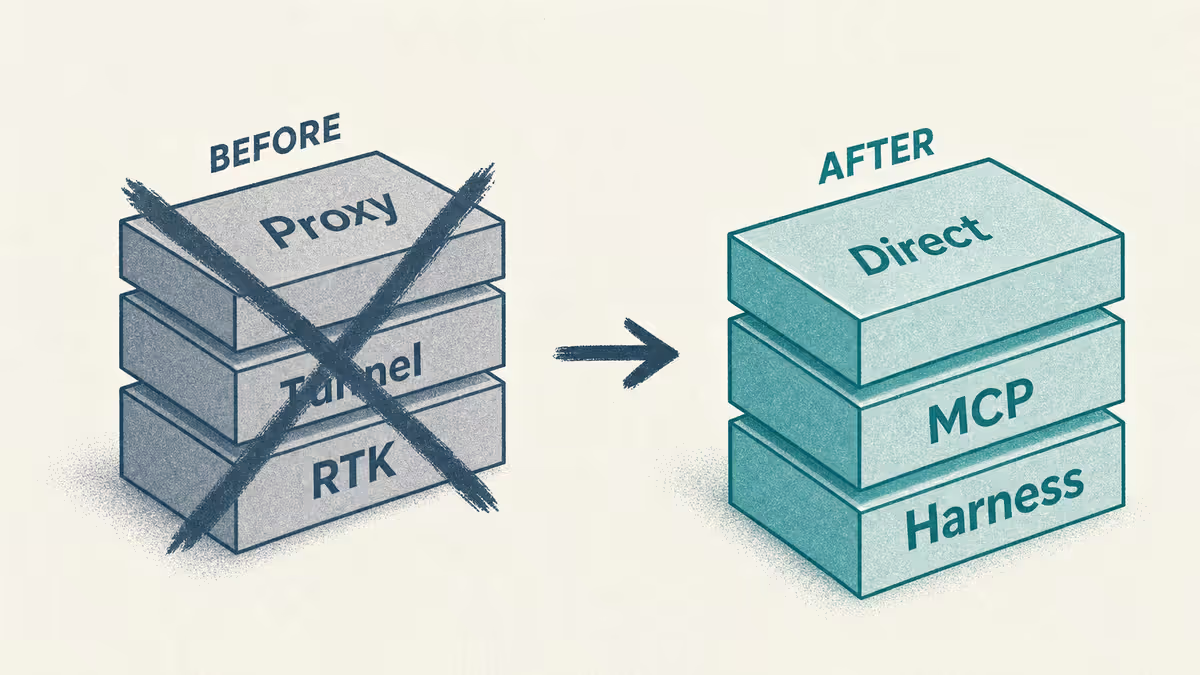
Cinematic 16:9: workbench with crossed-out proxy diagram, active OpenRouter
Hands-on

Beyond Headroom: What I Tried to Save Cursor Tokens, What Failed, and What I Use Now

Best forProgram leads optimizing Cursor token spend and context discipline without proxy middleware

I ran Headroom, built a 300-line proxy, wired a Cloudflare tunnel, and added RTK. On my Cursor + OpenRouter workload the dollars did not move. Here is what is worth doing instead.

Continue reading →
Cinematic 16:9 low-angle shot: two translucent IDE panes floating in
Hands-on

From VS Code Copilot to Cursor: What Changed in My AI Workflow

Best forPractice leads comparing Copilot and Cursor for governed agent workflows

Copilot had the same footer spec but dropped it on long chats. Cursor keeps it with alwaysApply rules, optional hooks, and a v3.1 mode-based Response Footer Contract.

Continue reading →
Isometric cutaway of three enterprise AI foundation layers—data, governance, and change—with a deploy capsule waiting above a hold line
Strategic

Getting Enterprise AI Right: The Work That Comes Before Deployment

Best forLeaders and program owners steering enterprise AI before go-live pressure wins

Enterprise AI programs that last share one pattern: data readiness, named governance owners, and change runway are gates before go-live—not parallel work you finish after the demo.

Continue reading →
Editorial 16:9 hero for enterprise AI readiness: architectural blueprint
Strategic

Why Your AI Program May Fail Before It Starts

Best forLeaders running a fast pre-flight check before an enterprise AI program launches

Most enterprise AI programs struggle before the model fails. Data, governance owners, and change runway get compressed. A pre-flight diagnostic before the next funding gate.

Continue reading →
Minimal developer workspace with a single model selector pinned to one
Hands-on

Composer 2.5 as My Only Coding Model: Cost, Predictability, and a Tighter Bootstrap

Best forPractice leads standardizing Cursor model policy and tighter agent bootstrap

I run Cursor on Composer 2.5 only—not to save money alone, but to get predictable rule compliance. A tighter session bootstrap beat chasing frontier models for my workflow.

Continue reading →
Hero illustration for Your Brain Was Not Built for This: Why I Built a Second One in Obsidian
Hybrid

Your Brain Was Not Built for This: Why I Built a Second One in Obsidian

Best forKnowledge workers overwhelmed by context who want a second brain without hype

Why leadership and knowledge work need an Obsidian second brain—plain Markdown, linking, and AI-ready files—not another app that traps what you already know.

Continue reading →
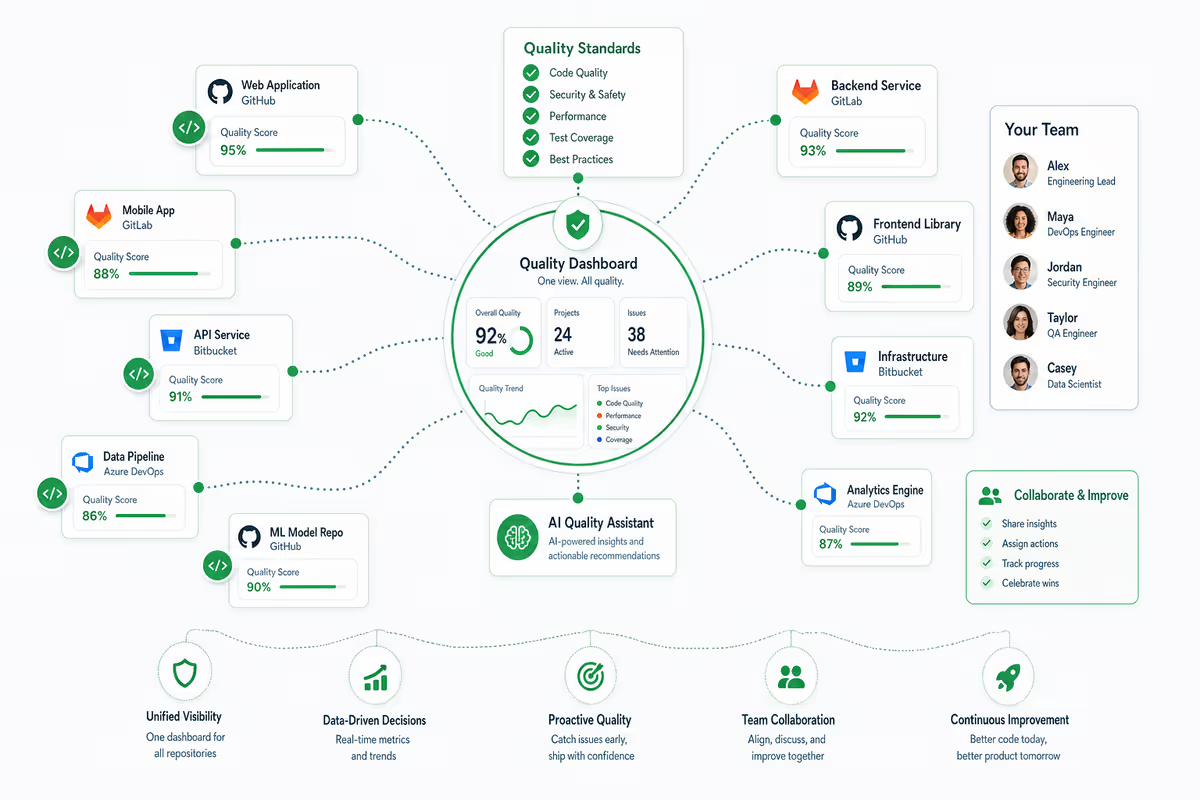
A network map of many software repositories connected to one quality
Hybrid

Team Playbook: Rolling Out Gravio Across Multiple Repositories

Best forPlatform and engineering leads rolling AI quality scoring across multiple repos

A practical rollout framework for introducing Gravio across many repos without creating process fatigue, policy confusion, or noisy quality signals.

Continue reading →
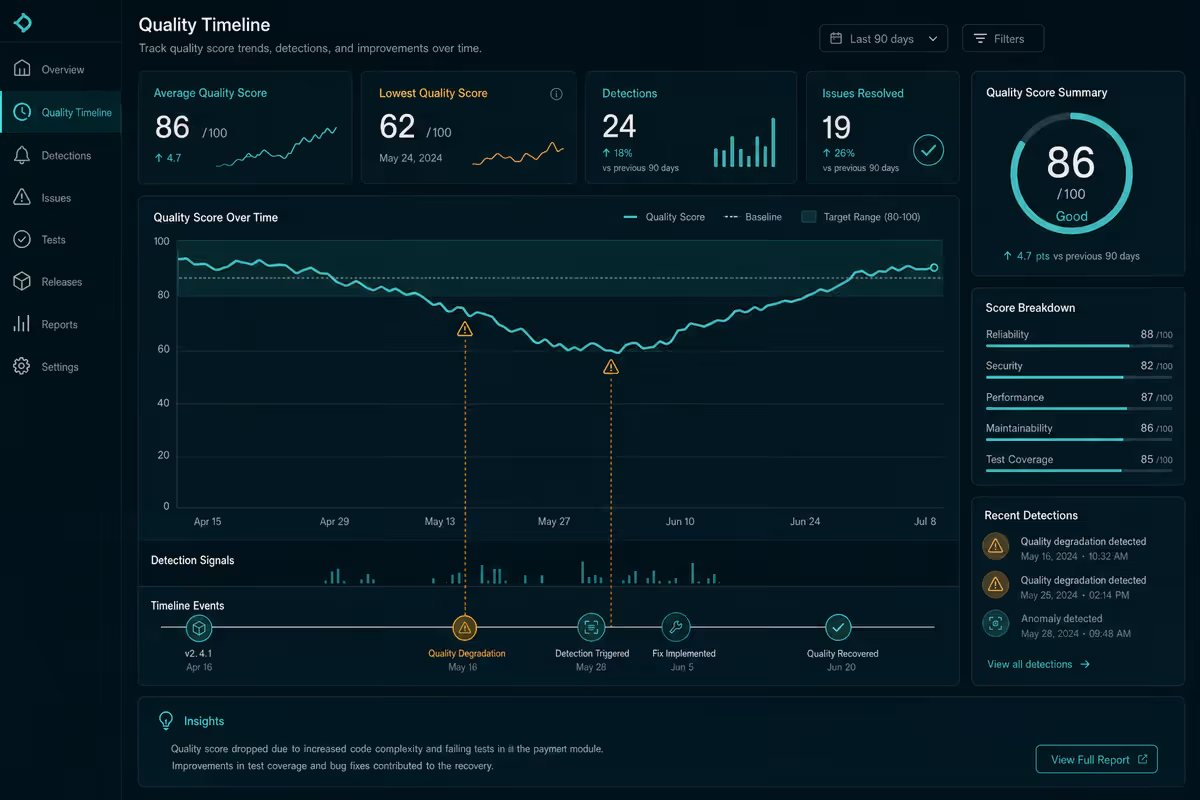
A timeline dashboard with quality score trend lines bending downward
Hybrid

Why AI Agent Output Quality Drifts Over Time (And How to Catch It Early)

Best forTeams running agent workflows who need a practical quality signal before drift becomes production risk

Your AI outputs can look great this month and degrade next month without obvious failures. Here is why drift happens and how to detect it before it reaches production.

Continue reading →
Hero illustration for Redefining the Career Ladder: How AI Sidelines Entry-Level Learning in APAC
Strategic

Redefining the Career Ladder: How AI Sidelines Entry-Level Learning in APAC

Best forAPAC leaders thinking about talent pipelines when AI changes junior work

TL;DR What Redefining the Career Ladder: How AI Sidelines Entry-Level Learning in APAC covers. Who it is for and when to use it. Practical next steps after…

Continue reading →