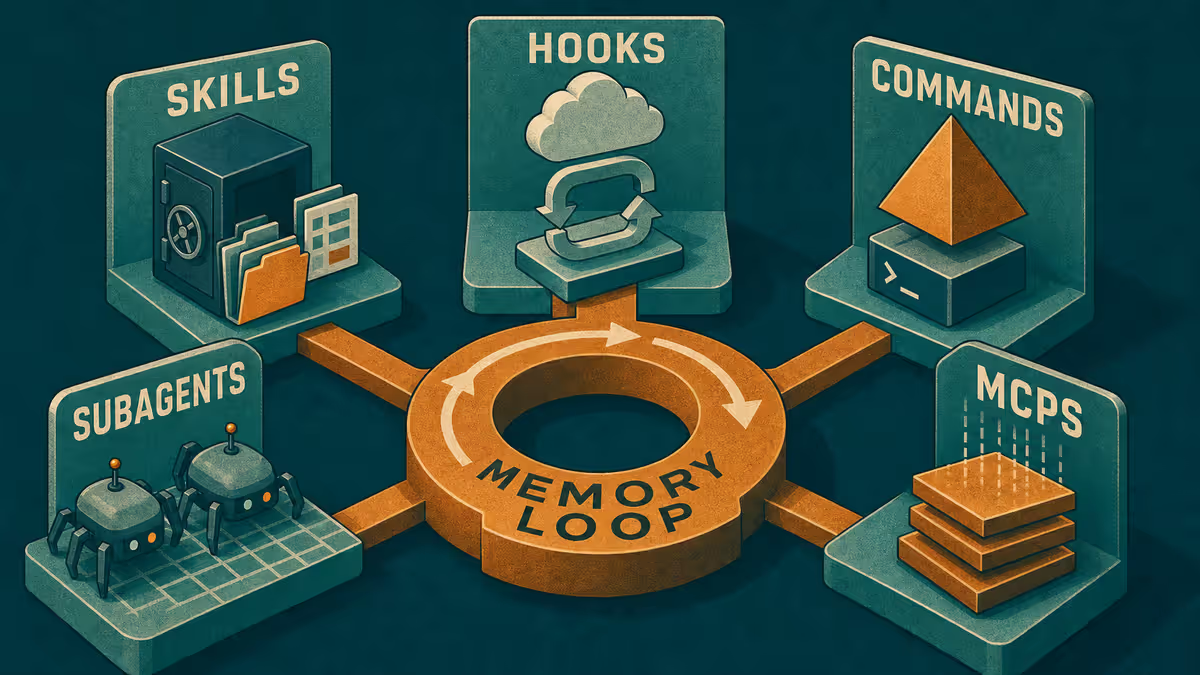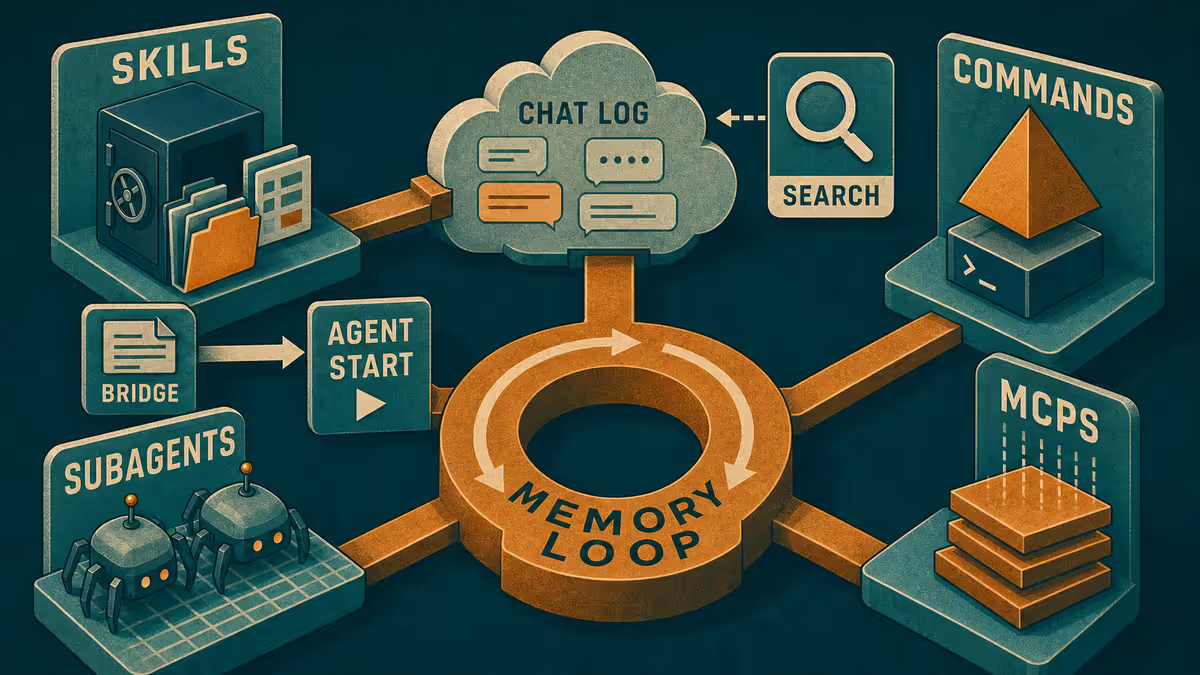
Harness cluster: Lightweight harness · Skills, hooks, orchestration · Memory loop
Cursor cloud hooks vs local hooks
Cursor cloud agent hooks fire around cloud-hosted agent runs: before a prompt is submitted, after an agent thought, when a subagent starts. Local hooks fire in your IDE lifecycle: session start, after an agent response, before file edits in some setups.
Both are Customize harness mechanics. They run at different trust boundaries.
Who it is for: Anyone adding hooks to a Cursor workspace who needs a plain map of which events belong in the cloud layer versus the local machine layer.
What you will learn: a job table for common hook events, how cloud and local hooks compose, what belongs in each layer, and guardrails so hooks stay mechanical rather than strategic.
The problem hooks solve
Agents skip steps when tired humans skip steps. The same close-out gets missed: update Bridge, check draft folder, validate response shape, confirm parallel routing fired.
Hooks are mechanical reminders at event boundaries. They are not a place to hide business strategy. Strategy lives in SSOT files and human approval.
Without a split mental model, teams either over-wire local scripts for cloud-only events or expect cloud hooks to reach private files they cannot see. Both patterns weaken the harness.
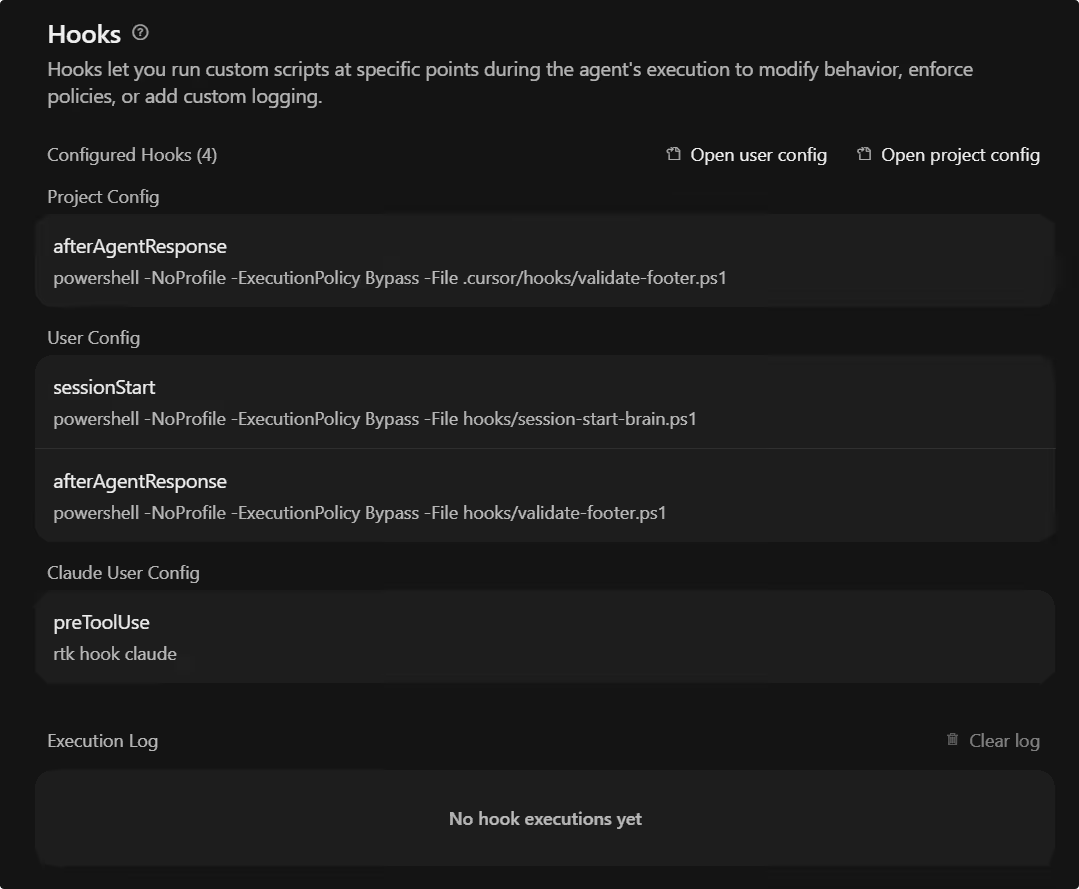 Screenshot: Petralian / Cursor (2026)
Two layers, one harness
| Layer | Runs where | Typical events | Good for |
|---|---|---|---|
| Cloud agent hooks | Cursor cloud agent runtime | beforeSubmitPrompt, afterAgentThought, subagentStart | Prompt hygiene, subagent policy, cloud-side telemetry |
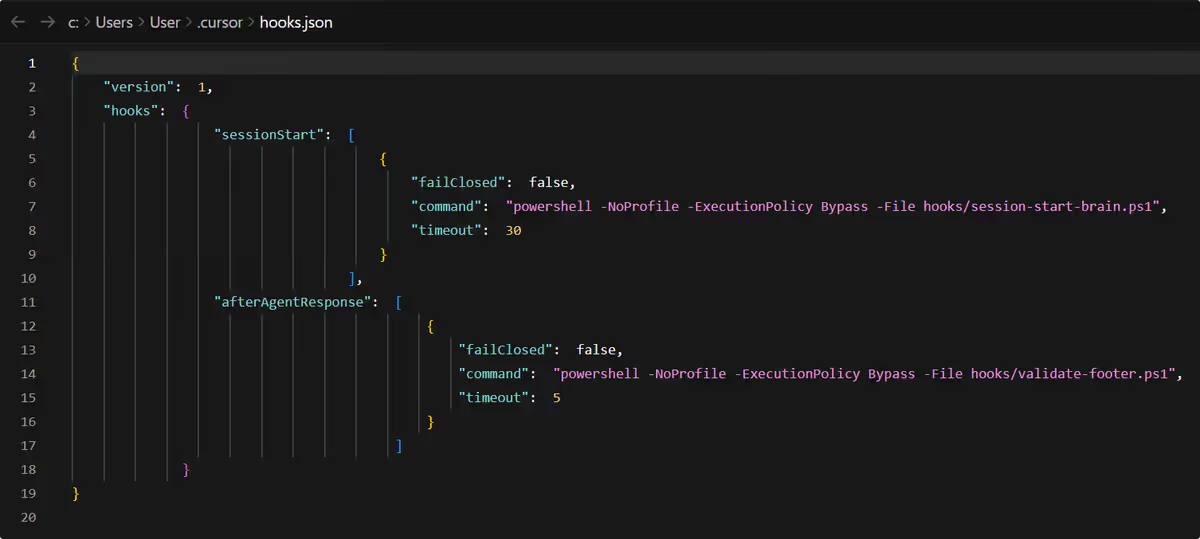
| Local hooks | Your machine / IDE project | sessionStart, afterAgentResponse | Bootstrap reads, footer validation, repo-specific checks |
Think of cloud hooks as airport security for the agent plane. Local hooks are your house rules when the plane lands.
Cloud hook jobs (when they win)
beforeSubmitPrompt — normalize or block prompts that violate workspace policy before tokens spend. Examples: require initiative name in consulting modes; strip accidental paste of secrets patterns; enforce "read Bridge first" injection.
afterAgentThought — observe reasoning phases for logging or guardrails that should not block the user mid-turn. Use sparingly. Heavy logic here adds latency and noise.
subagentStart — enforce parallel routing policy: did independent deliverables actually split? Log which subagent type launched. Pair with the independence rule from orchestration.
Cloud hooks excel when the agent runtime is the system of record for the turn, especially for cloud agents and subagent trees you do not fully control from a local script.
Local hook jobs (when they win)
sessionStart — runs when you open a new Agent chat (not on every follow-up message). It can inject brain-pack snippets, footer law, vault paths, or "read these three files" without you pasting manually. This is how lightweight harness design stays cheap: one script, one JSON config, no separate service.
Two levels of "session start" — do not mix them up:
| Level | What fires | What you get |
|---|---|---|
| Light bootstrap | User sessionStart hook (e.g. session-start-brain.ps1) | Footer contract, parallel law, pointer to Bridge — automatic on new Agent chat |
| Full Start of Session | /start-session command or explicit "run session start skill" | Vault reads, session note, roadmap, IDN when planning — still manual by design |
In my daily flow I often type "run session start skill" (or /start-session) because I want the full vault protocol, not just the hook injection. That is intentional: light hooks on every new chat; heavy bootstrap when the work is non-trivial or I have been away.
Can the full protocol run automatically?
sessionStarthook (local) — yes for injection. Wire~/.cursor/hooks.json→ a script that returnsadditional_context(see Brain templatesession-start-brain.ps1). Fires on new Agent chat after a window reload. Advantage: zero typing for footer law and Bridge pointer. Limitation: does not replace reading vault files unless your script summarizes them or you add asession-prep.ps1that writes.cursor/brain-pack.mdfirst.beforeSubmitPrompt(cloud) — can prepend "read Bridge first" on first prompt only if you track turn count in hook state. Advantage: runs even when local hook misfires. Limitation: cloud cannot read your privateD:\vault paths directly; inject pointers, not full files.- Always-on rules (
session-protocol.mdc) — partial. The agent should follow Start of Session before non-trivial work, but rules compete with your first message unless something injects priority context. - What does not exist yet (2026): a built-in "always run this skill before first reply" toggle separate from hooks. If you want full vault bootstrap without typing, extend
sessionStartto runsession-prep/ brain-pack generation — not to paste the entire manual prompt every time.
Advantages of wiring sessionStart even when you still use the skill:
- New chats get footer and parallel law even if you forget to run the skill.
brain-pack.mdloads once per chat without a 14k paste.- Project vs user hooks split: user hook = Brain conventions; project hook = repo footer validator.
- You keep choice: trivial question → skip skill; ship day → run skill or rely on richer brain-pack.
afterAgentResponse — validate contracts you care about on every reply: footer shape, forbidden folder writes, missing memory update nudges. failClosed: false warnings beat hard stops for editorial rules.
Local hooks excel when the repo and vault on disk are the system of record. They can read .cursor/rules, run PowerShell or shell checks, and touch project files directly.
Example implementation — how I run it
I treat cloud hooks as portable policy that should make sense on any machine running cloud agents. Local hooks are repo-specific where needed (footer validator on Petralian; user-level sessionStart for Brain bootstrap).
Typical Petralian setup: user sessionStart injects light context; project afterAgentResponse validates footer shape. I still run Start of Session skill when I need vault session notes, Bridge refresh, or a planned multi-file pass — the hook does not replace that judgment call.
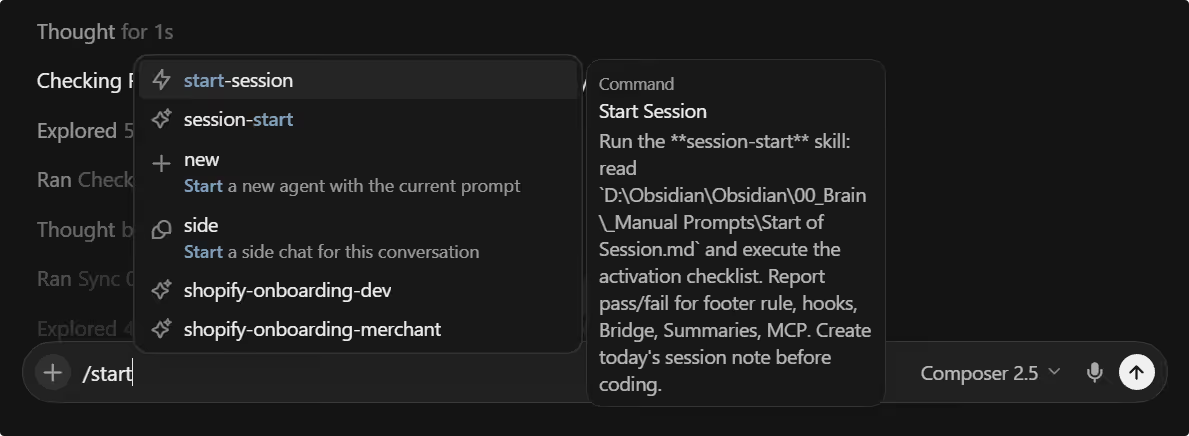 Screenshot: Petralian / Cursor (2026)
Neither layer stores strategy. Both point back to markdown SSOT: Bridge, open loops, writing guide gates. The memory loop close step is a human habit; hooks only make skipping it visible.
For program teams: cloud hooks are easier to standardize across seats. Local hooks are where repo owners enforce merge discipline. Document both in your internal runbook; publish only the teaching pattern on the blog.
Smoke test after hook changes: Developer → Reload Window → new Agent chat → confirm injected FOOTER LAW line before your first prompt. If missing, check Customize → Hooks (user + project) and re-sync from Brain templates if needed.
What not to put in hooks
| Avoid | Do instead |
|---|---|
| Pricing or model escalation policy | SSOT + human picker |
| Legal/commercial approval | RACI file + explicit human A |
| Long markdown injections every turn | sessionStart once + Bridge read rule |
| Secret values in hook scripts | env vars; never commit keys |
| Hooks should be boring. If a hook reads like a blog post, move it to a skill or rule. |
 Screenshot: Petralian / Cursor (2026)
Limitations
Cloud hooks cannot assume your private vault layout. Local hooks do not run on a phone capture flow. Mobile handoff still needs files (Brain handbook).
Hook warnings that fire every turn get ignored. Tune for high-signal misses only.
Cloud and local event names will evolve with Cursor releases. Anchor on jobs (pre-submit, post-response, subagent spawn), not on memorizing one JSON schema forever.
Path A: one local reminder without hooks JSON
If you are not ready to wire hooks:
- Add a line to the top of Bridge:
## Pre-flight: read before acting - Paste your three-file bootstrap list there.
- Manually run a checklist on session close (Bridge updated? draft folder correct?).
You lack automation but keep the same harness shape. Add user-level sessionStart when the checklist slips twice in one week; add /start-session when you need full vault protocol after a long break.
What to try this week
List every process miss from the last five sessions. Mark each as cloud (agent-turn) or local (repo/vault). Implement one hook total — the highest-signal miss — not six at once.
Related reading
Weekly email with new posts on enterprise AI and how teams ship it.
One email per week. Unsubscribe anytime.