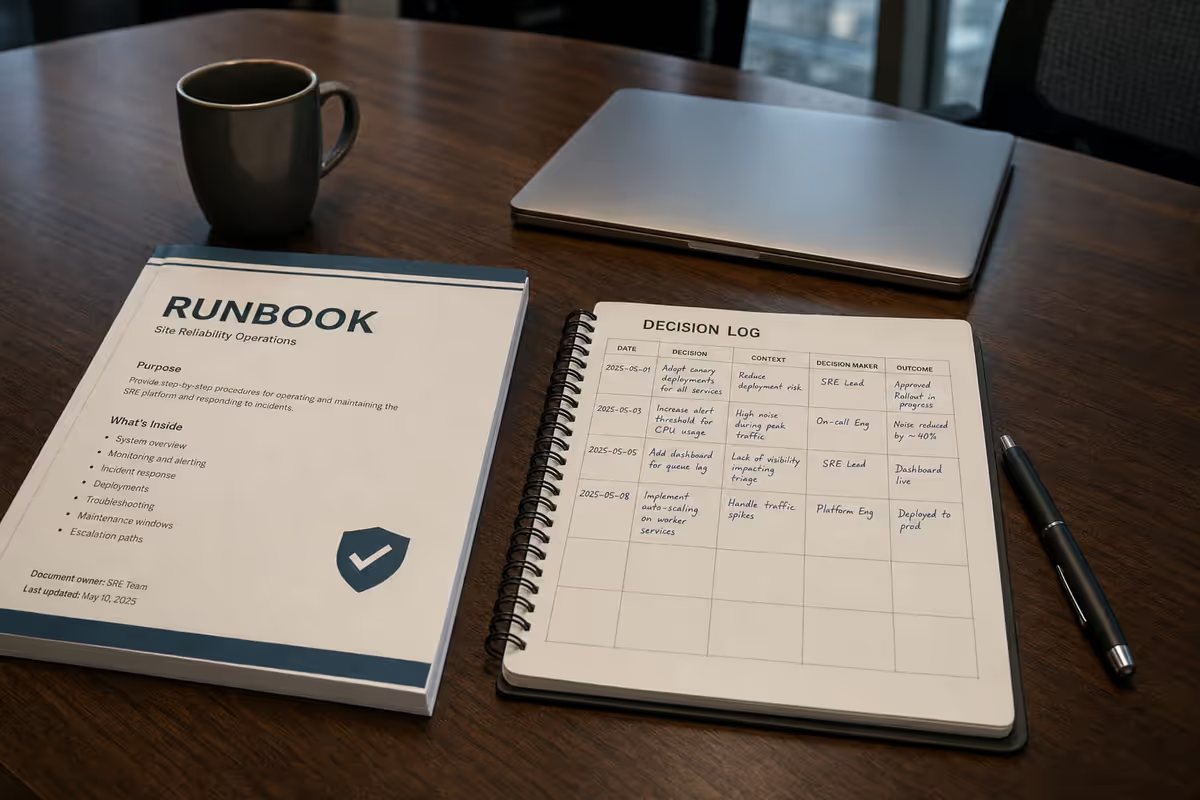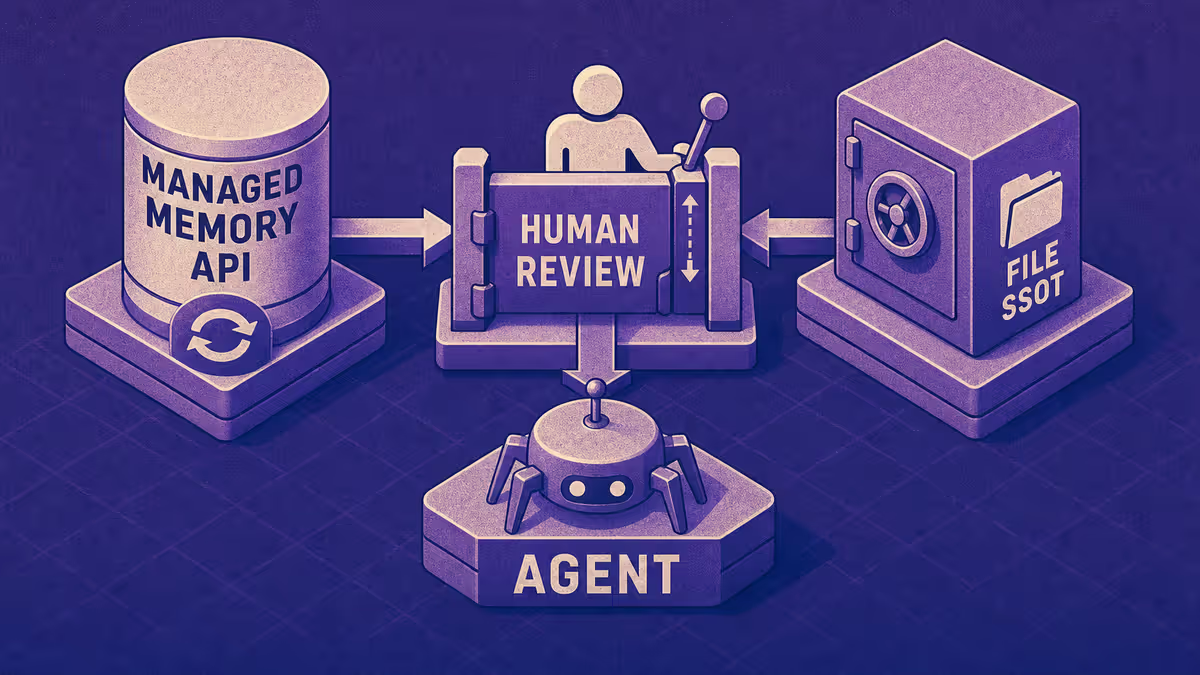
Memory cluster: AI memory landscape · Deliberate file memory · Harness memory loop
Managed agent memory vs files you control
Managed agent memory (services like Mem0 and similar layers) stores facts and preferences in a product-specific store, often with automatic extraction from chat. Files you control (Obsidian, git markdown, Bridge notes) store what you curate in formats that survive tool churn.
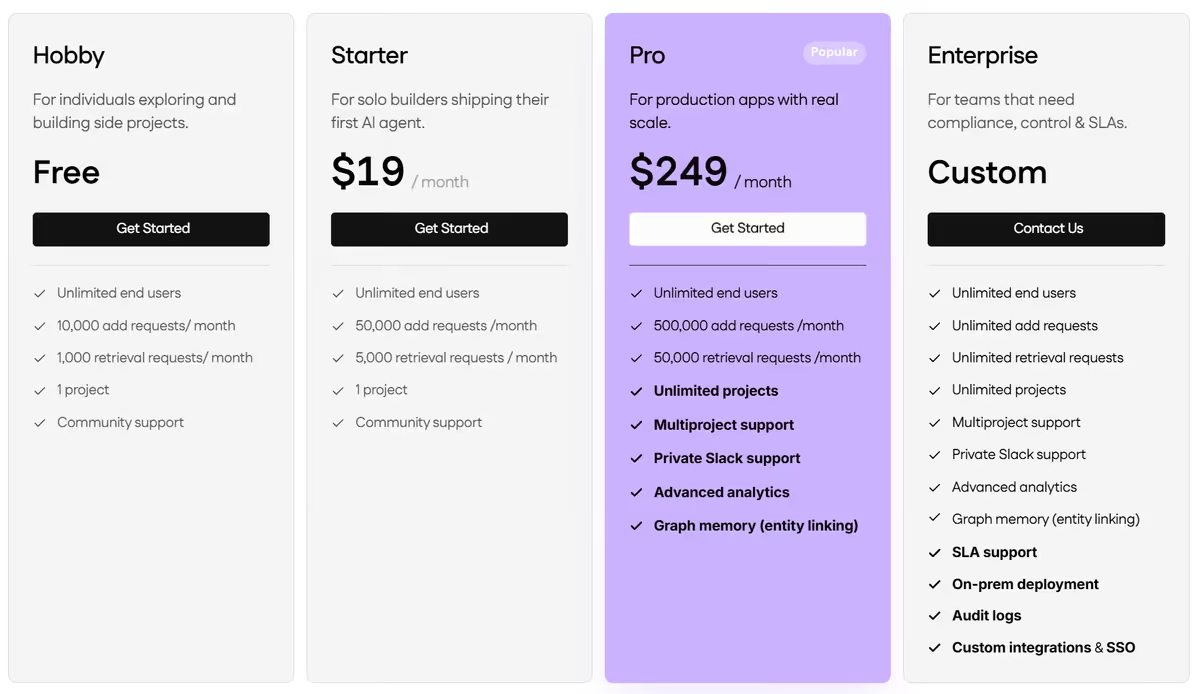 Screenshot: Mem0 pricing — Petralian (2026); Free until you do more as one project… and I think everyone does more as one project… so find better options
The strategic question is not which is "smarter." It is which memory tier owns which class of truth.
Who it is for: Anyone building agent workflows who wants recall without giving up portable SSOT files for decisions, governance, and handoff.
What you will learn: three memory failures and which lane fixes each, when managed memory helps, when files must win, and a hybrid pattern you can start without a full platform rebuild.
Three failures, two lanes
From the memory landscape post, practical AI memory breaks in three ways:
| Failure | Symptom | Best primary lane |
|---|---|---|
| Contextual | Cold start every session | Managed + Bridge bootstrap |
| Knowledge | Research not compiled | Files you curate (wiki, vault) |
| Operational | "What did we decide Tuesday?" | Bridge / session SSOT |
Managed memory targets contextual recall: preferences, standing facts, recurring entities. Files target knowledge and operational truth: what you endorse, what ships, what is next.
When one lane pretends to cover all three, quality drifts. Automatic memory invents convenience facts. File-only memory without habits leaves contextual gaps.
When managed memory wins
| Situation | Why managed helps |
|---|---|
| High chat volume, low curation time | Extraction reduces re-explaining |
| Personal preferences (tone, timezone, formats) | Safe to be semi-automatic |
| Multi-channel agents (Telegram, WebUI) | Central store behind runtimes |
| Prototyping before vault discipline exists | Faster than designing folder taxonomy |
Managed layers are strong shortcuts to contextual recall. They are weak systems of record for commercial decisions unless you add review.
When files you control win
| Situation | Why files win |
|---|---|
| Publish gates and legal-sensitive work | Human-readable audit trail |
| Tool or vendor change | Markdown exports; git history |
| Team handoff | Anyone opens Bridge without API keys |
| Knowledge compilation over months | Cross-links, tags, deliberate structure |
| Cursor / IDE agent loops | Agent reads paths you already use |
This is the core teaching of deliberate file memory: portability beats hope.
Strategic hybrid (what I actually do)
I do not treat managed memory as the boss. I treat it as Lane A: contextual cache.
Lane B: files hold Bridge, open loops, writing guides, feature notes, and anything that must survive Obsidian → Cursor → publish pipeline.
Promotion rule: If a managed memory fact changes how I work next month, it gets a line in a file SSOT. If it is taste-level ("prefers short paragraphs"), managed can hold it.
Demotion rule: If managed memory contradicts Bridge, Bridge wins. Always.
The memory loop close step is where promotion happens. Hooks can warn when close-out skipped; they cannot replace the human promote/reject call.
Example implementation — how I run it: Cursor sessions bootstrap from vault Bridge and repo memories/ where present. Ambient agents (Hermes, messaging surfaces) may use managed recall for conversational context — covered in the comparison posts. Petralian blogging and client deliverables never rely on managed memory alone for publish truth.
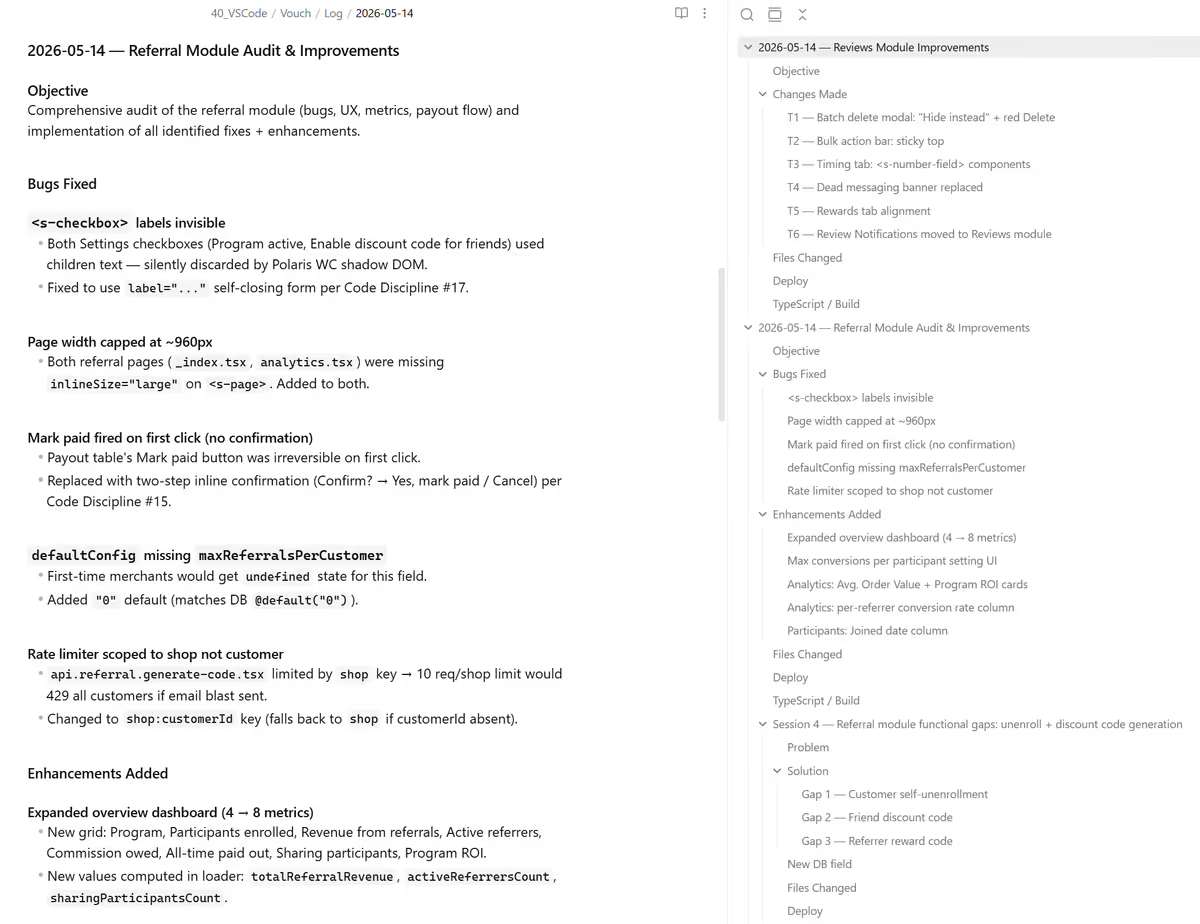 Screenshot: Petralian Vouch Obsidian vault — Petralian (2026); Total recall on what we did, linked to commits
Governance questions for program leads
Before buying managed memory org-wide, ask:
- Export — Can we get markdown or JSON out without a sales call?
- Conflict — What happens when managed fact ≠ Confluence/Jira/wiki?
- Retention — Who deletes stale auto-memories?
- Accountability — Is there a human A on promoted facts (RACI), or does the agent become accidental record keeper?
- Portability — If we leave the vendor in 18 months, what breaks?
Files answer those questions boringly. That is a feature.
Limitations
Managed memory can reinforce wrong summaries confidently. Files rot without close habits. Hybrid adds sync thinking — keep the promotion rule simple or it will not run.
Neither lane replaces access control for confidential work. Client engagements stay in generic labels on the blog; vault paths stay private.
Path A: hybrid without Mem0
- One
preferences.mdyou paste at session start (tone, format, timezone). - One
Bridge.mdper initiative. - Weekly five-minute review: move anything repeated from chat into
preferences.md.
You built manual managed memory. Add a product when repetition hurts.
What to try this week
List ten things you re-explained to AI in the last seven days. Mark each: preference, knowledge, or operational. Preferences can go managed or preferences.md. Knowledge and operational items go files. One promotion pass. Notice which category caused the most friction.
Related reading
Weekly email with new posts on enterprise AI and how teams ship it.
One email per week. Unsubscribe anytime.