TL;DR
- Chat memory is opaque and ephemeral.
- Deliberate files give audit trails, solo-shipping continuity, team handoffs, and survival when models or tools change.
External Memory Series (4 of 4) — Series hub · 1 Implementation · 2 Productivity · 3 vs the diagram · 4 Governance (this article)
Background: The AI Memory Problem · Your Brain Was Not Built for This · Directing AI as Primary Engineer
Default AI memory lives inside the product: threads, profiles, retrieved chunks you cannot inspect. That works until you need to explain a deploy, onboard someone, or switch tools—and the reasoning is gone.
Deliberate file memory means lessons and state live in Markdown, git, and hooks the human owns. This article is the governance case: audit, solo shipping, team continuity, tool churn, and feedback that edits the system—not the chat scrollback.
What is deliberate file memory for AI agents?
Deliberate file memory is the practice of storing agent context, decisions, and lessons in human-owned files—Feature notes, bridge handoffs, gotchas, decision logs—with promotion rules and footers that require proof (file paths), not hope that the model "remembered." It turns feedback into governance artifacts you can audit, diff, and hand to a teammate or future you.
Who it is for: Solo shippers at production depth, program owners, and anyone who must explain a deploy, onboard a collaborator, or survive switching models and IDEs.
What you will learn: Five outcomes files beat chat on, how feedback becomes enforceable rules, boundary automation from the reference stack, and the smallest artifact to add this quarter. Mechanics: Part 1; philosophy: Part 3; series hub.
Why it matters: five outcomes files win
| Outcome | Chat-only | Deliberate files |
|---|---|---|
| Audit ("why did we ship?") | Poor | Strong (commits → Feature notes, footers) |
| Solo ship at production depth | Fragile | Strong (Bridge, gotchas, rules) |
| Team / future-you handoff | Weak | Strong (hub notes, Summaries) |
| Tool / model churn | Reset | Portable vault + repo |
| Compounding lessons | Retry prompts | Rules with file citations |
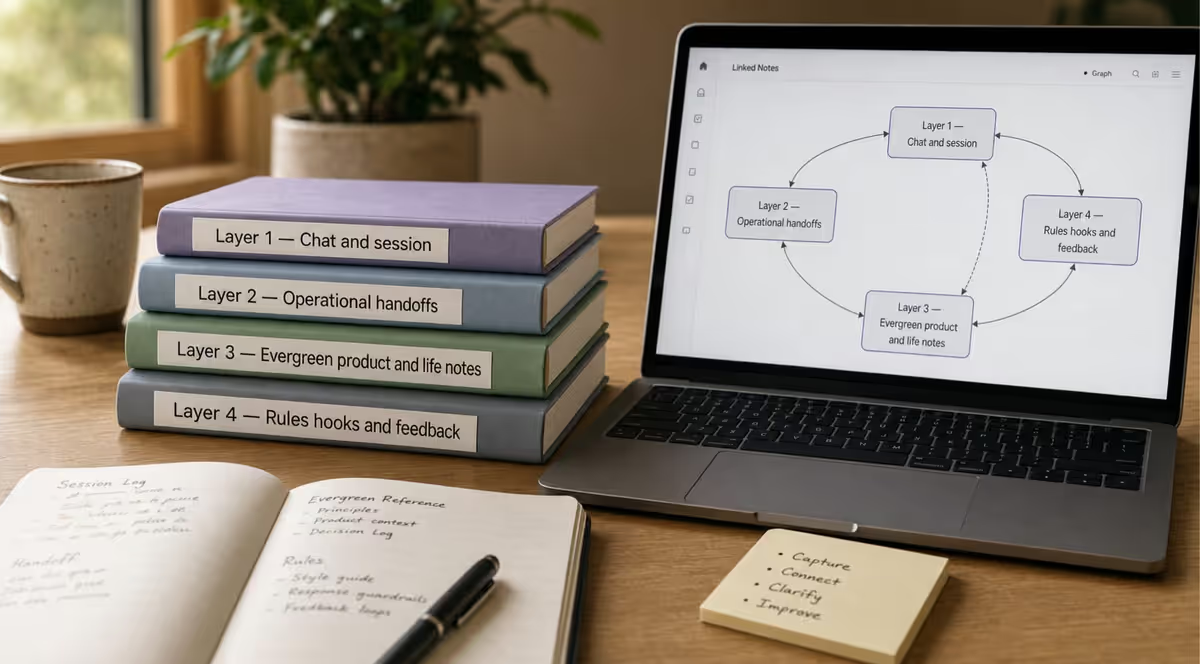
Directing AI as primary engineer only scales when context infrastructure is the job. Files are that infrastructure.
Feedback as governance, not vibes
Chat feedback fixes one instance. File feedback fixes the class:
- Bug → line in agent instructions +
known-gotchas.md - Deploy race → deploy lock scripts + Safety Gate Audit in rules
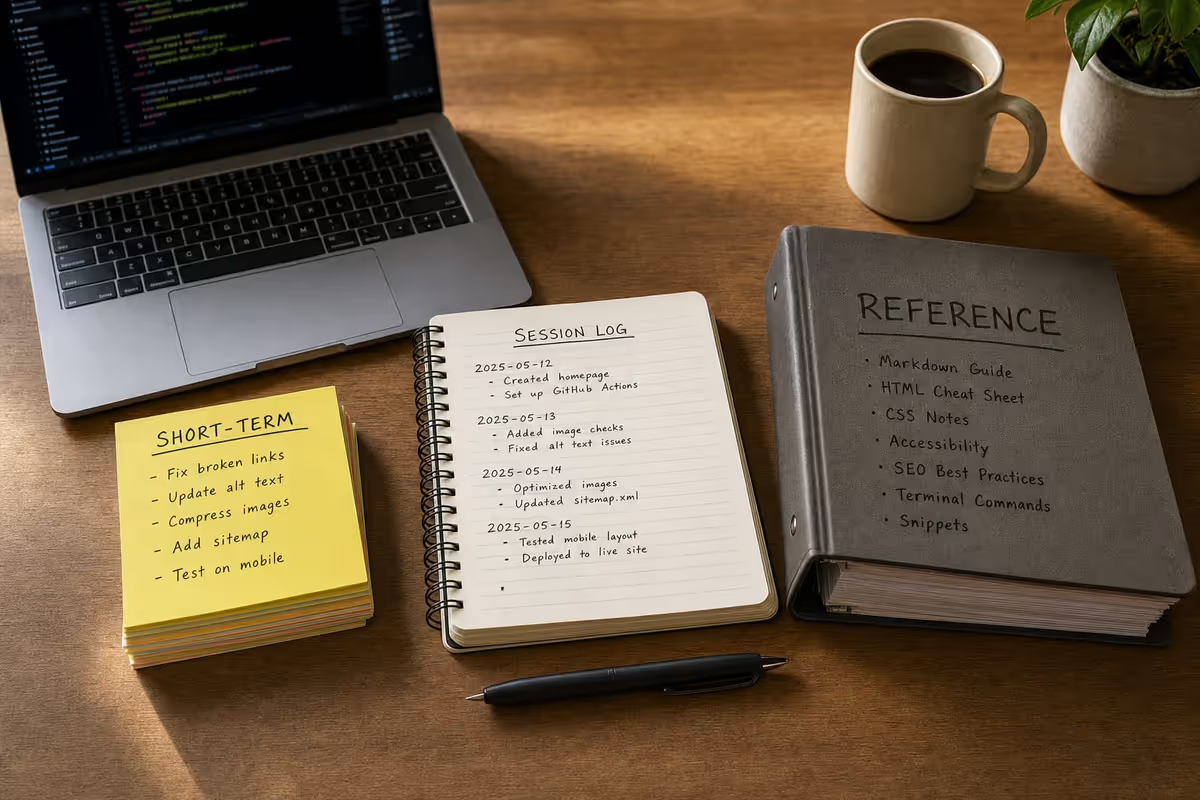
- Session lesson →
Operations/Lessons Learned.md
Session End footer requires Self-improvements: exact file path—or the write did not happen. That is stricter than the generic "feedback loop" on a slide.
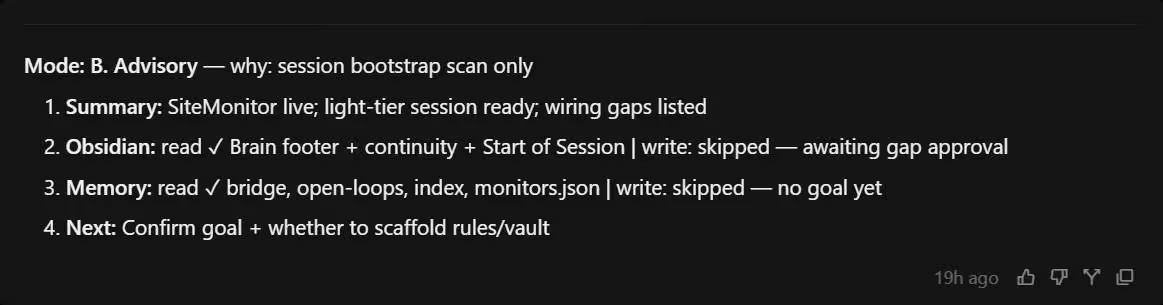 Screenshot: Petralian / Cursor (2026)
Why AI agent output quality drifts is the quality angle on the same idea: without external anchors, drift is invisible until production.
Automation at boundaries (May 2026)
Reference stack on open-source production codebases (Gravio, petralian.com):
- IDE
sessionStarthook → bootstrap snapshot + git/health status post-commithook →Features/*.md## Commitsfrom path map- Dual vault MCP:
00_Brain+ project vault
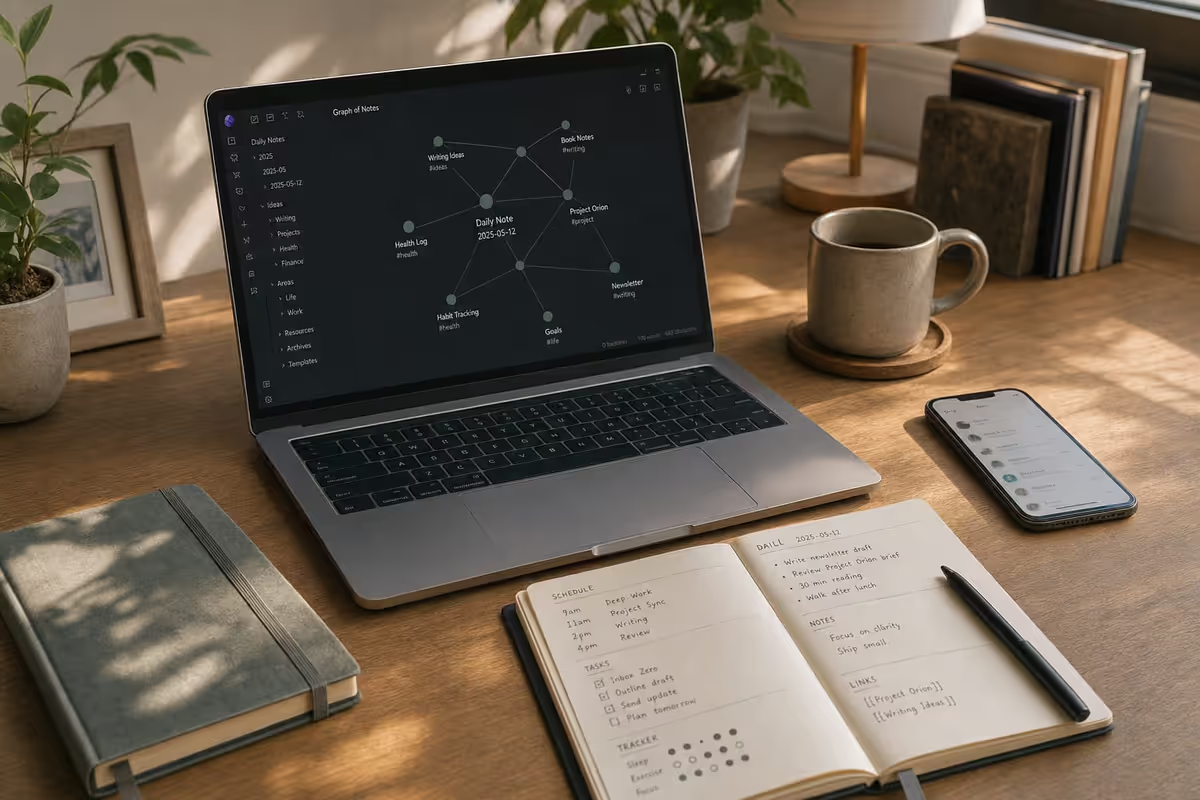
Details in part 1 of this series. Publishing workflow: Obsidian drafts through GitHub Actions.
Enterprise programs
Getting enterprise AI right argues deployment is not the hard part—operating model is. Deliberate file memory is an operating model artifact: inspectable, linkable, versioned.
Additional detail
Reference
Quick reference
| Outcome | Chat-only | Deliberate files | Starter artifact |
|---|---|---|---|
| Audit | Poor | Commits → Feature notes, session footers | Features/*.md with ## Commits |
| Solo ship continuity | Fragile | Bridge, gotchas, rules | NEXT_SESSION.md |
| Team / future-you handoff | Weak | Hub notes, Summaries | AI Session Bridge.md |
| Tool churn | Reset | Portable vault + repo | Shared brain vault + bootstrap order |
| Compounding lessons | Retry prompts | Rules with file citations | Session footer + known-gotchas.md |
Feedback rule: Session End Self-improvements must cite an exact file path—or the lesson did not land.
Common mistakes
| Mistake | Symptom / risk | Fix |
|---|---|---|
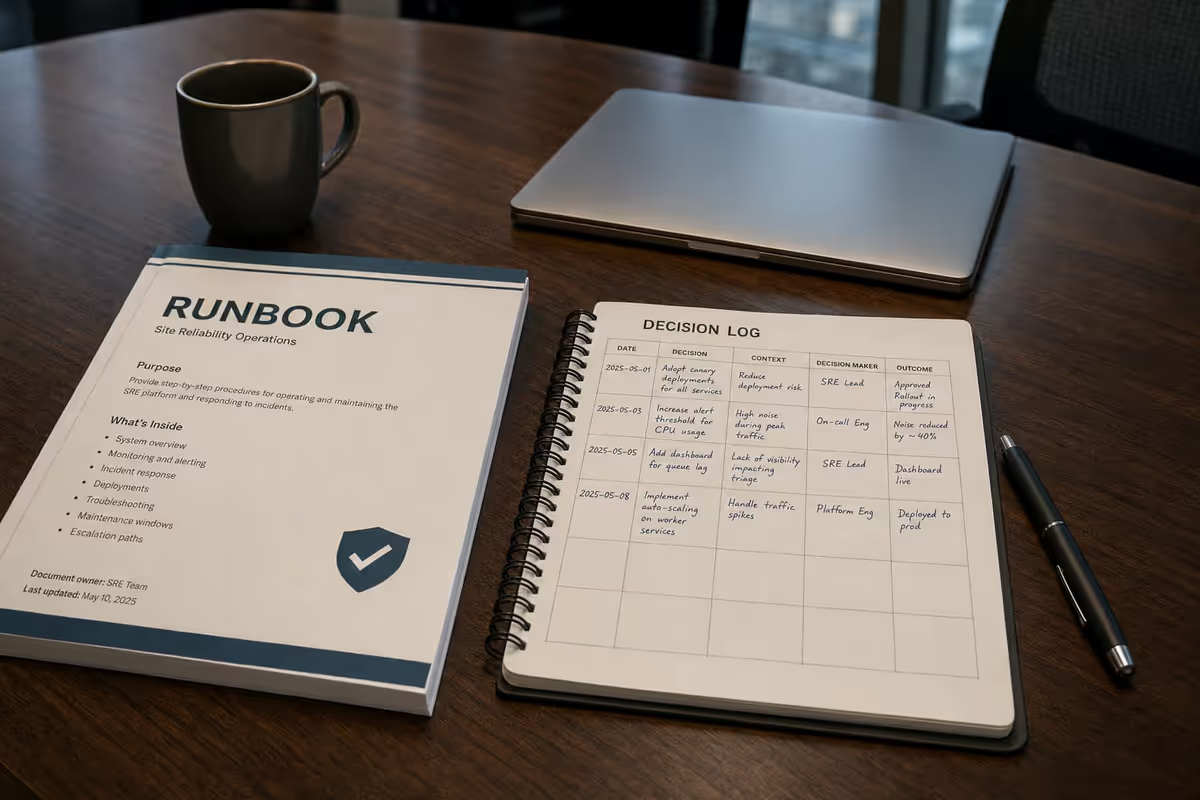
| Trusting opaque product memory for compliance | Cannot explain what the agent "knew" at ship time | Decision notes + Feature commits linked to git |
| Chat corrections without file promotion | Same class of error repeats | Bug → known-gotchas.md + agent instructions; cite path in footer |
| No handoff surface for solo work | You become the only continuity layer | One Bridge or NEXT_SESSION.md updated every session end |
| Skipping automation at boundaries | Agents forget to update notes | Session-start snapshot + post-commit Feature updater (Part 1) |
| Enterprise rollout without operating-model artifacts | Deployment succeeds; drift is invisible | Treat vault + repo memory as governance, not optional docs |
FAQ
What is the difference between chat memory and deliberate file memory?
Chat memory is opaque and ephemeral inside the product; file memory is inspectable, versioned, and portable across Claude, ChatGPT, IDE agents, and future tools.
Do solo builders need governance-grade memory?
Yes, if you ship at production depth without a team to carry tacit knowledge. Bridge notes and gotchas replace the colleague who would otherwise remember deploy state.
How strict should session footers be?
Require file-path proof for self-improvements. Vague "lesson recorded" in chat is fiction; a cited path in known-gotchas.md or agent instructions is verifiable.
What is the minimum artifact to test this quarter?
One durable file—Decision note, NEXT_SESSION.md, or a single Feature note with hard rules—and an instruction: read it first, cite it in the plan.
How does this close the External Memory series?
Part 4 of 4 (capstone). Revisit Part 3 for the philosophy comparison; Part 1 for full implementation.
Reader action
Pick one outcome you care about this quarter (audit, handoff, or tool independence). Add one durable artifact: a Decision note, NEXT_SESSION.md, or a single Feature note with hard rules.
Run the next agent session with: read that file first, cite it in the plan. If that session needs less re-explanation, file memory is working.
Series navigation
- Next: None (series capstone)—revisit Why file memory beats the diagram if you skipped the philosophy piece.
- Start of series: Three layers for AI-first development
If you're new to Cursor: 50% off your first month (code
JP5ARNKSFI2Q). I may earn usage credits; install directly if you prefer.
Weekly email with new posts on enterprise AI and how teams ship it.
One email per week. Unsubscribe anytime.