TL;DR
- One chat for research and build mixes exploration noise with implementation truth.
- I research in Poe, promote decisions into markdown, then Cursor implements against the repo and Obsidian vault.
Research layer, build layer
Research layer work is divergent: compare models in Poe, stress-test assumptions, read long threads, export transcripts, draft outlines you may discard. Build layer work is convergent: change files, run checks, respect project rules, leave an audit trail. When both happen in one long thread, the model optimizes for the last prompt, not the program outcome.
Who it is for: Students, founders, operators, and builders who already split time between a multi-model chat app and an IDE agent. You do not need to be a full-time developer. You do need a promotion habit so build sessions start from files, not from memory.
What you will learn: when to keep research out of the repo agent, how transcript exports fit the flow, how the lazy handoff works (dump → summarize → build), how I run the split across Poe, Cursor, and Obsidian, and Path A if you only have one chat subscription today.
Why one thread fails both jobs
Chat interfaces reward breadth. Repo agents reward scoped context: specific paths, hooks, and prior decisions. Mixing them produces predictable friction:
| Research behavior | Build behavior | Collision |
|---|---|---|
| "Consider five approaches" | "Implement approach A" | Agent re-opens discarded options |
| Long source summaries | Small diffs | Token burn on stale narrative |
| Hypothetical numbers | Parametric YAML SSOT | Wrong figures ship |
| Voice experiments | Lint and type checks | Style drift in code |
Is Cursor only for developers? makes the broader case: Cursor wins when continuity across files matters. Poe (and Claude, Gemini, etc.) still win when you want a low-friction sandbox with model choice and no repo checkout.
The split is separation of concerns.
How the two layers connect
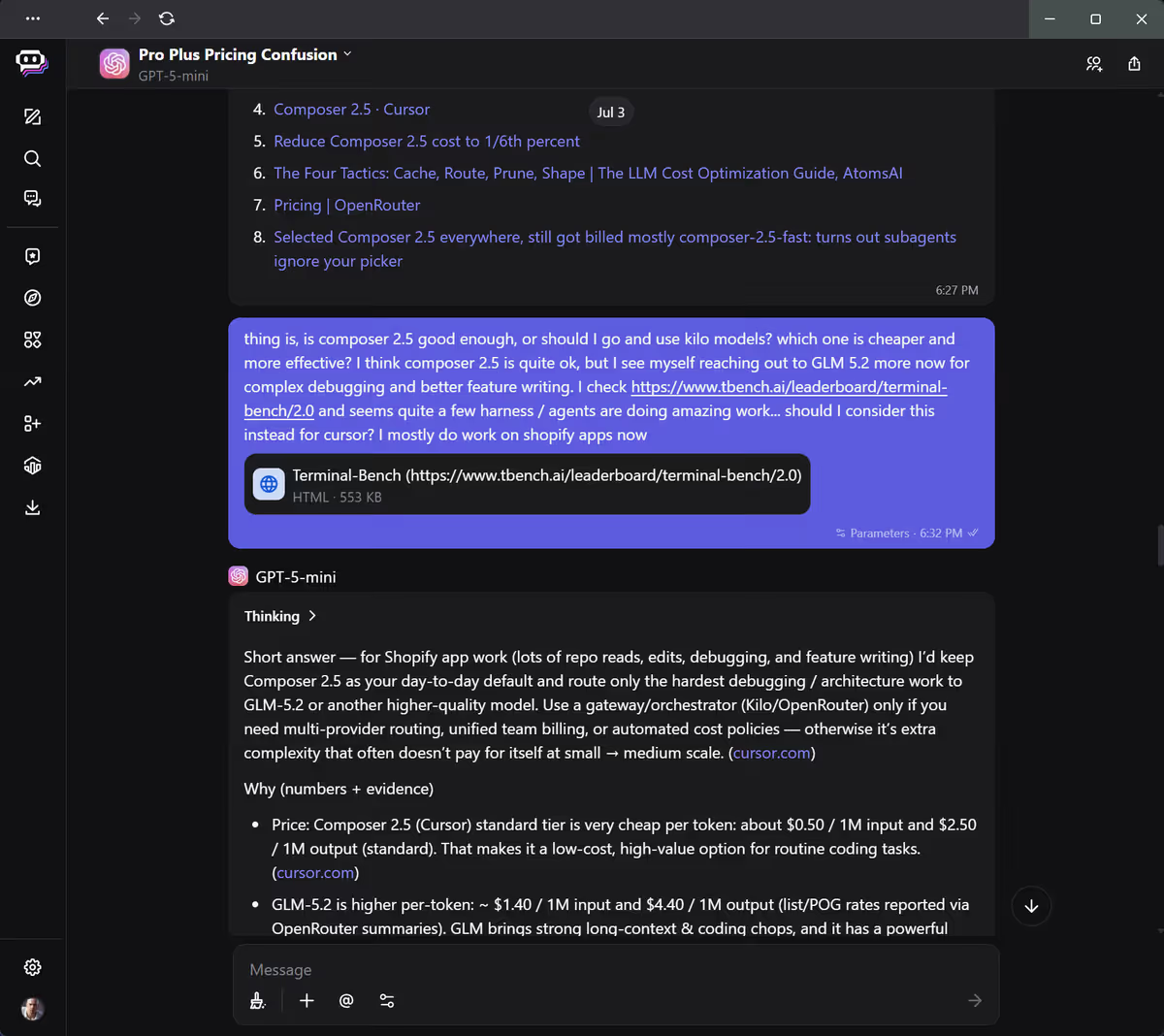 Screenshot: Poe research thread — Petralian (2026)
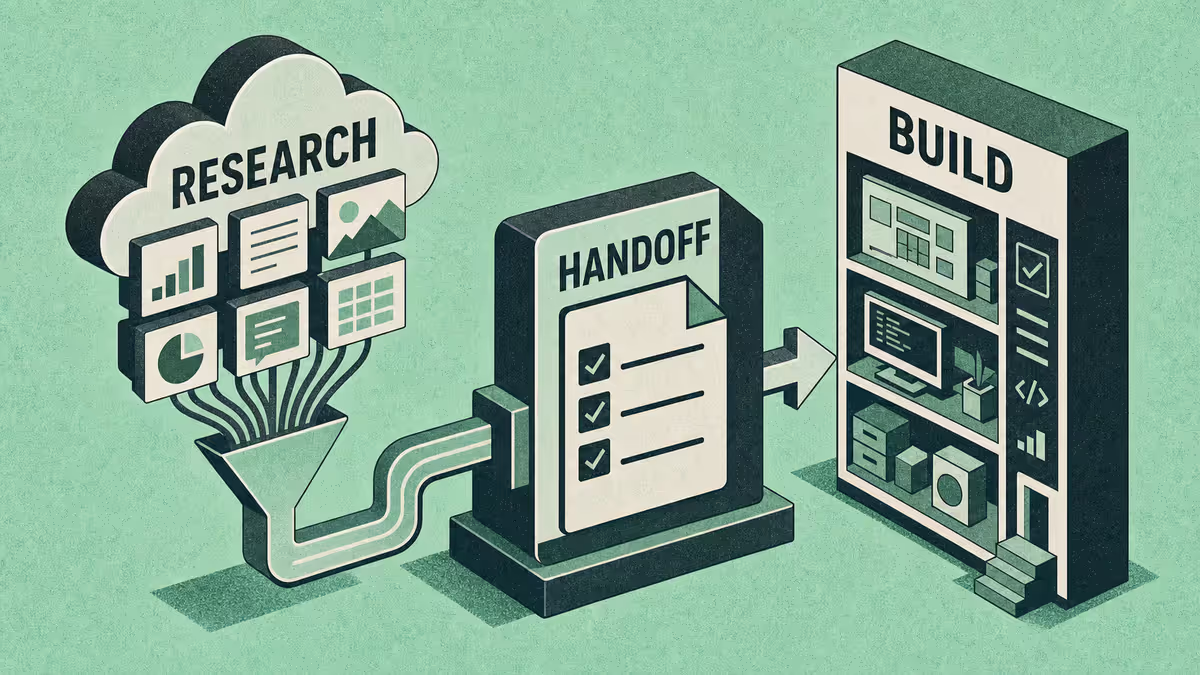
The handoff file is the contract. It holds decisions, rejected options (one line each), sources, and explicit out-of-scope notes. It does not hold the entire research transcript — that lives elsewhere until you promote what matters.
Transcript exports: when research already happened
A lot of my research does not start in a blank Poe thread. It starts as a full export:
- Export — Poe conversation, call transcript, or long chat log saved as
.mdor.txt. - Drop — drag the file into the repo (e.g.
docs/research-inbox/) or a vault inbox folder. - Summarize in Cursor — one session: drop the full export, say research capture (or run
npm run research:capture), point at00_Brain/Templates/Research Capture.md, and get a short structured handoff. Redact client names. I skim; I do not transcribe sections by hand. - Organize in Obsidian — promote durable notes, link to Feature notes or Bridge, add my framing (what I actually do on this project, not what the model guessed).
- Build — fresh Cursor session with
RESEARCH.md+ repo rules only.
That last step is where I add depth from my own flow: session protocol, parametric YAML, vault paths agents must read. The transcript is raw input; the handoff file is editorial judgment.
I do not ask Poe to touch git. I do not ask Cursor to re-read a fifty-page transcript every build session. The promotion step is the work.
Example implementation: how I run it
Research (Poe): I pick a model for the question (reasoning vs fast vs long context). I explore, paste primary links, compare answers. When I trust the direction, I export the thread — I do not curate the handoff inside Poe.
Transcript path (common): Export → drop in repo → Cursor summarizes → I edit → promote to vault.
Build (Cursor): Open the workspace. Session start reads Bridge and any RESEARCH.md I promoted. I point the agent at specific paths. I review diffs.
Screenshot: TBD — How to capture: Cursor with RESEARCH.md and a redacted transcript in context; save as when-poe-is-research-and-cursor-is-build-layer-body-03-cursor-agent.png in Attachments/ — Petralian (2026)
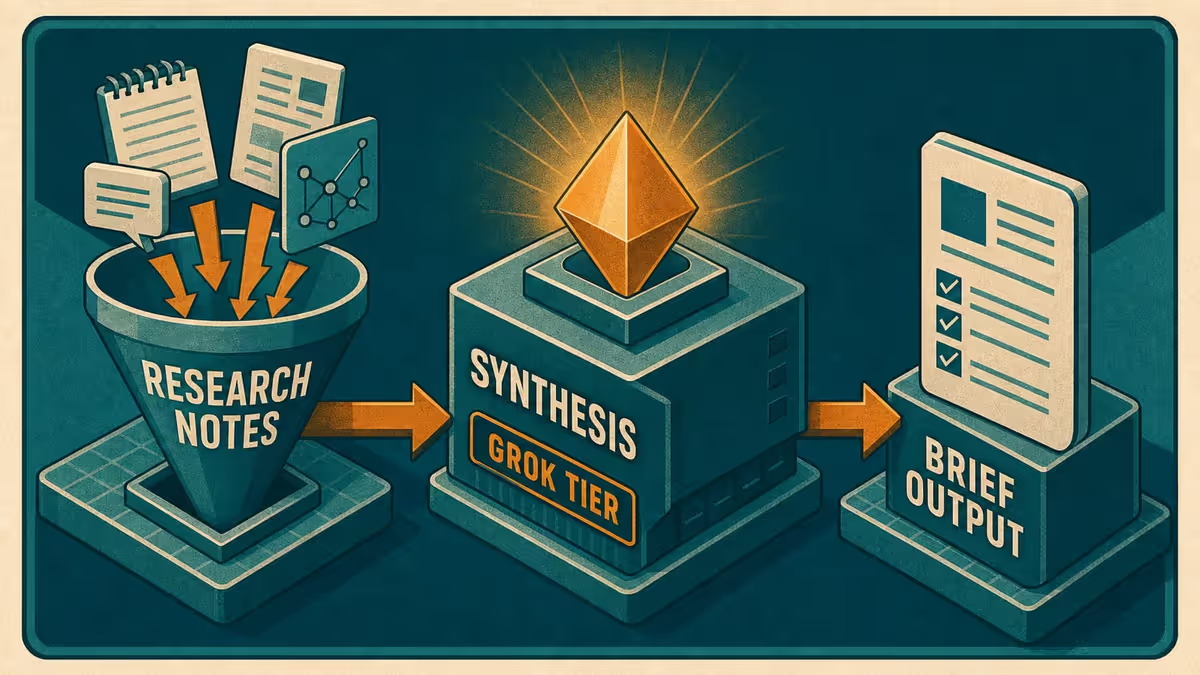
When I need model variety for research, I treat comparisons like Grok vs Cursor for knowledge work as input to the brief, not as parallel build paths.
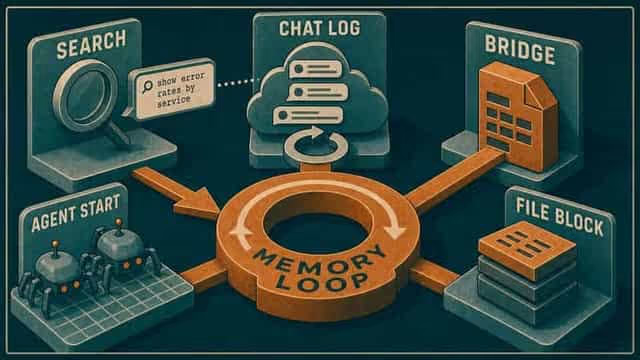
For "what did we already decide," I use a Bridge file, not transcript search alone. See conversation search vs Bridge.
When to keep research inside Cursor
Stay in one tool when:
- The task is a single-file edit with no external sources.
- Research is already in the repo (issues, specs, prior posts).
- You need a tight loop between search and apply (rename across thirty files).
Split layers when research spans multiple sessions or devices, when you use Poe for model choice, or when you want browsing/chat without giving an agent wide repo write access.
Handoff template
I do not fill this out manually. The lazy path:
- Dump — export the Poe thread (or drop a transcript) into the repo inbox.
- Summarize — one Cursor session: say research capture, or paste the prompt from Brain
_Manual Prompts/Research Capture.md. - Skim — fix anything obviously wrong, then promote to vault or leave beside the repo for build.
The 00_Brain/Templates/Research Capture.md note is the shape standard — decisions, rejected options, sources, build scope. Filled example for screenshots: 00_Brain/Operations/Research Capture — Example.md. The agent structures; my job is export, one prompt, and a quick read.
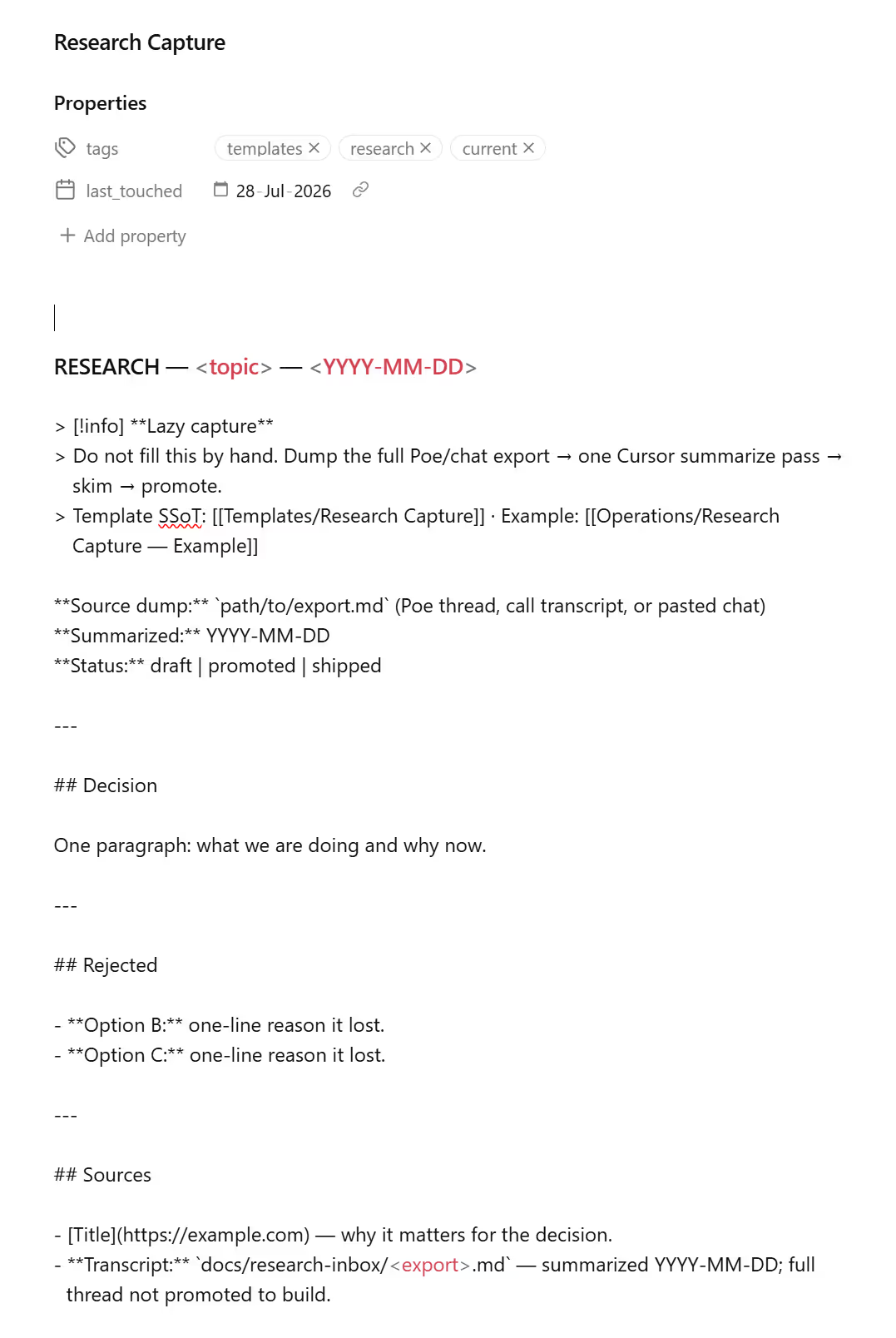 Screenshot: Obsidian — Research Capture template — Petralian (2026)
Promote when build starts. Archive or delete when shipped.
Path A: one chat tool, two modes
No Cursor required to practice the pattern — still lazy:
- Export or copy the whole research conversation.
- Paste it into a new chat: "Summarize and structure this for build. Decisions, rejected options, sources, scope only."
- Start a new chat with that summary only. Ask for deliverable X without reopening discarded options.
If build quality jumps on step 3, the layer split was the fix, not a missing model.
Limitations
Two layers still need a promotion step. Without it, handoff files rot or build agents never see them. The summarize pass is cheap; skipping it and pasting raw transcripts into every build chat is not. Research models may hallucinate citations; verify links before handoff. Subscription cost stacks if you pay for Poe plus Cursor plus Obsidian sync.
FAQ
When should I use Poe versus Cursor?
Use Poe (or any research chat) for open exploration, model comparison, and compiling briefs. Use Cursor when work must land in files with diffs, tests, and repo context.
What if my research is a long transcript?
Export it, drop it in the repo, and run one summarize session in Cursor against your Brain research template. Promote the short handoff. Do not paste the full transcript into every build chat.
What is a research-to-build handoff file?
A short markdown artifact the agent structures from a dump — decisions, constraints, open questions — so the build layer does not re-litigate basics. Not a form you type by hand.
Can one chat tool do both layers?
It can, but context bleeds: research tangents pollute implementation, and repo truth does not persist across sessions without files.
Do I need Poe specifically?
No. The pattern works with any research surface plus any file-grounded editor. Poe is what I use; ChatGPT or Claude fit the same research layer role.
What to do next
Export one Poe thread. Drop it in the repo. Ask Cursor to summarize and structure it using your Brain research template. Open a fresh build session with only that handoff. If the second session ships faster with fewer reversals, adopt the split for that workstream permanently.
Weekly email with new posts on enterprise AI and how teams ship it.
One email per week. Unsubscribe anytime.