External Memory Series — File-based memory for AI-assisted work (overview · 1 Implementation · 2 Productivity · 3 vs the diagram · 4 Governance)
Team Playbook: Rolling Out Gravio Across Multiple Repositories
Rolling out quality tooling to one repository is easy. Rolling it out across twenty is organizational work.
If you skip rollout design, adoption becomes uneven, metrics get noisy, and teams lose trust in the signal.
This playbook helps you scale Gravio without chaos.
Phase 1: Align on Purpose
Before touching CI, answer three questions:
- Why are we introducing AI quality scoring now?
- Which release risks are we trying to reduce?
- What behavior should improve if rollout succeeds?
Without this alignment, rollout feels like extra process instead of risk reduction.
For architecture concerns teams will ask, start with Zero-Knowledge AI Quality.
Phase 2: Standardize Onboarding
Give every team the same first-run flow and expected outputs.
Use the practical setup from From Empty Folder to First Quality Score in 10 Minutes.
Define a minimal onboarding checklist:
- CLI setup complete.
- Folder authorization complete.
- First scan complete.
- Ownership assigned for ongoing scan cadence.
Phase 3: Create a Shared Scoring Vocabulary
Cross-repo adoption breaks when each team interprets scores differently.
Define:
- What counts as healthy score range.
- What counts as warning vs critical regression.
- What remediation timeline each severity requires.
This turns scoring into a common operating language.
Phase 4: Add Drift Monitoring Before Hard Gates
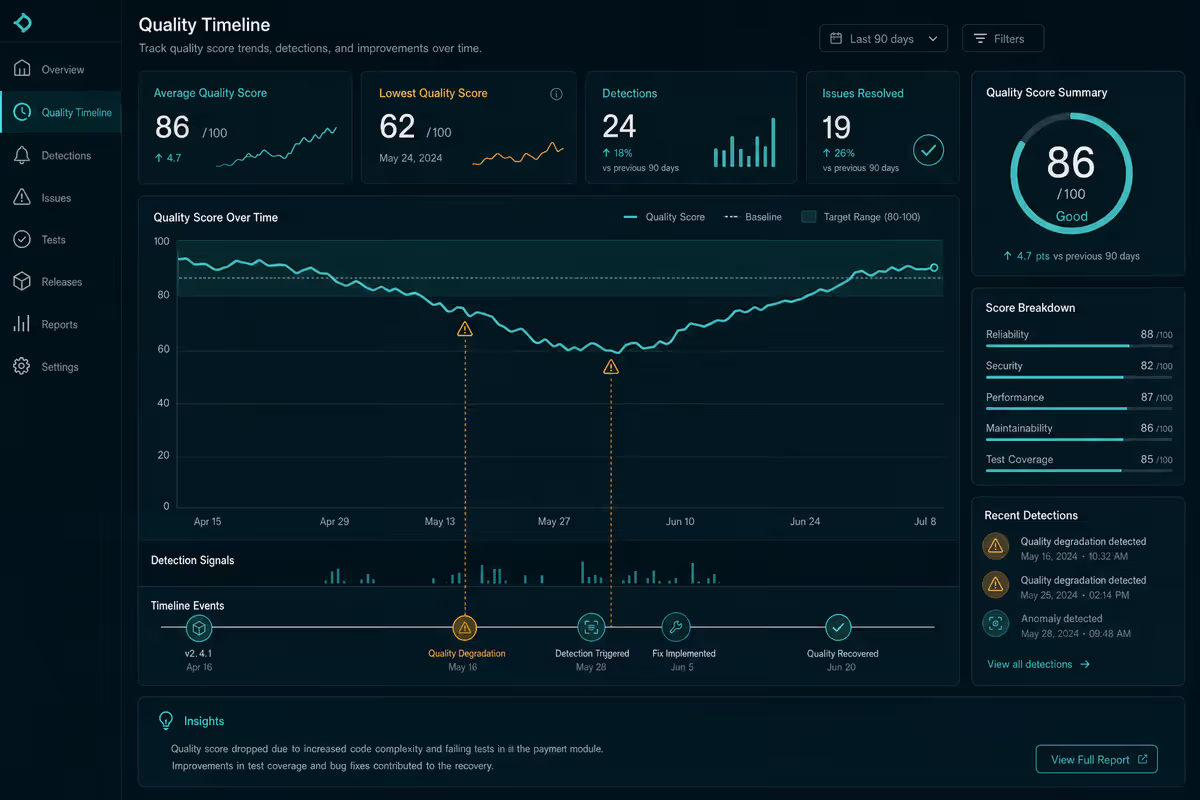
Do not enforce strict CI gates on day one. First establish trend visibility and team confidence.
Use concepts in Why AI Agent Output Quality Drifts Over Time to build stable baselines.
Only then introduce policy enforcement with The New CI Gate.
Phase 5: Governance That Helps, Not Harms
Governance should reduce decision friction, not add bureaucracy.
Recommended governance artifacts:
- Org-level threshold policy.
- Exception process with expiration dates.
- Monthly quality trend review across repos.
- Ownership map for each repository.
Keep documentation lightweight and decision-focused.
Additional detail
Common Multi-Repo Failure Modes
Failure mode 1: "One policy fits all" without context
Different repos have different risk profiles. Start with shared baseline, then allow bounded overrides.
Failure mode 2: Forcing gates before data quality stabilizes
Premature hard enforcement creates backlash. Sequence matters.
Failure mode 3: Treating score as vanity metric
Scores are only useful when connected to release and remediation decisions.
Executive-Level Outcomes to Track
At leadership level, monitor:
- Regression incidents avoided.
- Time from detected drift to remediation.
- Percentage of repos meeting baseline quality threshold.
- Confidence trend in release readiness.
These outcomes prove the rollout is improving engineering reliability, not just adding dashboards.
What is a multi-repo Gravio rollout?
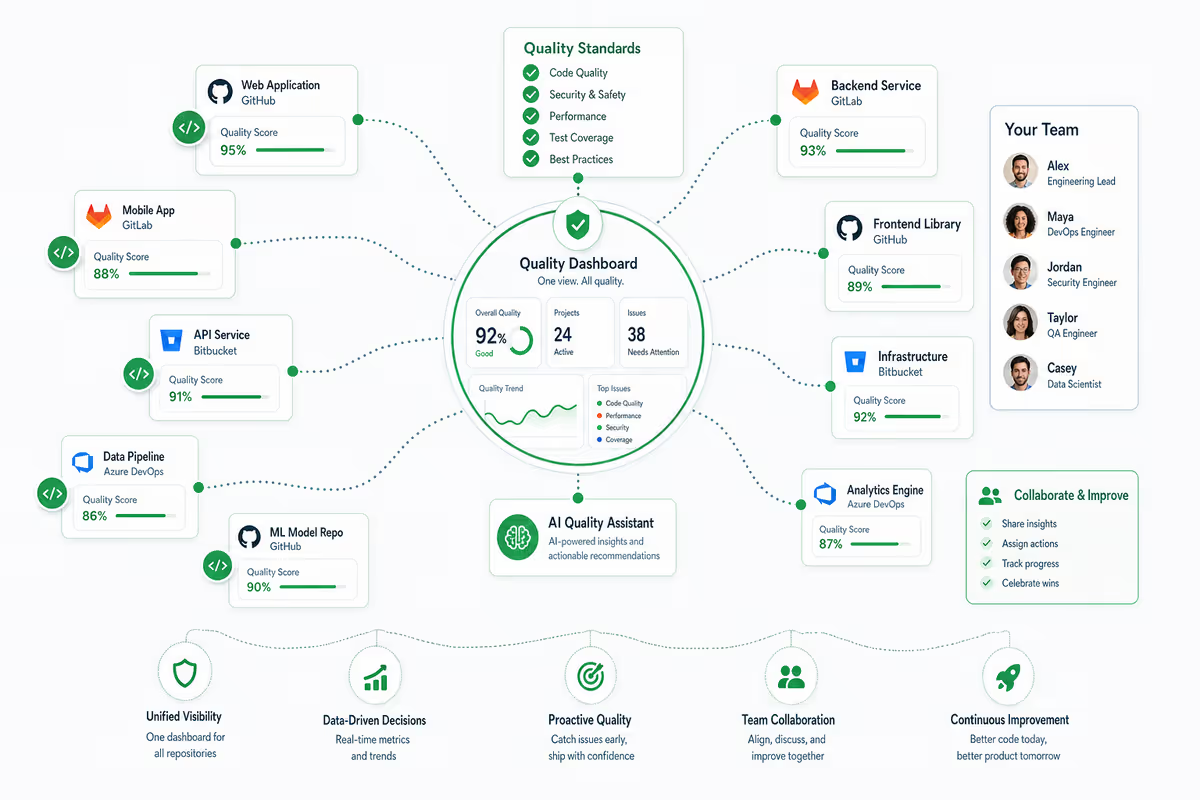
A multi-repo Gravio rollout is an operating model upgrade—shared onboarding, scoring vocabulary, drift baselines, CI gates, and governance—so quality signal stays comparable across many repositories without process fatigue or noisy metrics.
TL;DR
- A practical rollout framework for introducing Gravio across many repos without creating process fatigue, policy confusion, or noisy quality signals.
Additional detail
Reference
Quick reference: five rollout phases
| Phase | Focus |
|---|---|
| 1. Align | Why scoring now; which release risks to reduce |
| 2. Standardize | Same first-run flow and ownership per repo |
| 3. Vocabulary | Healthy range, warning vs critical, remediation SLAs |
| 4. Drift first | Trend visibility before hard CI gates |
| 5. Governance | Org thresholds, bounded overrides, monthly review |
Common mistakes (multi-repo quality rollouts)
| Mistake | Symptom | Fix |
|---|---|---|
| One policy fits all contexts | Wrong thresholds per risk profile | Shared baseline + bounded overrides |
| Hard gates before stable data | Backlash, waived failures | Drift monitoring first, then CI gates |
| Score as vanity metric | Dashboards without behavior change | Tie scores to release and remediation |
| Uneven onboarding | Noisy cross-repo comparisons | Minimal checklist: CLI, auth, scan, owner |
| No exception process | Informal waivers undermine trust | Documented exceptions with expiration |
FAQ
When should we enforce CI gates across all repos?
After baselines stabilize and teams trust the signal—typically phase 4 drift visibility, then CI gate policy.
How do we handle different repo risk profiles?
Start with an org-level baseline, then allow bounded per-repo threshold overrides documented in governance artifacts.
What should leadership track?
Regression incidents avoided, time from drift detection to remediation, percentage of repos meeting baseline, and release-readiness confidence trend.
How does privacy affect multi-repo adoption?
Address architecture early with zero-knowledge scoring so security review does not block each repo.
What is the minimum onboarding checklist per repo?
CLI setup complete, folder authorization complete, first scan complete, owner assigned for ongoing cadence.
Final Thought
A successful Gravio rollout is not a tooling project. It is an operating model upgrade.
When teams share onboarding, language, thresholds, and governance, quality moves from reactive firefighting to proactive control.
If you are just starting, begin with From Empty Folder to First Quality Score in 10 Minutes and expand from there.
Weekly email with new posts on enterprise AI and how teams ship it.
One email per week. Unsubscribe anytime.