External Memory Series — File-based memory for AI-assisted work (overview · 1 Implementation · 2 Productivity · 3 vs the diagram · 4 Governance)
Zero-Knowledge AI Quality: How Gravio Scores Agents Without Seeing Your Code
The moment you evaluate AI agent quality, you hit a trust problem.
If your scoring platform needs raw prompts, raw outputs, and full repository context, it can help you benchmark quality. But it also becomes a new data risk surface. For startups handling customer logic, agencies working under NDAs, or internal teams building regulated products, that tradeoff can become a hard blocker.
Gravio is built around a different idea: you should be able to measure AI quality without handing your plaintext project data to the server.
The Trust Gap in Most AI Tooling
Many tools are useful, but architecturally simple: collect everything centrally and analyze server-side. That model is fast to build and easy to operate, but it creates a core tension:
- Teams want deep quality insights.
- Teams cannot always share deep internal context.
When this tension stays unresolved, one of two things happens:
- Teams avoid quality tooling entirely.
- Teams use it inconsistently and only on "safe" repositories.
Neither outcome is good for production reliability.
What "Zero-Knowledge" Means Here
In practical terms, Gravio’s contract is straightforward:
- The local workflow performs scanning and quality generation where your code already lives.
- Data intended for cloud storage is encrypted before publish.
- The server path should not require plaintext run JSON to store or serve results.
This is not marketing theater. It is a product decision that influences endpoint design, publishing flow, and day-to-day developer trust.
If you are evaluating privacy constraints right now, pair this with the implementation guide in From Empty Folder to First Quality Score in 10 Minutes for the exact setup sequence.
Why This Matters for Real Teams
1) It removes a major adoption objection
Security reviewers usually ask one question early: "Where does sensitive data exist in plaintext?"
When the answer is "kept local, encrypted before cloud publish," approvals become more realistic.
2) It aligns with least-privilege thinking
Quality platforms should not become accidental data lakes. Keeping plaintext out of server workflows shrinks blast radius and policy overhead.
3) It supports broader rollout
Teams can onboard more repos when trust boundaries are clear. That is critical if you plan to standardize quality checks across multiple projects.
For rollout strategy, see Team Playbook: Rolling Out Gravio Across Multiple Repositories.
Common Misunderstandings
"Privacy-first means fewer insights"
Not necessarily. You can still capture trends, score movement, and actionable quality signals without central plaintext storage.
"We can add privacy later"
In practice, retrofitting privacy into a data-hungry architecture is expensive and often incomplete. Privacy expectations should shape the protocol up front.
"This only matters for enterprise"
Small teams benefit too. Early architecture choices become migration pain later. Starting with safer defaults prevents rework.
How to Evaluate Any Privacy Claim
Whether you use Gravio or another platform, ask these questions:
- Does the server need plaintext prompts/outputs to function?
- Is encryption optional or structural?
- Are there endpoints that quietly bypass the encrypted path?
- Can we prove the data path in docs and code contracts?
- What does a worst-case breach expose?
If those answers are unclear, your quality pipeline has hidden risk.
Additional detail
What is zero-knowledge AI quality scoring?
Zero-knowledge AI quality scoring measures agent and repository quality without requiring plaintext prompts, outputs, or source on the server path. The local workflow scans where code lives; data intended for cloud storage is encrypted before publish. The goal is deep quality insight without turning the scoring platform into a new data-risk surface.
TL;DR
- Most AI quality platforms ask you to trust them with your source code.
- Gravio takes a different path: encrypted scoring designed to keep plaintext out of the server path.
Reference
Quick reference: evaluating privacy claims
| Question | Strong answer |
|---|---|
| Does the server need plaintext to function? | No—encrypted path is structural |
| Is encryption optional or default? | Structural, not a toggle |
| Are there bypass endpoints? | Documented and auditable |
| Worst-case breach exposure? | Ciphertext, not full repo context |
Common mistakes (privacy-first quality tooling)
| Mistake | Symptom | Fix |
|---|---|---|
| "Add privacy later" | Retrofit never completes | Design encrypted path up front |
| Assuming privacy means fewer insights | Teams avoid tooling entirely | Trends and scores without central plaintext |
| Trusting marketing labels | Security review blocks rollout | Verify data path in docs and contracts |
| Using quality tools only on "safe" repos | Uneven signal, silent risk | Clear trust boundaries enable broader adoption |
| Centralizing everything for convenience | Accidental data lake | Least-privilege publish workflow |
FAQ
Does privacy-first scoring reduce actionable insights?
Not necessarily. You can still capture score trends, category movement, and regression signals without storing plaintext run JSON centrally.
Who benefits besides enterprise security teams?
Startups with customer logic, agencies under NDAs, and small teams who want safe defaults before migration pain compounds.
How does Gravio's zero-knowledge path work in practice?
Local scan and quality generation at the repo; encrypted publish before cloud storage; server path should not require plaintext run content.
When should I pair this with CI gates?
After onboarding and baseline scans—see first score in 10 minutes then drift monitoring before hard gates.
What should security reviewers ask first?
"Where does sensitive data exist in plaintext?" If the answer is local-only with encrypted publish, approvals become more realistic.
Additional detail
A Better Quality Posture
AI quality should feel like a reliability improvement, not a compliance exception waiting to happen. Privacy-first scoring gives teams room to measure what matters while protecting what cannot leak.
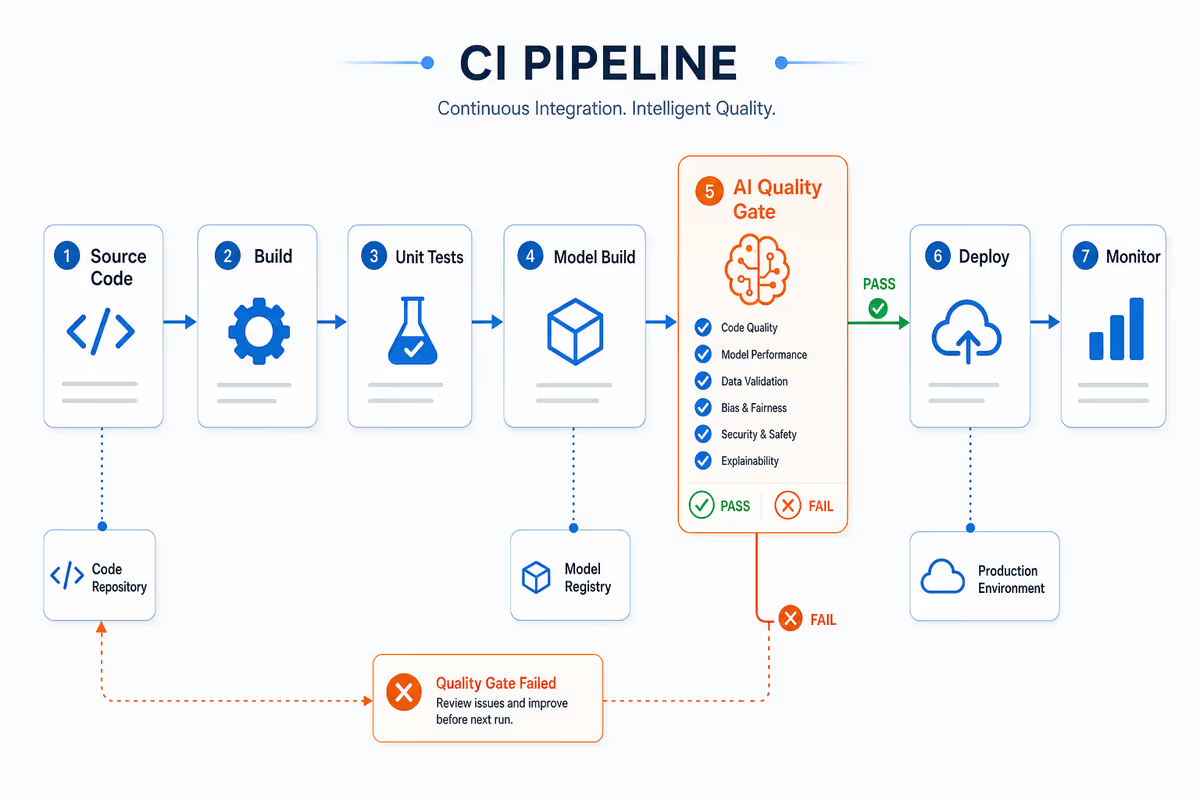
As teams mature, the next step is turning that quality signal into policy and deployment confidence. Start with Why AI Agent Output Quality Drifts Over Time, then implement guardrails with The New CI Gate: Failing Builds on Agent Quality.
Quality without trust does not scale. Trust without quality does not ship. You need both.
Do you want to join Gravio as a beta tester or support as an open source contributor? Simply sign up on gravio.dev and email me, I will convert your account to pro.
Weekly email with new posts on enterprise AI and how teams ship it.
One email per week. Unsubscribe anytime.